

IPTV Healthcare in Saudi Arabia Guide | CMT Technologies
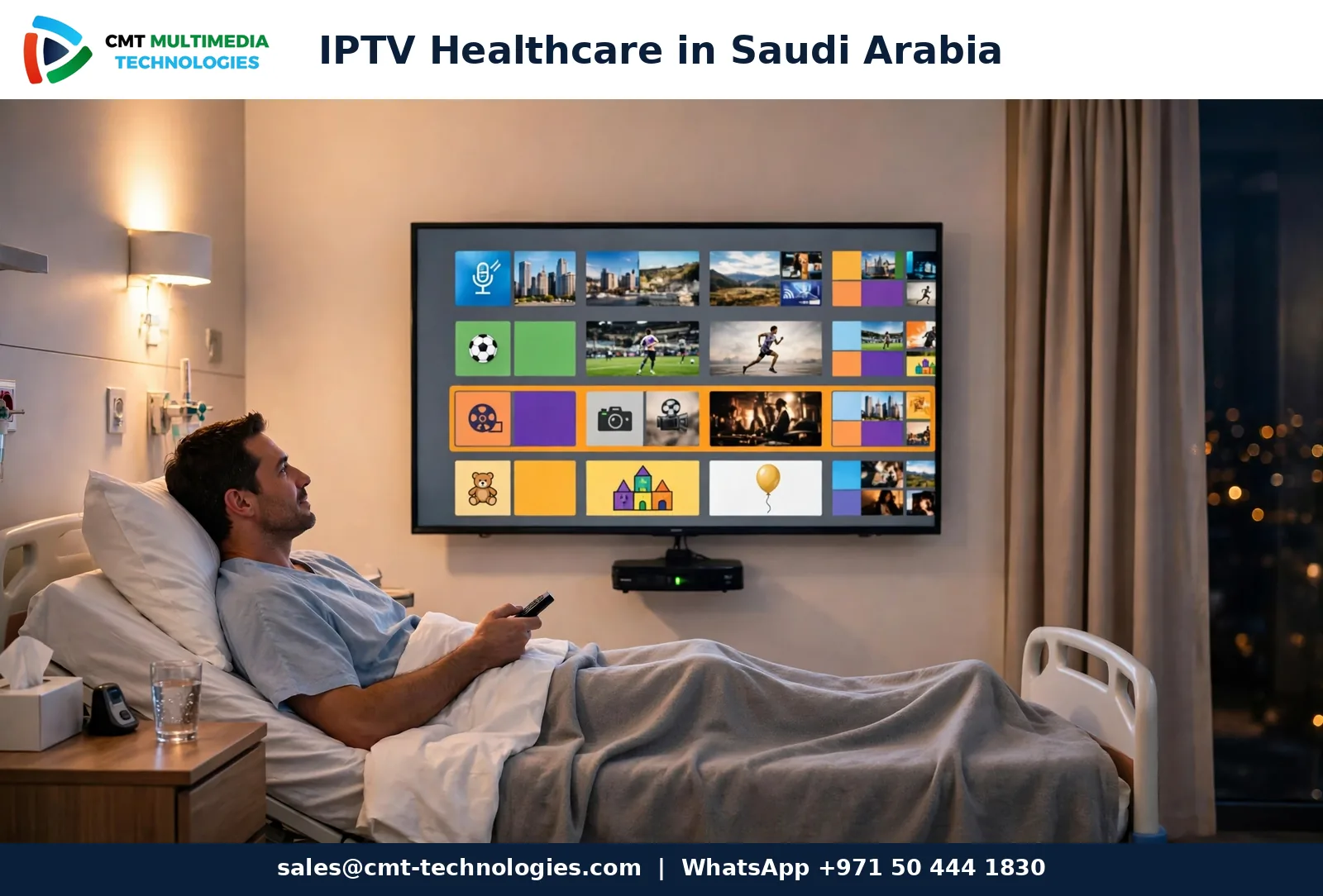
IPTV healthcare in Saudi Arabia gives every hospital patient a modern bedside screen: live TV channels, films on demand, patient education videos, meal ordering and nurse call, all controlled from the bed. For the hospital, one central system manages every screen, every ward and every message, instead of a separate cable feed in each room. CMT Technologies builds these systems for hospitals in Riyadh, Jeddah and Dammam, and the same platform serves large hospitals, specialty clinics and rehabilitation centers. This guide explains what the system includes, what it costs, how rollout works ward by ward, and how to choose the right setup for your hospital.
What patients get on the bedside screen
A patient spends most of the day in bed, so the screen in front of the bed matters more than any other screen. The welcome screen greets the patient by name, in their own language, and shows the day's schedule, meal times and prayer times. Live TV covers Arabic, English and other language channels, so patients from any country find something familiar. Films on demand help long stay patients pass the time, and patient education videos explain treatment, surgery preparation and aftercare in simple words, so nurses repeat the same instructions less often. From the same screen the patient orders meals, requests housekeeping and presses nurse call, and a short discharge survey collects feedback while the experience is still fresh. Together, these features form a complete patient entertainment system, not just a TV with more channels.
Which hospitals use IPTV healthcare
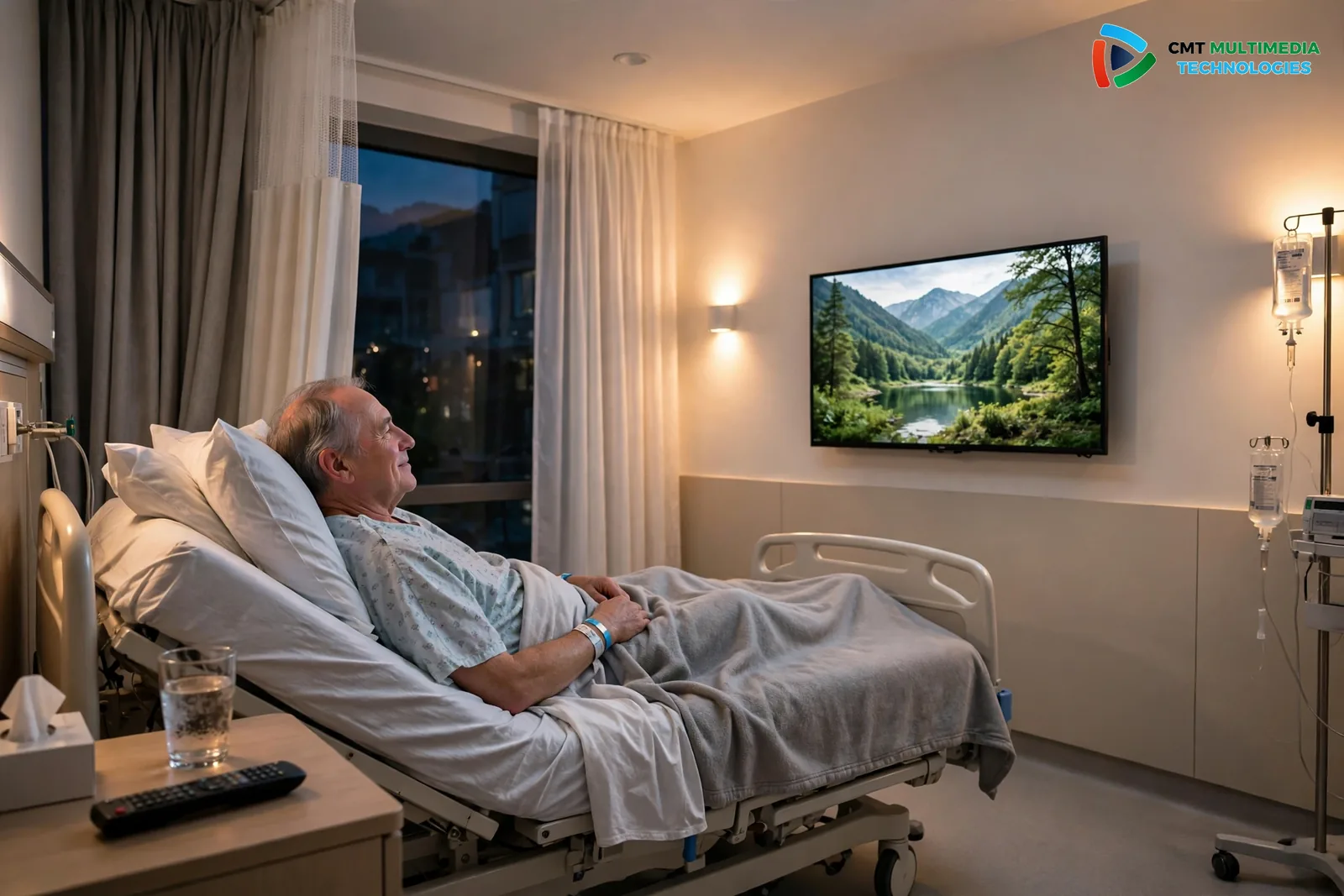
This is IPTV for hospitals in the true sense, so it fits every size and type of facility. Large general hospitals use it across dozens of wards with one central control room. Specialty clinics use it in waiting areas and recovery rooms, where short education videos prepare patients before the consultation. Rehabilitation and long stay centers use it because patients stay for weeks, and films, prayer times and family video messages make the stay easier. Medical campuses run it across several buildings from one system, with different content for each department. Government and private hospitals both use the same platform, with content, languages and access levels changing per hospital.
IPTV healthcare in Saudi Arabia by city
Riyadh holds the largest hospital demand in the Kingdom, with big general hospitals and specialty centers adopting bedside screens first. Jeddah serves the Red Sea coast and a large international patient base, so multilingual menus matter there more than anywhere else. Dammam and the Eastern Province cover industrial cities and a growing private hospital sector. Makkah and Madinah add a factor no other region has: Hajj and Umrah season, when pilgrim patient numbers rise sharply and the system must handle full wards, many languages and prayer time displays without slowing down. Hospitals in Riyadh, Jeddah and Dammam are already moving from old cable TV to hospital IPTV, and the same shift is now reaching Makkah, Madinah and the smaller cities. Arabic first menus, prayer times on screen and Arabic channels as standard make the system feel local, not imported.
Hospital systems that connect to the bedside screen
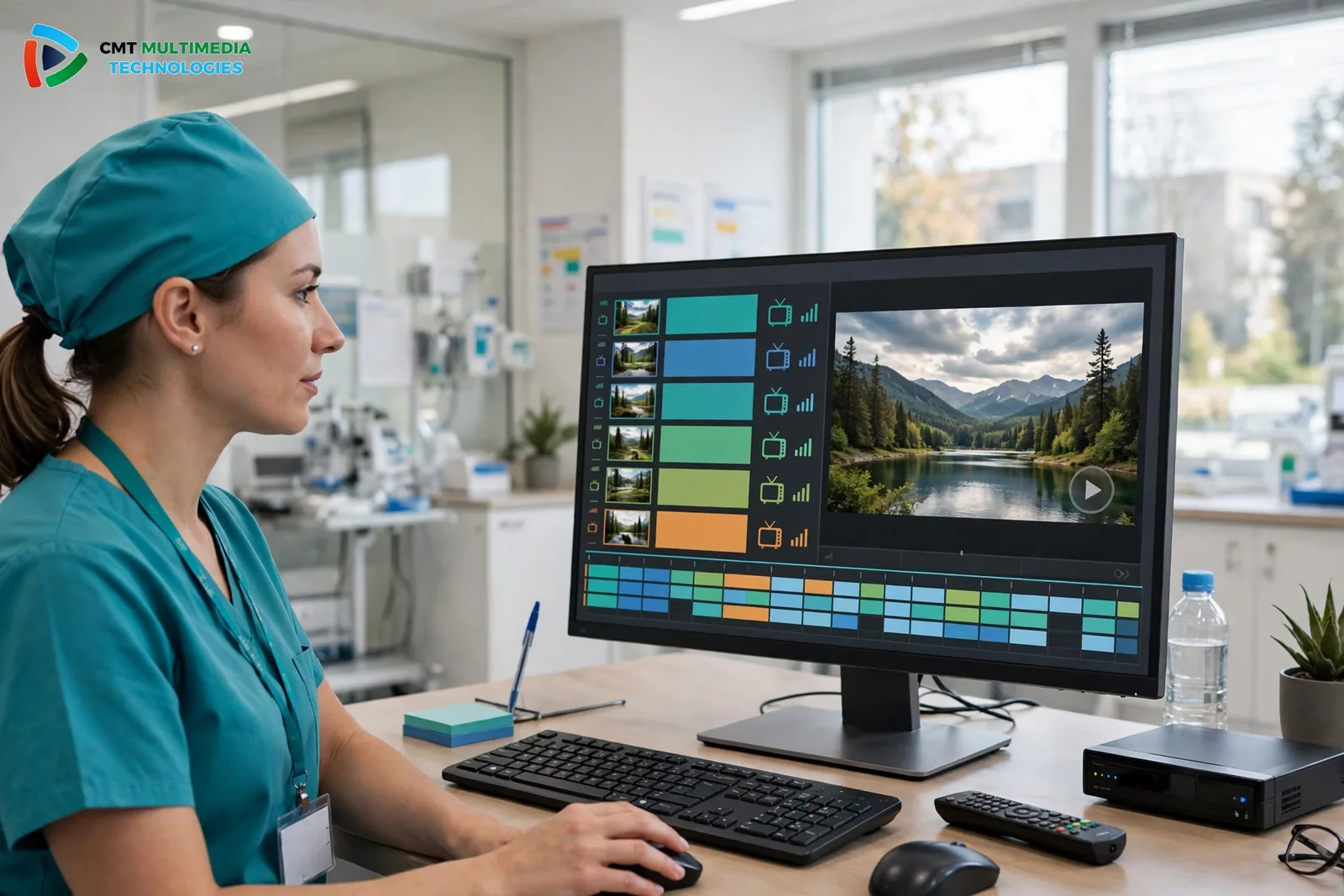
A screen alone is only half the system. The real value comes from what connects to it. The HIS link updates the screen itself when a patient is admitted, moved or discharged, so staff never update screens by hand. The EMR link matches education videos to the care plan, so a cardiac patient sees cardiac guidance and a maternity patient sees maternity guidance. Nurse call through the screen sends the request straight to the nurse station dashboard, with the room number and the request type, so nurses respond faster and managers see response times. A full IPTV system for hospitals also drives lobby, corridor and waiting area signage, where queue numbers, health messages and directions run from the same central control. Each integration is explained and tested during the pilot ward, before it reaches the whole hospital.
What IPTV healthcare costs in Saudi Arabia
Cost depends on five drivers, so no honest provider quotes one fixed price before a survey. First, the number of rooms and screens. Second, the existing network: a hospital with good cabling pays less than one needing new cabling in every ward. Third, on premise or cloud: cloud suits smaller hospitals with lower upfront cost, while large hospitals often prefer on premise control. Fourth, the channel package: Arabic, English, sports and religious channels, plus the size of the film library. Fifth, the depth of integration: HIS, EMR and nurse call add value and add cost. Spend in phases: start with one pilot ward, prove the result, then roll out floor by floor. When you compare IPTV providers in Saudi Arabia, ask for a room by room quote, a pilot ward price and a yearly support price, not one lump sum.
How IPTV rollout works, step by step
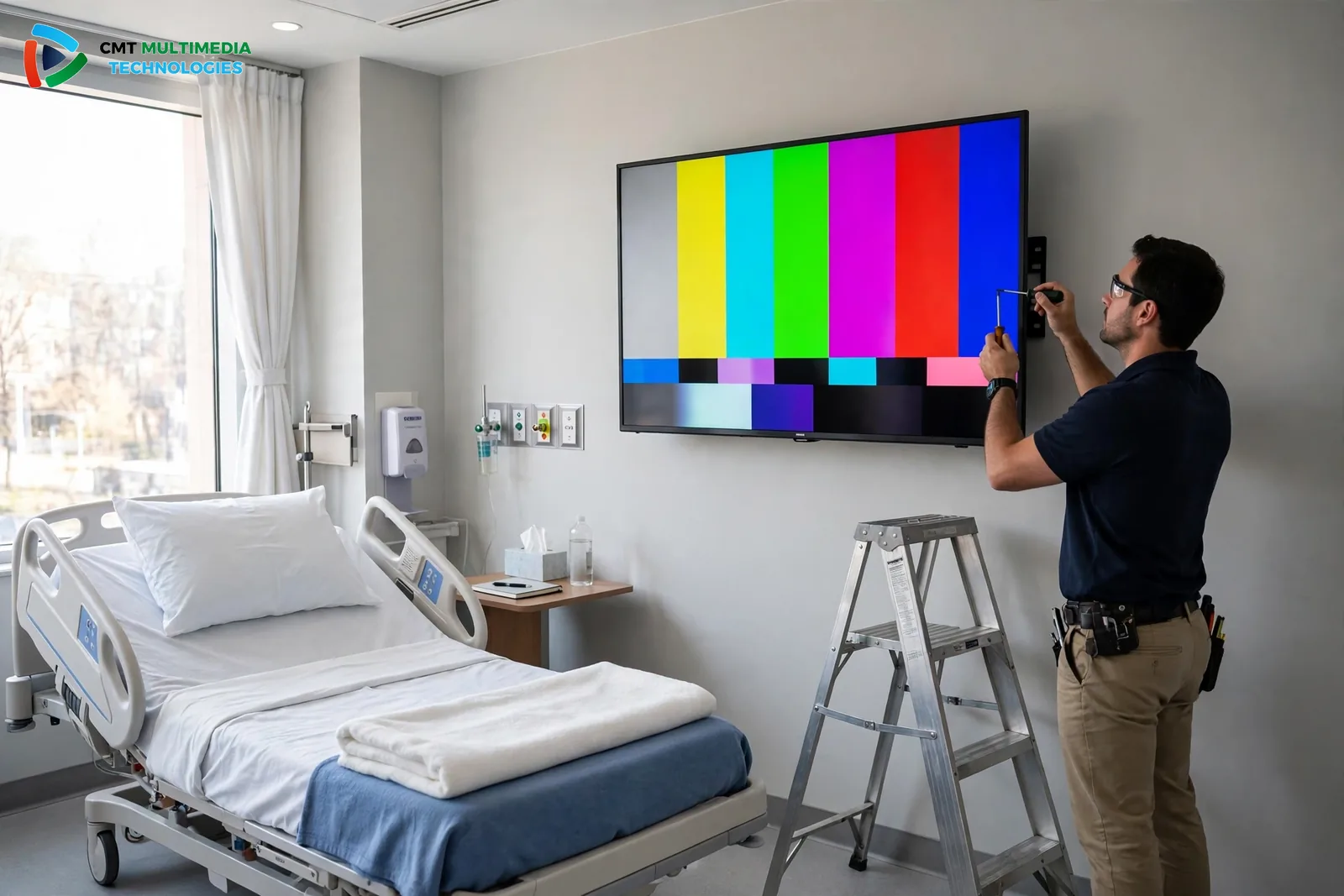
Survey. Engineers visit every ward, check the rooms, the network points and the existing TVs, and map what can stay and what must change.
Design. Channels, languages, menus, education videos and integrations are agreed with the hospital team before any hardware arrives.
Pilot ward. One ward goes live first. Real patients and real nurses use it for two to four weeks, and their feedback fixes menus, channels and workflows.
Phased rollout. Floor by floor, ward by ward, with no shutdown of care. Each ward goes live only after the previous one runs stable.
Training. Nurses learn the patient features, IT learns the control dashboard, and front desk staff learn the welcome screen and messaging tools.
Support. Monitoring, updates and a local support team take over, so the system keeps improving after installation day.
Old hospital TV vs the modern bedside IPTV system
Old hospital TV
- Fixed channels, one remote per room
- No way to send a message, take a meal order or collect feedback
- Every change needs a technician in the room
Modern bedside IPTV system
- Live TV plus films on demand, patient education, meal ordering, nurse call, welcome messages and discharge surveys
- Every screen controlled centrally, content updated in minutes
- Usage and response times visible per ward, from one dashboard
The difference is not more channels. It is a screen that works for the patient and for the hospital at the same time.
Why hospitals choose CMT Technologies
CMT Technologies has built IPTV and OTT platforms for more than 18 years, including national level platforms for SBC and Mobily, so hospital systems run on proven technology, not experiments. Our healthcare IPTV work already runs in Riyadh, Jeddah and Dammam, and the Dubai hospital page shows the same platform in a UAE hospital setting. For any IPTV for healthcare project in the Kingdom, the team handles survey, design, pilot ward, rollout, training and 24/7 monitoring from one contract, with local support in Saudi Arabia. The goal is simple: a screen that patients enjoy, nurses trust and hospital management can control.
Frequently asked questions
How much does it cost to install IPTV in a hospital in Saudi Arabia?
Cost depends on the number of rooms, the existing network, on premise or cloud setup, the channel package and the depth of HIS and nurse call integration, so the honest answer comes after a room by room survey. A pilot ward quote gives a real number early, and phased rollout spreads the rest across the budget year. Ask any provider for three prices: pilot ward, full rollout per room, and yearly support.
How long does installation take?
A pilot ward usually goes live in two to four weeks after design approval, and a full hospital rolls out floor by floor over a few months. Care never stops during rollout, because each ward goes live only after the previous one runs stable. Survey and design take the longest, since channels, languages and integrations must be agreed before hardware arrives.
Can we keep our existing TVs?
Yes, in most cases. Modern TVs with HDMI inputs work with a small set top box, and the survey maps which screens stay and which need replacement. Very old screens without HDMI usually need replacement, but that is often a small share. Keeping working TVs lowers the project cost and shortens the rollout.
Does the bedside system need fast internet?
No. Channels and hospital content run on the hospital local network, not on the public internet. Internet is needed only for cloud management and for updating the film library, so even a hospital with modest internet runs the bedside system smoothly. The network survey confirms the local capacity before installation starts.
Is patient data safe on the system?
Yes. Bedside screens show no medical records by default. The HIS link only shares non clinical details like patient name, language and room number for the welcome screen, and access to the control dashboard stays with authorized hospital staff. Education videos match the care plan in general terms, never by exposing private records.
Does it support Arabic?
Yes, Arabic comes first. Menus, welcome screens, channels and prayer times run in Arabic as standard, with English and other languages available per patient. Pilgrim patients in Makkah and Madinah benefit most, because the language follows the patient. Education videos are available in Arabic and English at launch.
What is a pilot ward?
A pilot ward is one ward that goes live before the whole hospital, so real patients and real nurses test the system for two to four weeks. Their feedback fixes menus, channel lists and nurse call workflows before rollout. Hospitals that skip the pilot stage face more complaints later.
What support comes after installation?
CMT provides 24/7 monitoring, software updates, channel and content updates, training refreshers, and a local support team in Saudi Arabia. The dashboard alerts the team to any screen or server issue before patients notice it. Yearly support is quoted separately, so the hospital always knows the running cost.