

IPTV Healthcare in Madinah | CMT Technologies
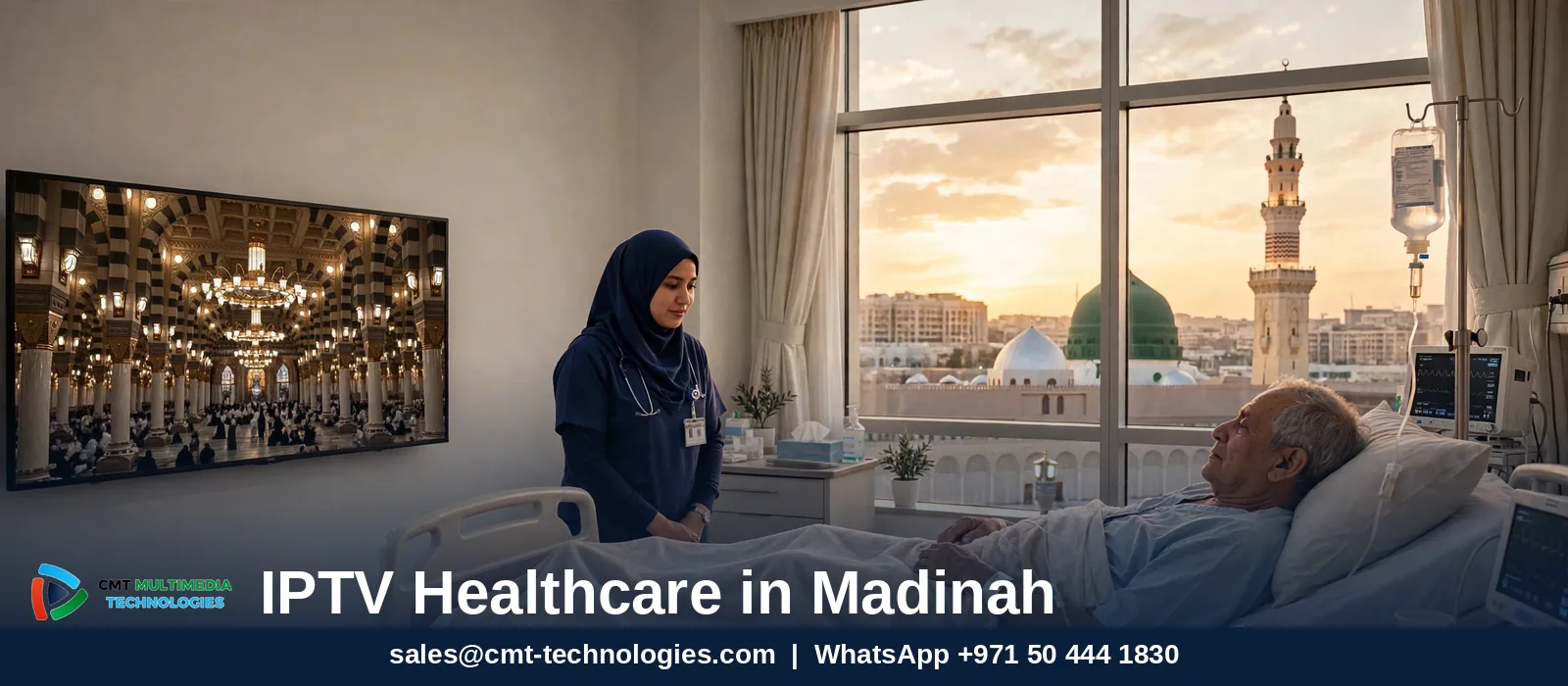
IPTV for hospitals in Madinah gives every patient a bedside screen with TV, prayer times, Qibla direction and family video calls in their own language, while ward staff control every screen from one place. This guide explains what a good system includes, how it is installed in a working hospital, and how to choose a provider.
IPTV healthcare in Madinah is hospital TV built for a city that welcomes pilgrims from every country. Patients arrive from many places, often with family far away, and a bedside screen can speak their language, show prayer times, and keep them close to home. This guide builds on our country guide to IPTV healthcare in Saudi Arabia and our guide to IPTV healthcare in Makkah, and it points to our healthcare IPTV service page.
At a glance
Bedside TV
TV, films and health guides at the foot of the bed.
Languages
Menus and guides in the languages patients speak.
Prayer times
Prayer times, Qibla and Haram broadcasts on every screen.
Ward control
Staff control each room and ward from one dashboard.
What a bedside TV does for a patient
A bedside patient TV is the screen a patient actually uses. It sits at the foot of the bed, within easy reach, and it replaces leaflets and a shared wall TV with something personal. The patient can watch live TV, read a health guide, and call for help, all from one remote.
In our experience, the first thing a patient notices is whether the screen speaks their language and whether it is simple to use. A tired patient far from home wants one clear screen, large buttons, and a remote they can hold without thinking about it.
What the system includes
Bedside TV
Live TV, films and health guides on the screen at the foot of the bed.
Multilingual guides
Welcome screens and hospital guides in the languages your patients speak.
Prayer times and Haram broadcasts
Prayer times, Qibla, Quran recitation and live Haram broadcasts on every screen.
Ward control
Staff switch channels and send messages for one room, one ward, or the whole hospital.
Why Madinah hospitals need IPTV built for visitor patients
That is why hospital IPTV in Madinah has to be built for visitor patients first, not adapted from a generic hotel system. A pilgrim patient may stay only a few days and may not speak Arabic or English, and the screen has to work on the first day, without a lesson.
Hospitals near the Prophet's Mosque feel this most. Visitor numbers rise sharply around Hajj and Umrah seasons, and wards that are quiet in one month can be full in the next.
TV in the language every pilgrim patient speaks
That is why multilingual hospital IPTV for pilgrim patients matters more in Madinah than in most cities. Arabic, English, Urdu, Turkish, Indonesian and French cover most patients here, and a welcome screen in the right language changes the whole stay.
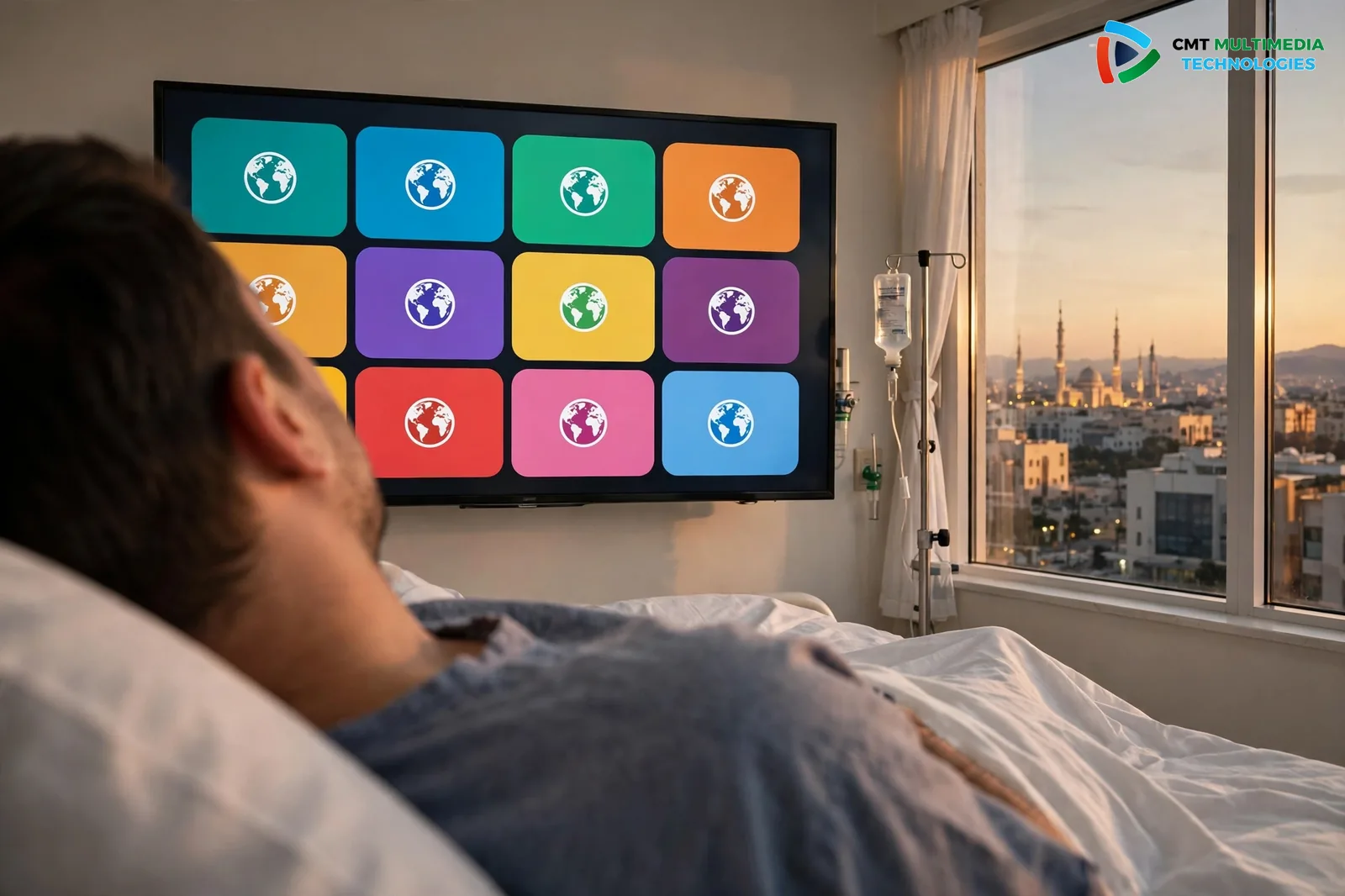
The patient picks a language on the first screen, and everything follows: the menu, the health guides, the prayer times and the channel list. Staff can change the default language for a ward, and the screen updates without a visit to the room.
Ward control: one screen, one room, one ward
Ward control is the part patients never see and staff use every day. From one dashboard, a nurse can switch a channel, send a message to a ward, or set a prayer time display. Each room keeps its own settings, so one patient can watch TV while the next room rests.
In our experience, the hospitals that struggle with IPTV are the ones where every screen is managed by hand. One dashboard, one login, and clear roles for ward staff are what keep the system working after the installation team leaves.
Prayer times, Qibla and Haram broadcasts on every screen
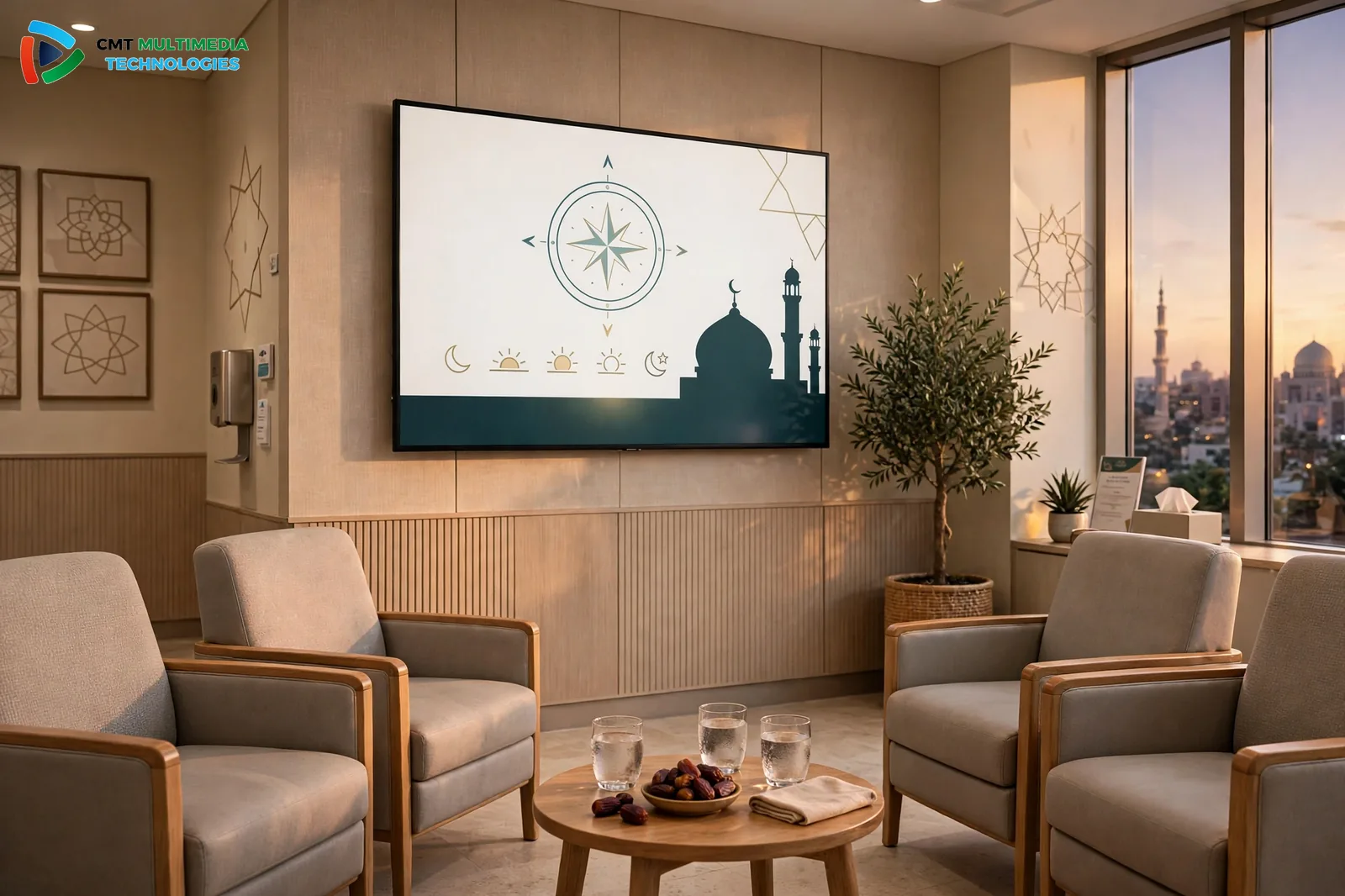
Prayer times and Haram live broadcasts sit at the centre of the screen in a Madinah hospital. The prayer time display, the Qibla direction and a live Haram broadcast belong on bedside, ward and lounge screens alike, so a patient who cannot leave the bed can still follow the prayer.
Quran recitation sits beside the prayer display, and the screen shows the next prayer time clearly from across the room. Families in the lounge see the same information, so everyone in the hospital shares the same prayer rhythm.
Family stays close, even far from home
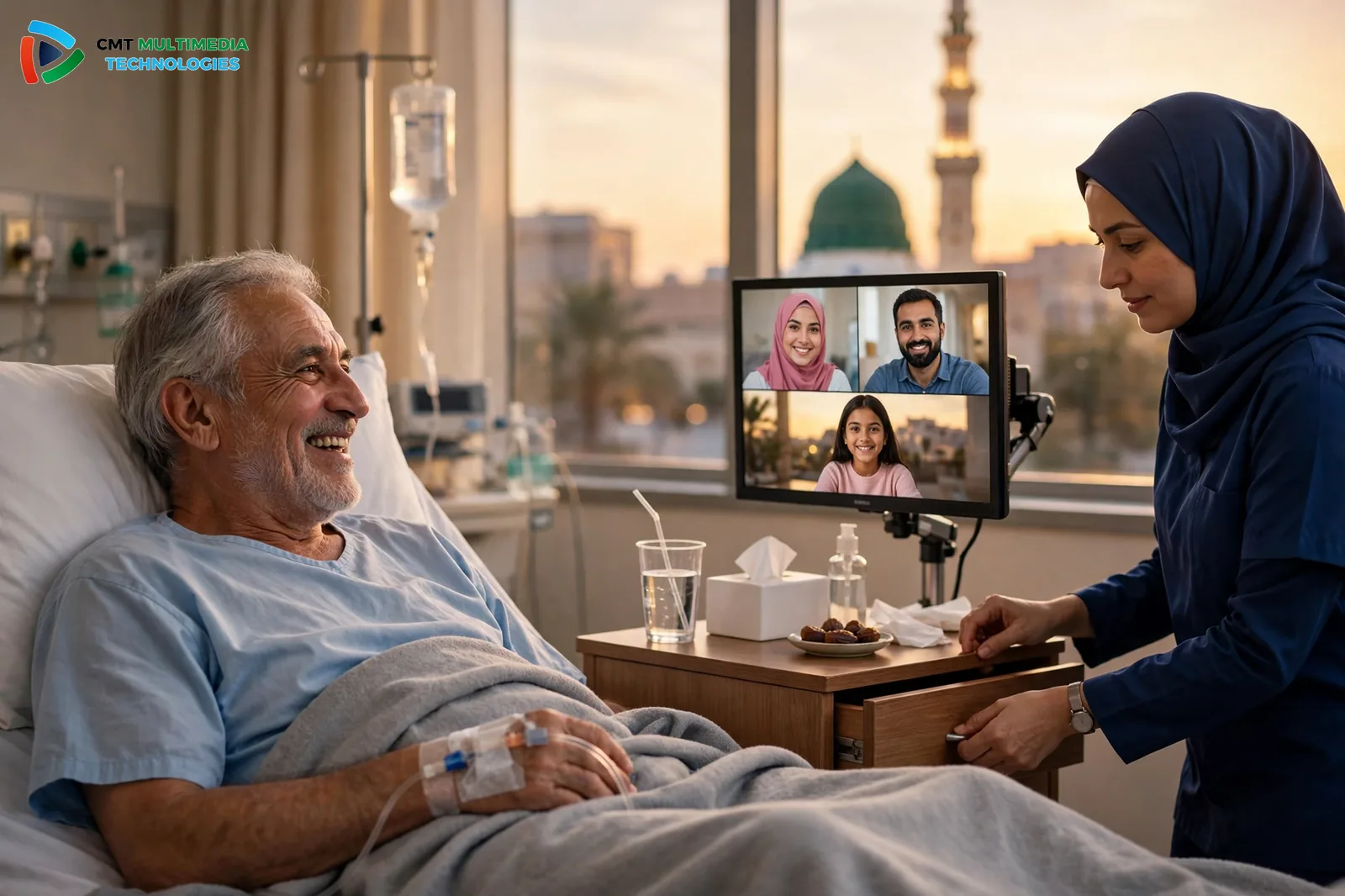
A patient in Madinah is often far from home, and the bedside screen is the easiest way to close that distance. A video call on the TV lets a patient see their family on a big screen, without holding a phone and without asking a nurse for help.
The same screen can show messages from family and visiting hours, so the patient always knows what is happening. For older patients, a big screen with large buttons is far easier than a small phone.
How installation works in a working hospital
A hospital IPTV installation in Madinah usually starts with a walkthrough of the wards, the network and the rooms, so the plan fits the building instead of fighting it. Cables, screens and the server are planned ward by ward, and the work is done in stages.
The hospital does not have to close a ward for the work. In our experience, the cleanest installations are the ones done in small steps, with one ward live before the next one starts, and each room checked before patients use the screen.
How to choose a provider for your hospital
When you compare IPTV providers in Saudi Arabia, ask each one the same questions and compare the answers side by side. The right provider will answer every line clearly, without pushing you to decide on the first call.
- Bedside screens with a simple remote and large buttons
- Menus and guides in the languages your patients speak
- Prayer times, Qibla and Haram broadcasts on every screen
- Ward control from one dashboard, with clear staff roles
- Installation in stages, so wards keep running
- Training for ward staff and a clear way to get help
- Screens that work on your hospital network
- A demo on a real ward before you decide
What affects the price
The price of a hospital IPTV system depends on the number of rooms, the number of wards, the screens you choose, and the work your building needs. An older building may need more network work than a new one, and licences for channels and content also shape the final cost.
Ask for a clear breakdown before you decide, so you can see what the screens, the server, the installation and the licences each cost.
Why hospitals choose CMT
CMT works on healthcare IPTV in Saudi Arabia for hospitals in several cities, and this Madinah guide comes from that work. We plan each system around the patients in the wards, the languages they speak, and the way the staff already work.
In our experience, the difference is in the details: a screen that is easy for an older patient, a prayer display that is right, and a dashboard a nurse can use without calling for help.
Frequently asked questions
For patients and families
Can a patient change the language on the bedside TV?
Yes. The patient picks a language on the first screen, and the menu, the health guides and the channel list all follow. If a patient cannot find their language, a nurse can set it from the ward dashboard.
Can I watch prayer times and the Haram broadcast from my bed?
Yes. Prayer times, the Qibla direction and the live Haram broadcast are on the bedside screen, so you can follow the prayer without leaving the bed. The same display runs on ward and lounge screens.
Can I video call my family on the bedside TV?
Yes. The bedside TV can show a video call on the big screen, so you can see your family without holding a phone. A nurse can start the call for you if you need help.
How do I contact CMT about IPTV healthcare in Madinah?
Send a demo request through the Request a Demo form on our website. Tell us about your hospital and your wards, and our team will arrange a demo for you.
For hospitals
Which IPTV provider is the best in Saudi Arabia?
There is no single ranking that names the best IPTV healthcare in Madinah, so judge a provider by what you can see: a demo on a real ward, screens in your patients' languages, and ward control your staff can use.
Is IPTV legal in Saudi Arabia?
Yes, when it is delivered through licensed services and legal content. Hospitals should use a provider that works with licensed channels and legal content, and that can show the licences for what is on the screens. Ask for this in writing before you sign.
Can ward staff control every screen from one place?
Yes. The ward dashboard controls every screen in a ward, and each room keeps its own settings. A nurse can change a channel, send a message, or set the prayer display for one room or for the whole ward.
Will IPTV work with our hospital's existing network?
In most cases, yes. The system can run on your hospital network, wired or wireless, and the installation team checks the network during the first walkthrough. If a ward needs more capacity, the team will tell you before the work starts.