
Studio and Production
Channel Playout
Master Control Room
Headend and Encoding

Broadcasting solutions are the full chain that puts a TV channel on air and keeps it there.
Studio and Production
Channel Playout
Master Control Room
Headend and Encoding
Headend and Encoding
Broadcasting solutions are the full chain that puts a TV channel on air and keeps it there. The chain covers the studio, playout, headend, encoding, and delivery over satellite, cable, terrestrial, and the internet. CMT Technologies builds and runs these broadcasting solutions for broadcasters and media companies across the Gulf, from a new channel launch to a full multi-channel operation.
A TV channel is a promise to viewers: it is on air, on time, every day. Keeping that promise takes more than a studio. It takes a chain of systems that work together without stopping. CMT Technologies builds that whole chain as one service, so your channel goes on air and stays on air. See our IPTV and OTT solutions for the full service list, and our live broadcast page for live event work.
Broadcasting solutions cover the full journey from your programme to your viewers. Here is the chain, from the studio to the screen.
We set up the studio where programmes are made: cameras, lights, sound, and the desk where presenters sit.
The playout system runs the channel schedule: programmes, adverts, promos, and live inserts, in the right order, at the right time.
The master control room watches every feed and every output. Operators see problems early and switch to a backup before viewers notice.
The headend takes the channel feed, encodes it, and prepares it for each way it travels: satellite, cable, terrestrial, and the internet.
The channel reaches viewers over satellite, cable, terrestrial, and OTT apps, from the same playout.
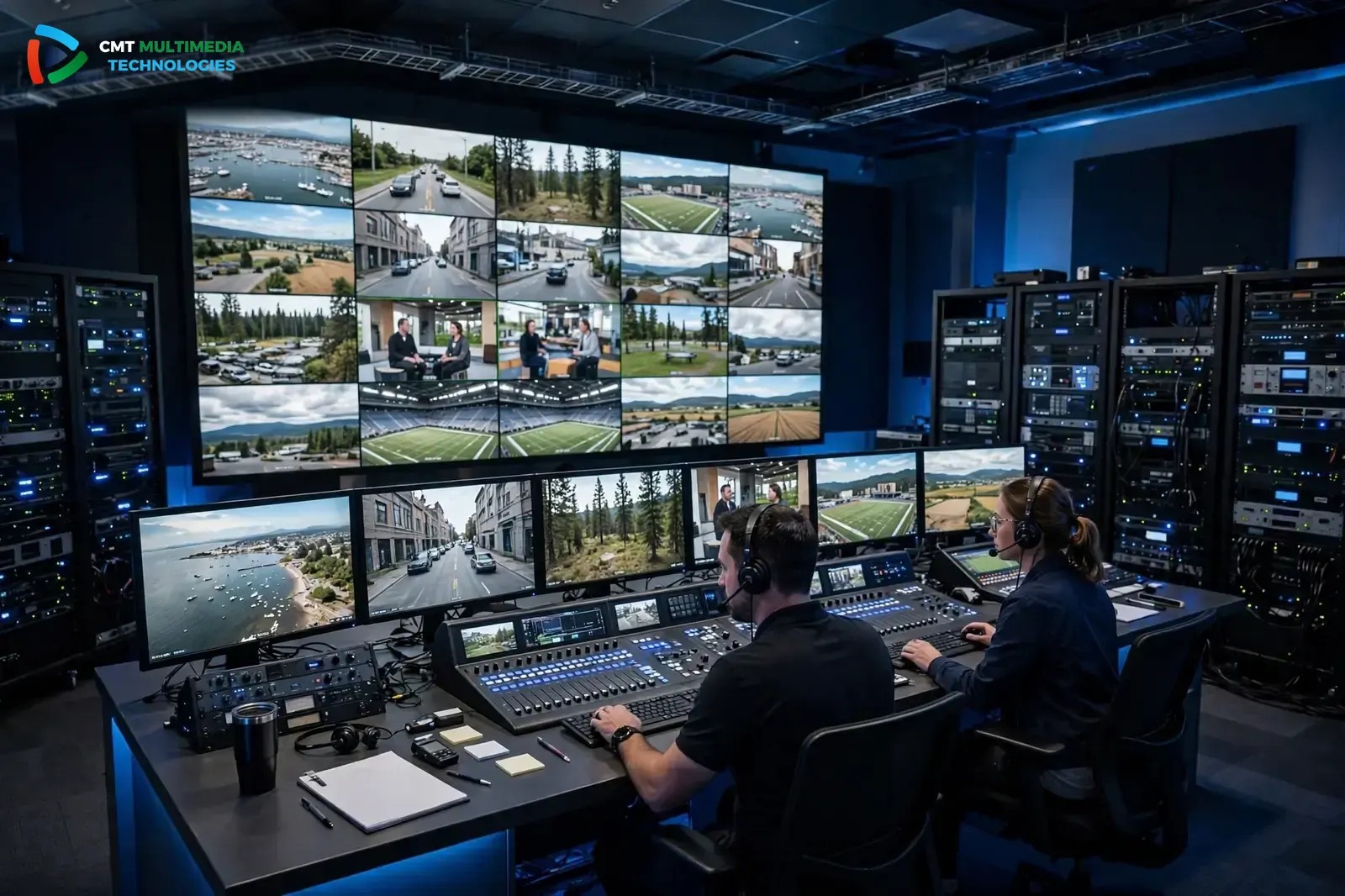
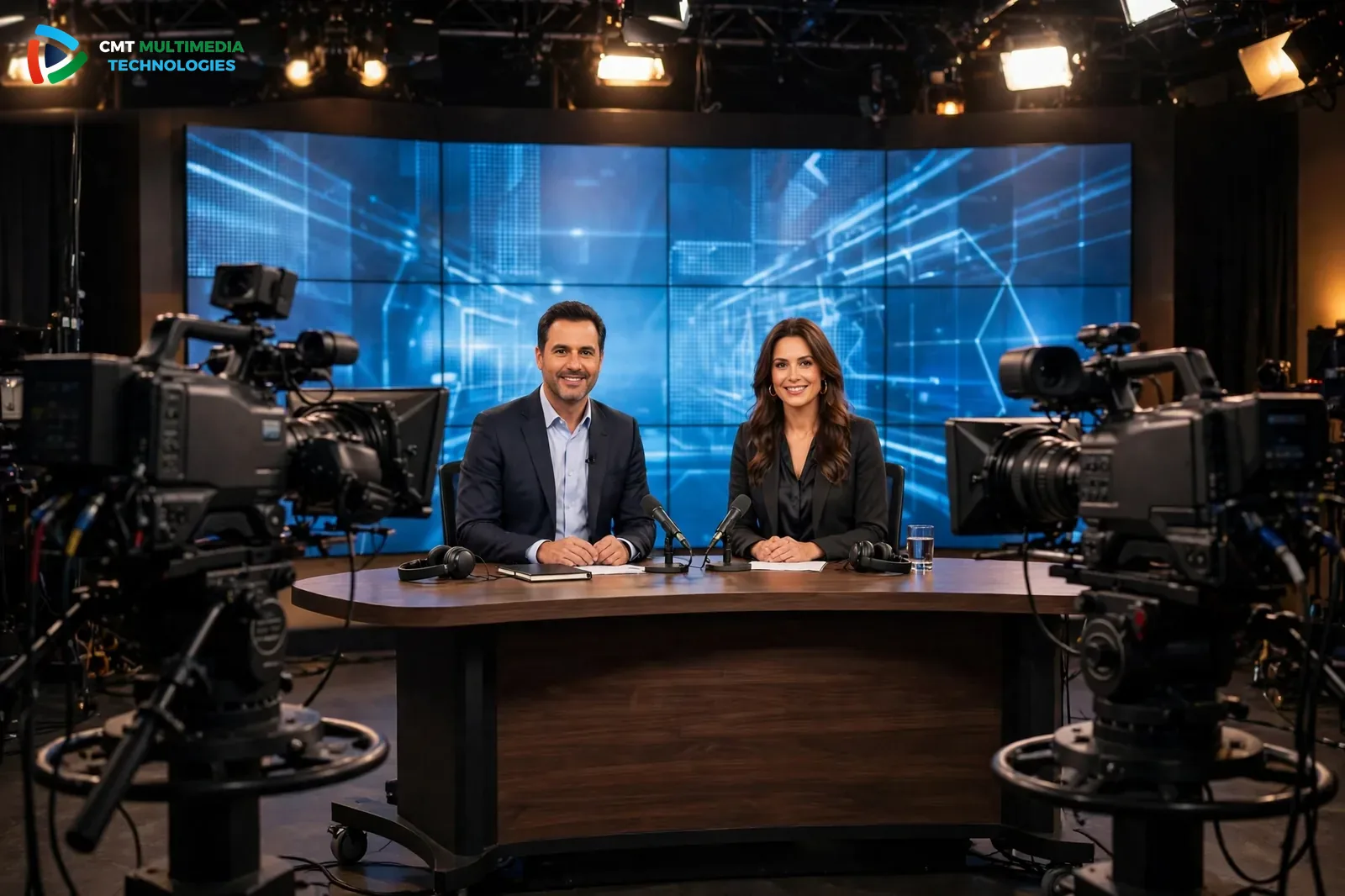
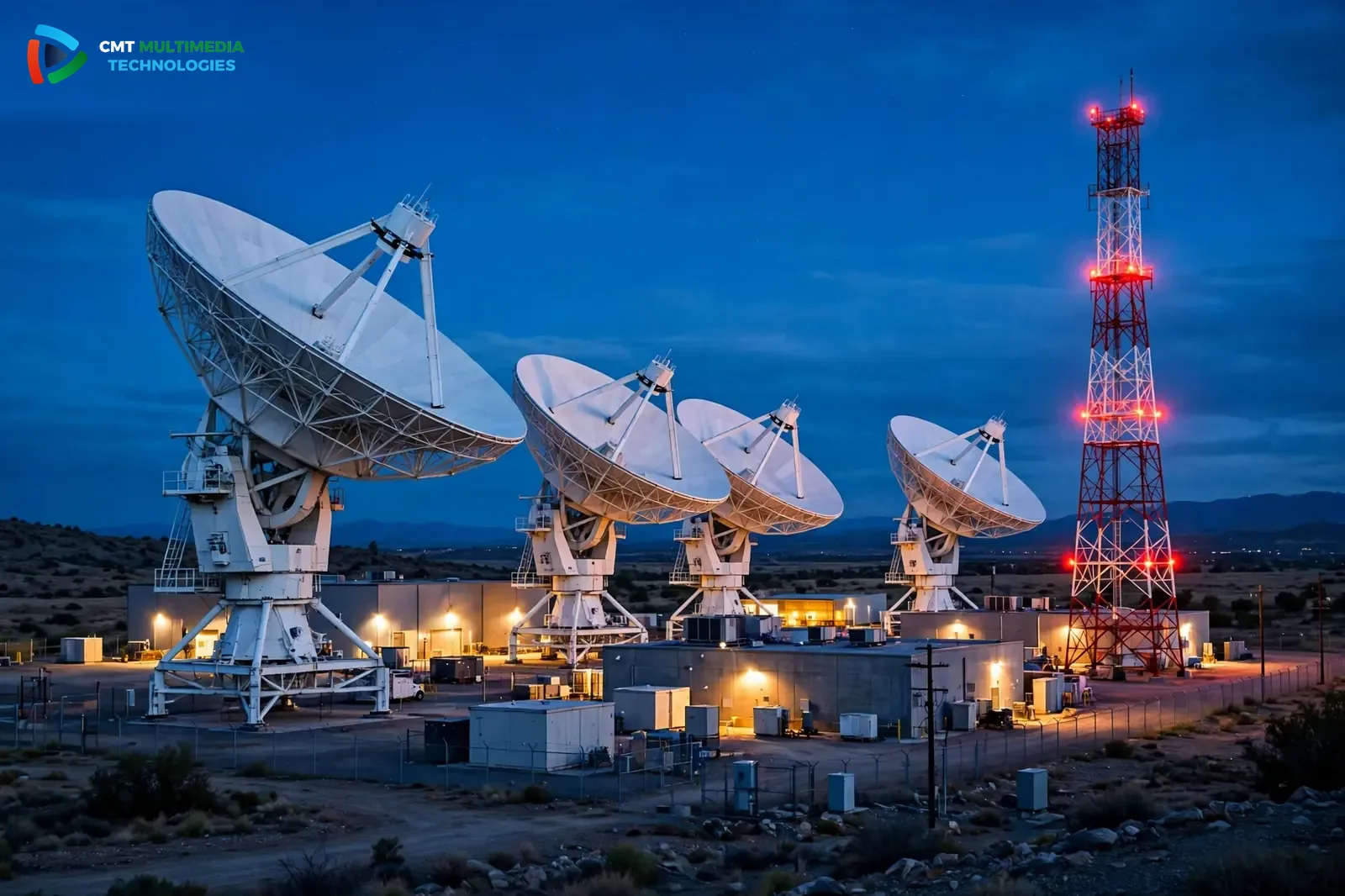
Studio, playout, headend and delivery, run by one team.
Broadcast solutions for broadcasters turn a new channel idea into a channel on air: news, sports, entertainment, religious, and children’s channels. Broadcast solutions for media companies turn a library of programmes into scheduled channels and live streams with their own brand. A hospitality iptv broadcast solution carries hotel channels to guest rooms, and a hotel iptv broadcast solution gives guests live TV on the room screen. See our hospitality IPTV solutions for hotel TV. The chain is the same. The content and the audience change with the business.
A broadcast system can run in the cloud, on site in your own facility, or as a mix of the two. Cloud runs on hosted servers, so a new channel starts fast without buying a full headend first. On site runs on your own equipment, under your own roof. A hybrid system mixes both: playout in the cloud, with on-site encoding and backup. The right choice depends on your channels, your team, and your rules. We plan it with you.
Companies ask what this costs. The price changes with the project, so we do not list fixed prices here. Five things set the cost: (1) how many channels you run, (2) cloud, on site, or hybrid, (3) whether a studio build is part of the work, (4) how many delivery routes you need (satellite, cable, terrestrial, OTT), (5) how much monitoring and support you need after launch. Request a demo and we will price your project after we see your channel plan.
Choose a broadcasting partner who knows the whole chain, not just one part of it. Ask five things before you sign: (1) does it cover studio, playout, headend, and delivery in one service, (2) what happens when a live feed or a playout fails at 3 in the morning, (3) can it carry your channel to satellite, cable, terrestrial, and OTT from one playout, (4) who supports you after launch, (5) can it grow when you add channels. A good partner answers all five in plain words and shows a working channel, not just slides. Ask for a demo on your own content before you decide. TV broadcast solutions also link to nearby services: live production and video streaming for making the show, content watermarking solutions for tracing leaks, and IPTV solutions for telecom operators for operators who carry your channel.
The Gulf is a strong market for broadcasting. Viewers here watch in Arabic, English, and many other languages, and they expect live sports, live news, and Ramadan viewing at the highest quality. Channels in the region run from media hubs in Dubai, Abu Dhabi, Riyadh, Jeddah, Doha, Kuwait City, and Manama, and reach viewers across the UAE, Saudi Arabia, Qatar, Kuwait, Bahrain, and Oman. Broadcast monitoring matters most on peak nights, when a big match or a live event brings many viewers at once. CMT Technologies works from the Gulf, so we plan the chain around Gulf viewers, Gulf networks, and Gulf satellites. A TV channel launch in the Gulf needs local knowledge: which satellite platforms viewers use, which rules apply, and which peak nights to plan for.








Broadcasting solutions are the full chain that puts a TV channel on air and keeps it there: studio, playout, headend, encoding, and delivery over satellite, cable, terrestrial, and the internet.
Broadcast playout is the system that runs a TV channel around the clock. It holds the schedule, plays each item in order, adds logos and graphics, and switches to live feeds when news or sport breaks.
A broadcast headend is the technical heart of a channel. It takes the finished channel feed, encodes it, packs it for delivery, and locks it with conditional access so only the right viewers can watch.
Yes. One playout feeds all routes at once: satellite, cable, terrestrial, and OTT apps, so a schedule change reaches every viewer at the same time.
Broadcasting runs the channel itself: playout, headend, and delivery, day and night. Live production makes the show: cameras, directing, and switching at the event. The two work together.
Not always. A new channel can start with cloud playout and rented studio time, then build its own studio when the channel grows.
The feed moves to a backup path. Contribution links run with a backup route, and playout switches to a backup input or an emergency playlist if a live input drops.
Five things set the cost: how many channels you run, cloud or on site, whether a studio build is part of the work, how many delivery routes you need, and how much monitoring and support you need after launch.
Request a demo and we will show the full broadcast chain running with your content, from studio to satellite.
Contact