

IPTV Healthcare in Riyadh
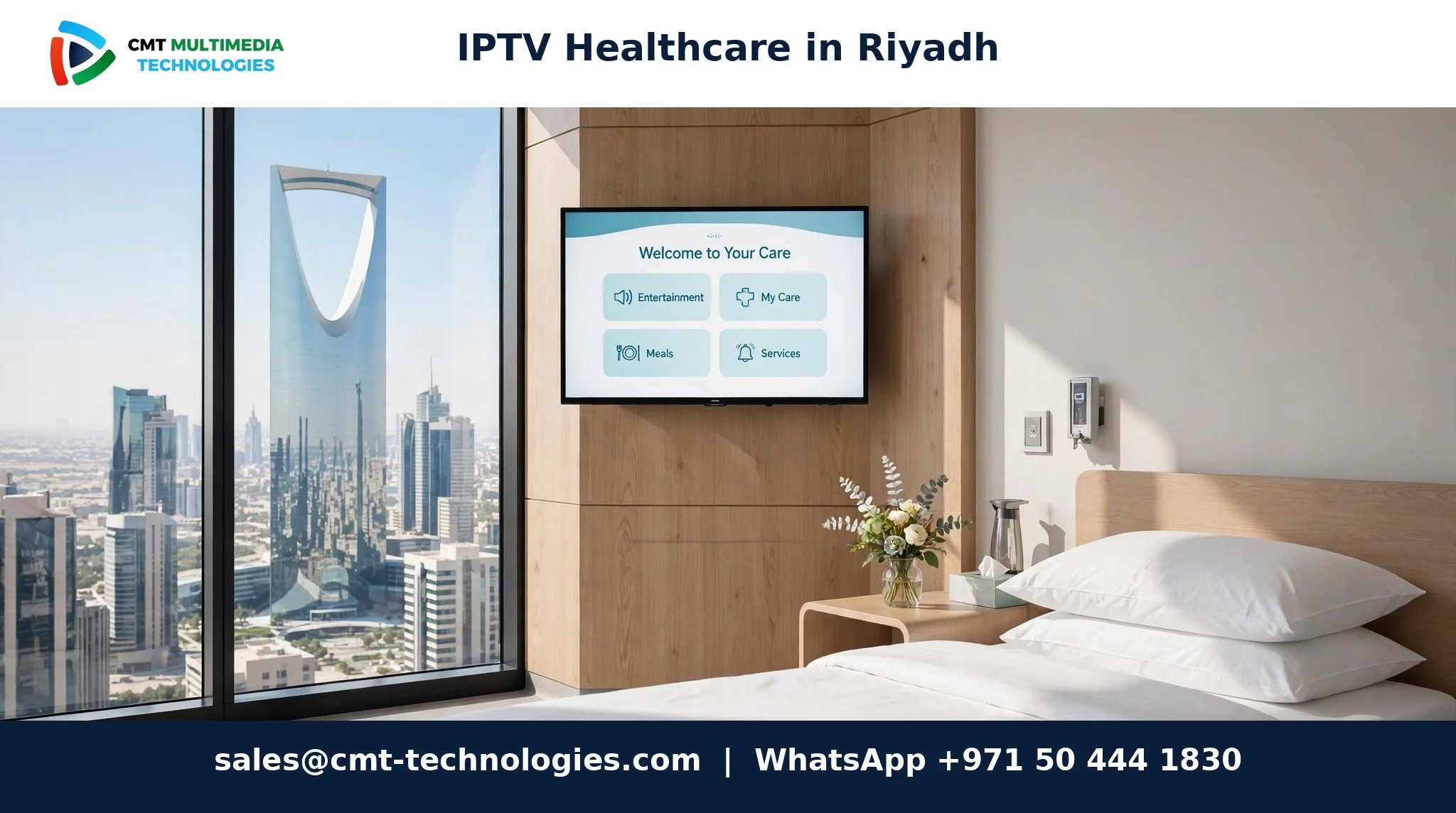
IPTV healthcare in Riyadh is a hospital TV system that gives every patient bed a screen with entertainment, health education, meal ordering and service requests, all managed centrally by the hospital. CMT Technologies designs and installs it for Riyadh hospitals and clinics, in Arabic and English, with content chosen for each ward.
A hospital stay runs on hours of waiting: waiting for results, for medicine, for the doctor round, for visiting time. The screen at the bed is the one thing that fills those hours. However, in many Riyadh wards it still does very little: a row of channels, a remote shared with the room, and a call button for everything else. As a result, every question the screen could have answered becomes a walk for a nurse.
This guide explains what a hospital IPTV system includes, the features patients and care teams actually use, how an installation runs inside a working hospital, and what shapes the cost, so Riyadh healthcare teams can plan on clear facts.
Table of Contents
What IPTV Healthcare in Riyadh Includes
Five parts make up the system, working as one platform from the ward to the screen at each bed:
- Headend and servers. The central equipment that receives and prepares channels and content for the whole hospital.
- Cloud middleware. The control layer that manages the screens ward by ward: which content each ward shows, which languages, which services are on.
- Bedside screens. The patient interface runs on the TVs at each bed. The menus stay large and clear, in Arabic and English, so older patients can use them without help.
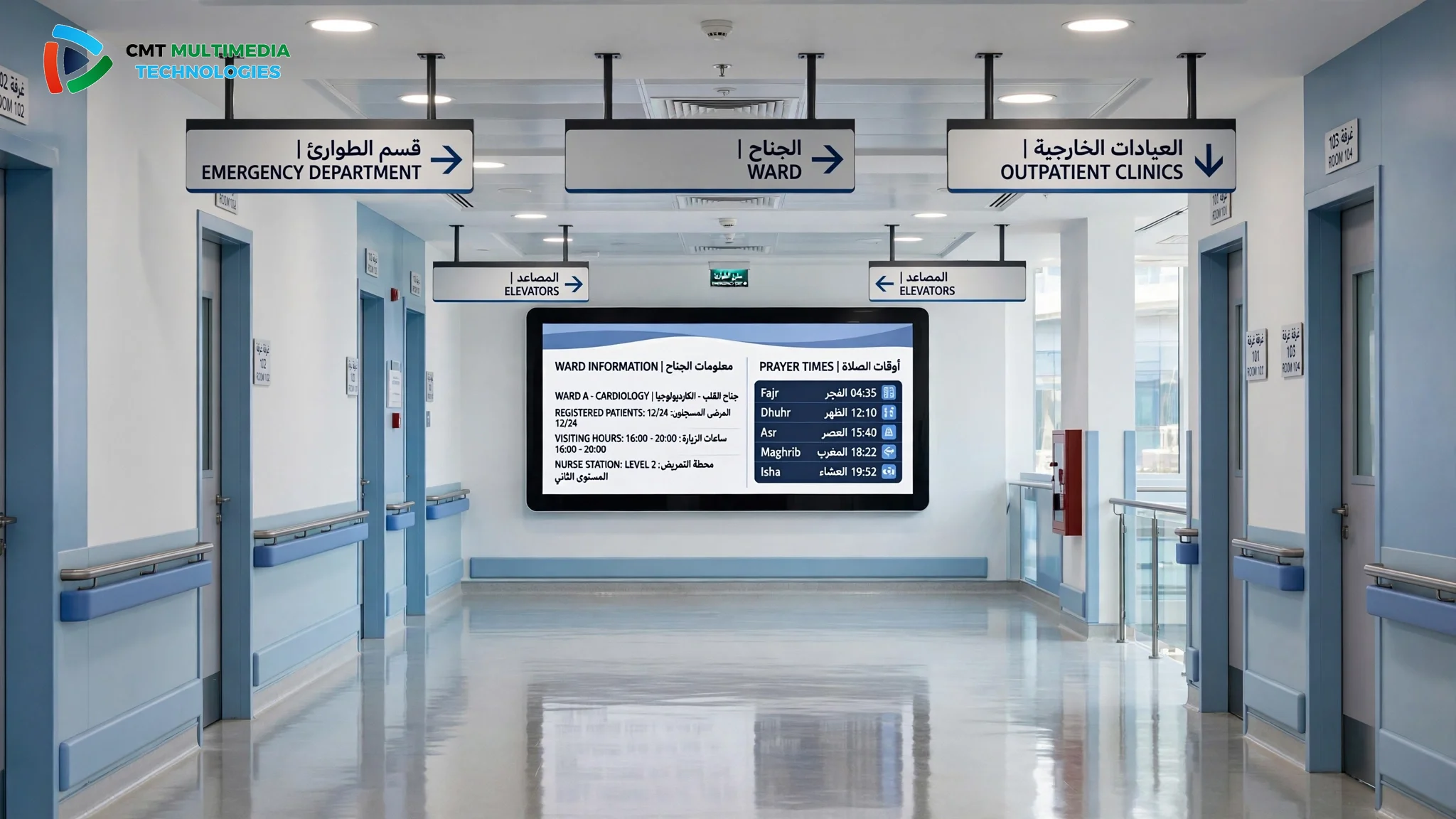
- Patient services. Entertainment, education, meal ordering and requests. The same platform also carries ward information screens in corridors and waiting areas.
- Monitoring and support. The central team watches every screen, so the system flags a dark screen in a ward to the team at once.
Overall, the platform is the healthcare side of our wider hospital IPTV system Saudi Arabia work, installed here for the hospitals of the capital.
Why Riyadh Hospitals Are Upgrading the Patient Screen
Riyadh is where Saudi healthcare is growing fastest. New hospitals and expansions open across the capital under the Kingdom health programmes. As a result, private groups compete for patients who compare facilities the way they compare hotels: on the experience as much as on the medicine. Indeed, a modern patient screen is part of that experience from the first hour of admission.
In addition, there is a working reason. Nurses carry every small request in a ward: the meal question, the extra blanket, the “when is the doctor coming”. A bedside screen answers the routine ones on its own. Then it sends the real requests to the right desk, in the patient language. That returns nursing time to nursing, which is the scarcest resource in any hospital.
Features Patients and Care Teams Use
In fact, the features that matter are the ones patients and care teams use every day of a stay:
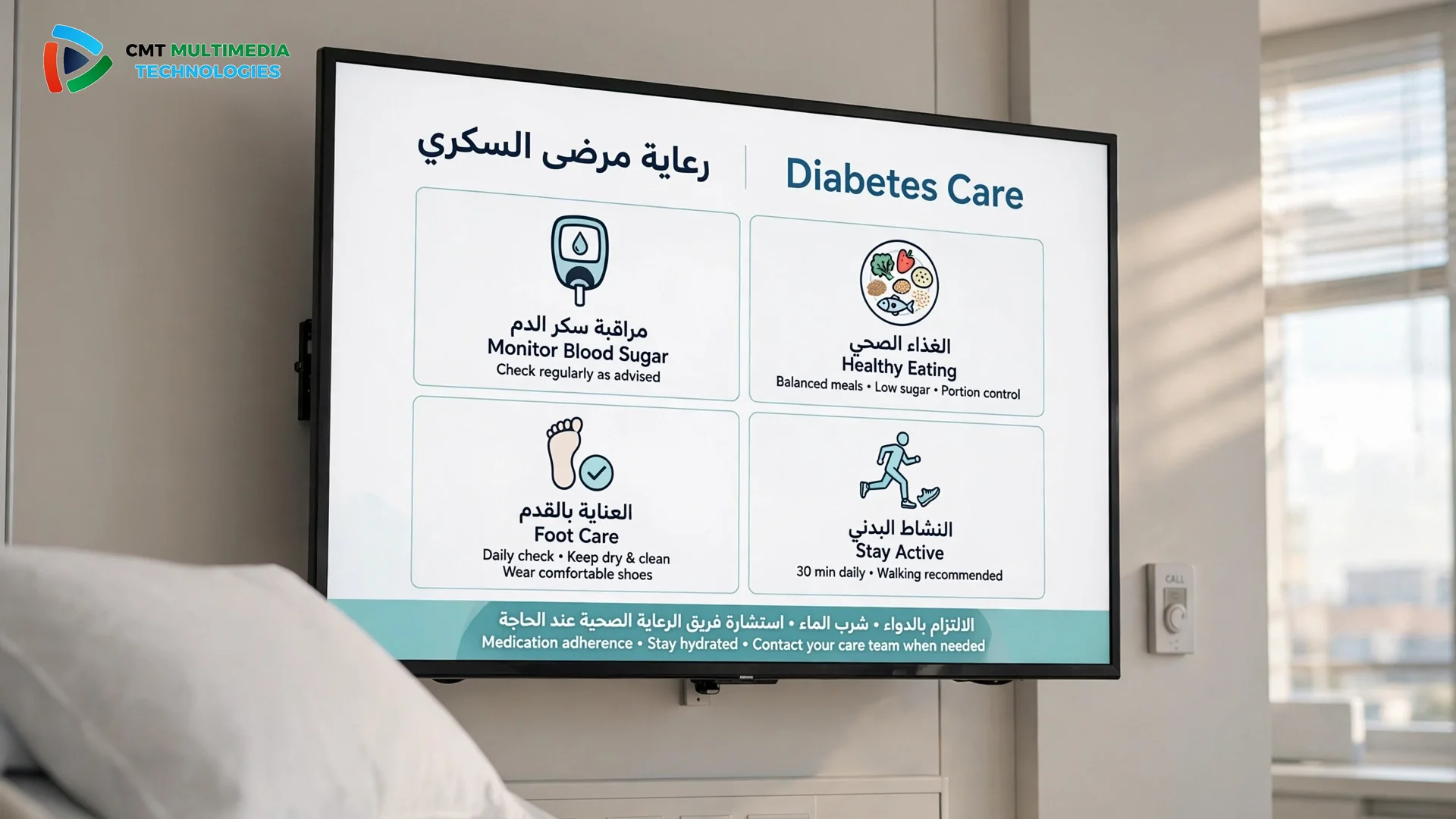
- Health education at the bedside. Short videos and guides on the patient condition, medication and recovery, in Arabic and English, assigned per ward so a cardiac patient and a new mother see different libraries.
- Entertainment that feels normal. Live channels, films and radio, including religious channels and the prayer schedule. The volume and the controls stay simple, so an older patient can manage both without help.
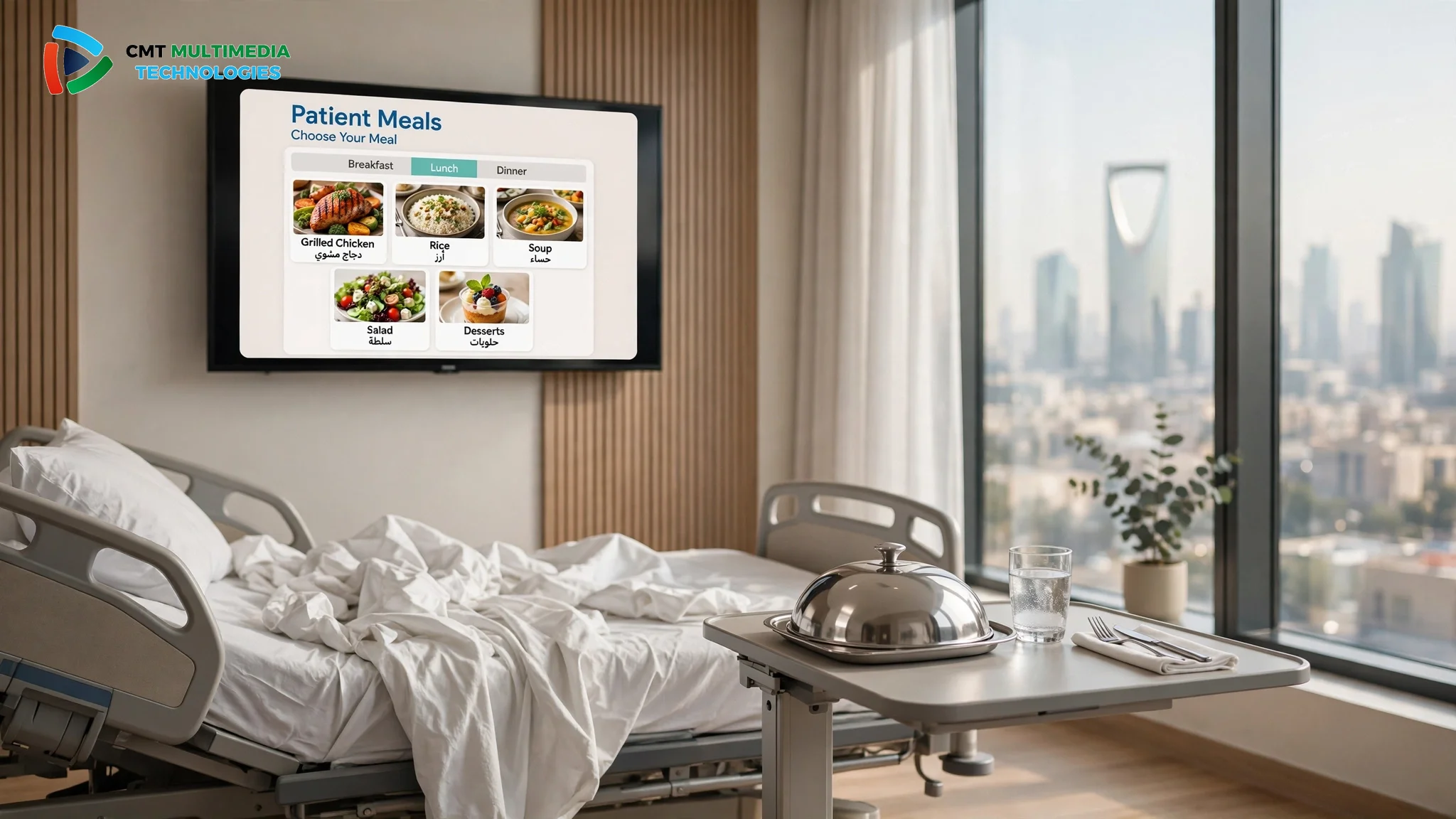
- Meal ordering inside the diet plan. Patients order from the bedside screen, and the menu only shows what their care team allows, so a diabetic patient never sees the wrong tray.
- Requests without the corridor walk. Housekeeping, maintenance and assistance requests go from the screen to the right desk, and the patient then sees on screen that the desk has received the request.
- Information that answers itself. Visiting hours, ward rules, discharge steps and hospital services on screen, in two languages, updated by the hospital in minutes. As a result, fewer basic questions land on the nursing desk.
- Welcome and orientation. The screen also greets the patient by name and ward, and shows how everything in the room works, which settles the first anxious hour of a stay.
How a Riyadh Hospital IPTV Project Runs
Hospital work runs around care, so the sequence reflects that:
- Site survey. The team checks wards, bed counts, existing TVs, the network and headend space, including infection control requirements for working in clinical areas.
- Design and proposal. CMT and the hospital team agree the content plan per ward, the patient services and a clear per bed price.
- Installation. Headend first, then ward by ward, in rooms that are empty or in works windows the hospital sets, never across a live ward round.
- Training and handover. Nursing, IT and facilities teams then learn the dashboard: content per ward, messages and the everyday checks.
- Monitoring and support. Finally, the team watches the screens around the clock after handover, with support in place through the busiest periods.
It is the same careful sequence behind our IPTV in Saudi Arabia installations across the Kingdom, in hospitals, hotels and corporate sites.
What Shapes the Cost of IPTV Healthcare in Riyadh?
The cost depends on the hospital. Therefore, any figure quoted without a survey is a guess. The factors that move it most:
- Number of beds. The headend serves the whole building, so the per bed cost falls as the hospital grows.
- Existing screens. Modern TVs at the bed run the system as an application. Older screens, instead, may need a small player each, and the survey identifies them.
- Network condition. Hospital networks carry critical systems first. IPTV needs its capacity planned properly, and the survey lists weak points before installation, not during it.
- Content and languages. Each hospital and ward gets its own education library, channel plan and two language interfaces.
- Buildings and wards. Similarly, towers, annexes and separate clinics each need their distribution planned in.
- Support level. Around the clock monitoring is also part of the service price, agreed before work starts.
Survey first, then a proposal with the per bed figure and everything it includes: that is the order that lets a hospital compare providers fairly.
Why Riyadh Hospitals Choose CMT Technologies
CMT Technologies is one team for the whole system: headend, middleware, bedside delivery, installation and support. In other words, a hospital deals with a single accountable supplier, not a chain of subcontractors. Our engineers have delivered healthcare and hospitality systems across the Gulf, and the team monitors every installation around the clock, fixing most faults before the ward notices.
Moreover, the platform runs on the screens the hospital already owns or plans to buy, grows ward by ward and building by building, and carries new services on the same system as care models change, without another rebuild.
Frequently Asked Questions
Can patients watch education videos about their own condition?
Yes. CMT assigns the education library per ward and per condition, in Arabic and English, so patients watch guidance that matches their treatment and recovery, at their own pace.
Does meal ordering respect the diet set by the care team?
Yes. The menu on each bedside screen only shows the items allowed in that patient diet plan. The patient then orders freely inside those limits, and the kitchen receives the order with the bed and diet attached.
Is the system easy for older patients?
Yes. The interface uses large text, few steps and two languages, and patients use it from the bed with a simple remote. The welcome screen then shows how everything works in the first minutes of the stay.
Can the hospital control what each ward shows?
Yes. The hospital manages content, channels and services ward by ward from one dashboard, so maternity, cardiac and paediatric wards each carry their own libraries, channels and information.
How does installation work in a hospital that is open?
The team works ward by ward, in empty rooms and in the works windows the hospital sets, under its infection control rules. Meanwhile, the survey produces a timetable that keeps care running while the work goes on.
Who looks after the system after handover?
CMT monitors the system around the clock. The system flags faults centrally, and engineers then fix most of them remotely, before patients or staff notice anything.
Start Your Hospital IPTV Project in Riyadh
Tell us your bed count, the wards you want to cover first and the screens you run today. Then we will survey the hospital and prepare a clear proposal with a personalised demo of the CMT platform.