

IPTV Healthcare in Jeddah
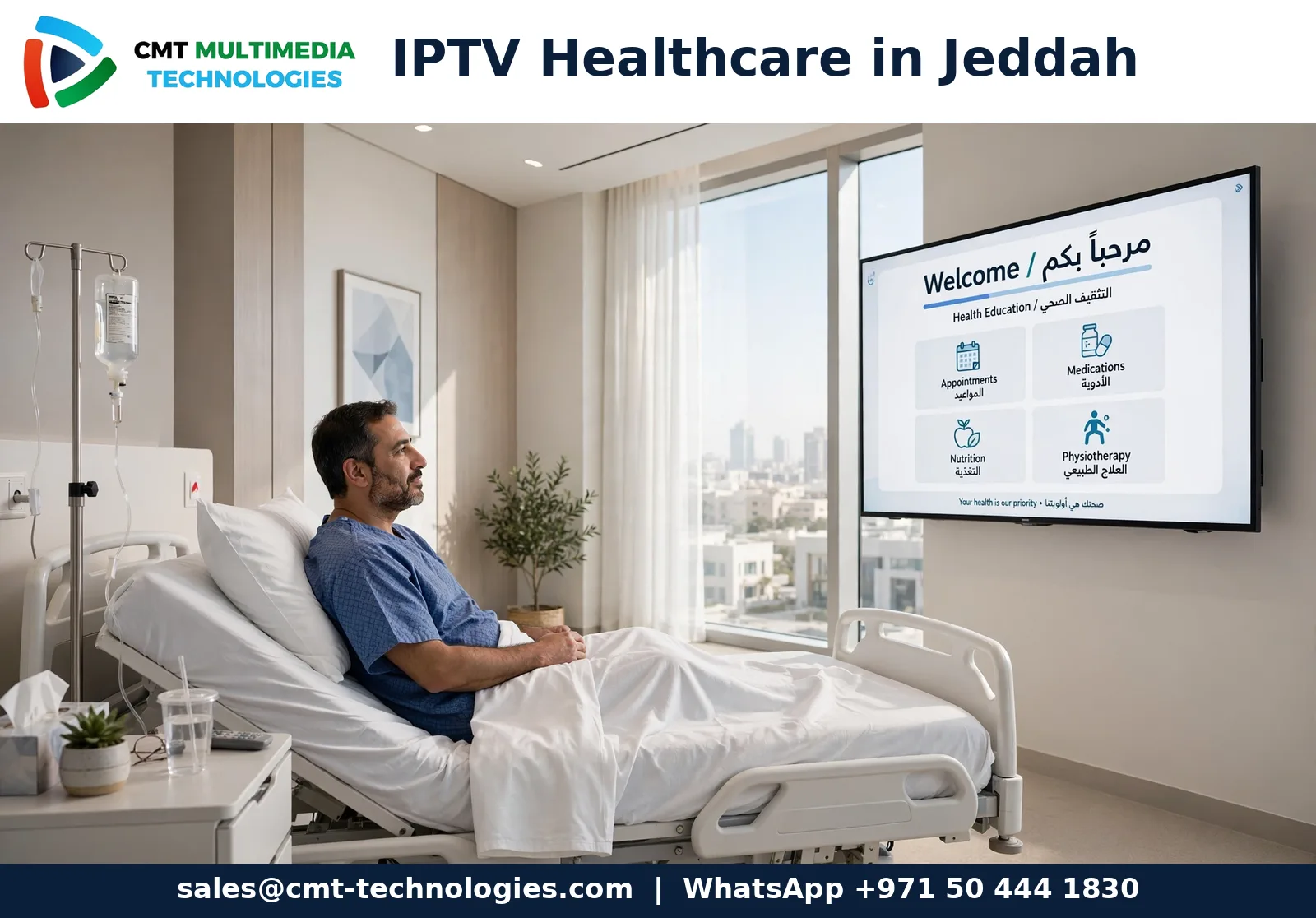
IPTV healthcare in Jeddah is a patient TV system that puts health education, entertainment, meal ordering and service requests on the screen at every bed, all managed from one dashboard. CMT Technologies installs it for Jeddah hospitals and medical centres, with the interface in Arabic and English and content matched to each ward.
A Jeddah hospital bed holds more than illness. The patient may be a resident recovering from surgery, a mother after delivery, or an older pilgrim who fell ill during an Umrah journey far from home. Each of them spends long hours facing the same wall, and the screen on that wall shapes how calm, informed and cared for they feel.
However, in many Jeddah wards that screen is still a plain television with a handful of channels. Care instructions live on paper leaflets that go missing, meal choices travel by word of mouth, and simple requests reach the nurses only when someone walks to the desk. The result is more footsteps for the care team and more waiting for the patient.
This guide explains what a Jeddah healthcare IPTV system includes, the features patients and care teams use, how an installation runs inside a working hospital, and what shapes the cost, so hospital teams can plan with clear facts.
Table of Contents
What IPTV Healthcare in Jeddah Includes
Five parts make up the system, working as one platform from the server room to the screen at each bed:
- Headend and servers. The central equipment that receives channels and content and prepares them for every ward in the building.
- Cloud middleware. The control layer that manages every patient screen: channels, education libraries, menus and hospital information.
- Patient screens. The interface runs on the wall TV facing each bed, in single rooms and in multi bed wards alike. The menus use large, clear text in Arabic and English, so patients of any age can use them without help.
- Patient services. Health education, entertainment, meal ordering, service requests and hospital information. The same platform also carries the screens in waiting areas, clinics and discharge lounges.
- Monitoring and support. The central team watches every screen, so the system flags a dark screen at a bed to the team at once.
Overall, the platform is the healthcare side of our wider work on Healthcare IPTV in Saudi Arabia, installed here for the hospitals of the Red Sea coast.
Why Jeddah Hospitals Are Upgrading the Patient Screen
Jeddah is the medical door of the western region. Patients travel to its hospitals from the whole coast and the smaller cities inland, and the city also receives pilgrims who need care before they can continue their journey or fly home. That mix means one ward can hold several languages, several age groups and very different levels of confidence with technology.
In addition, Jeddah hospitals compete on patient experience in a way they did not ten years ago. Families choose private care by reputation, and reputation now includes the room itself: how the patient passed the days, how clearly the hospital explained the treatment, and how quickly small requests were answered. A good patient screen speaks to all three in the patient own language. Indeed, discharge teaching is where it earns its keep first, because a patient who has watched the recovery videos goes home understanding the medicine schedule and the warning signs.
The same platform runs in the capital in our IPTV healthcare in Riyadh guide, where the hospital mix and the patient profile change again.
Features Patients and Care Teams Use
In fact, the features that matter are the ones used every day on a real ward:
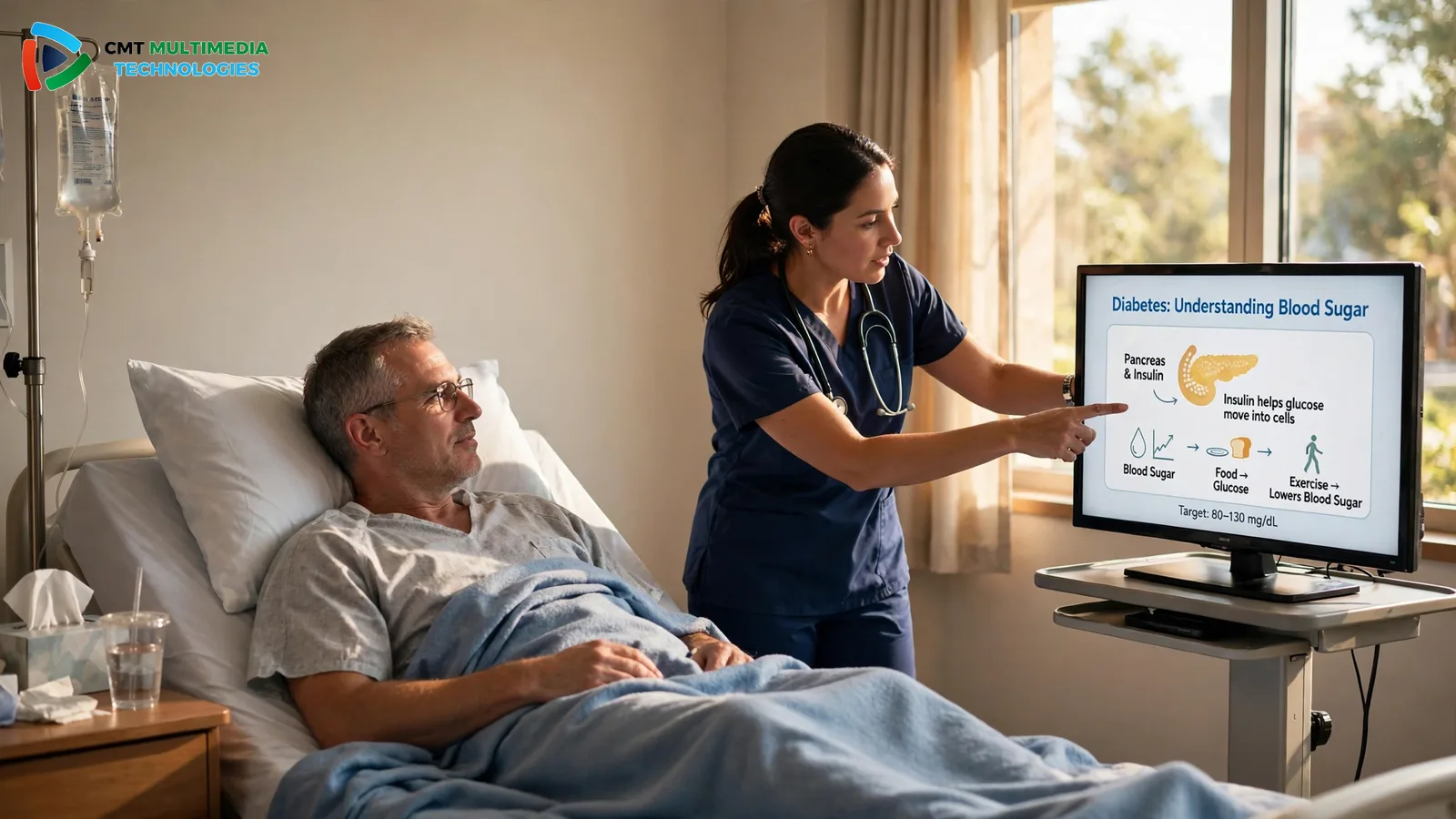
- Health education library. Short videos and guides on diabetes, heart care, recovery after surgery, newborn care and the patient own treatment plan, in Arabic and English, assigned by the care team to the right bed.
- Entertainment that rests the patient. Television channels, films and radio in several languages, at a volume and a schedule the ward controls, so the room stays calm at night.
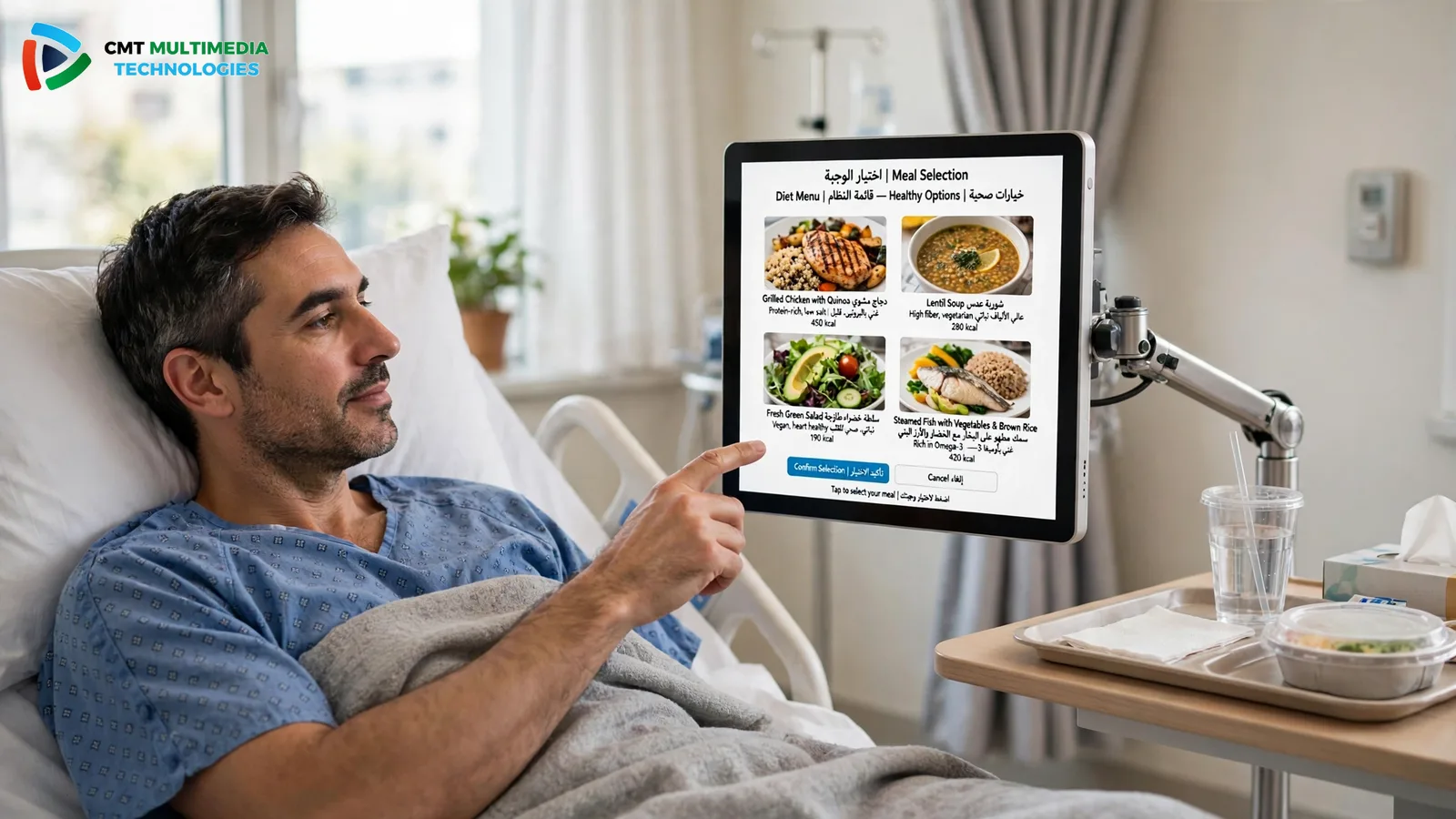
- Meal ordering from the bed. Patients choose from the diet menu the kitchen has approved for them, and the order reaches the kitchen with the bed number attached. Then the patient sees on screen when the meal is coming.
- Requests without waiting. Water, bedding, cleaning and assistance requests go from the screen to the right desk, so nurses spend their rounds on care instead of errands.
- Hospital information and wayfinding. Clinic timings, pharmacy and laboratory locations, visiting hours and discharge steps, shown in the patient language.
- Welcome and discharge screens. The screen greets the patient by name at admission and walks the family through the discharge checklist at the end of the stay.
Above all, the system keeps each bed personal: the content follows the patient treatment and language, and it clears at discharge for the next admission.
How a Jeddah Hospital IPTV Project Runs
Hospital work runs around patient care, so the sequence reflects that:
- Site survey. The team checks bed counts, existing screens, the network and headend space, ward by ward, including waiting areas and clinics.
- Design and proposal. CMT and the hospital team then agree the education library, the languages and a clear per bed price.
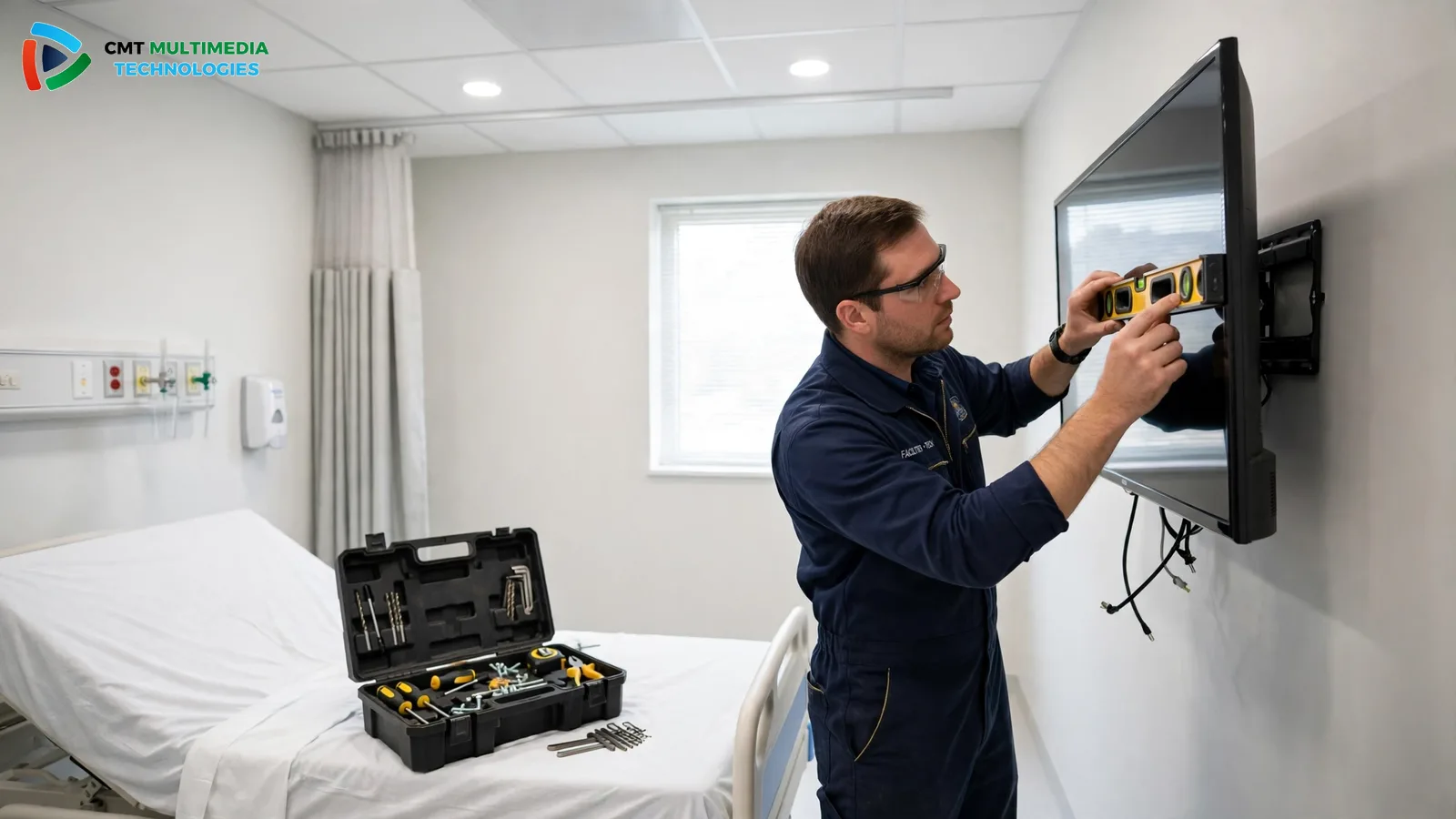
- Installation. Headend first, then ward by ward, in empty rooms and in the quiet windows the hospital sets, with infection control rules followed on every floor.
- Training and handover. Nursing, admissions and IT teams then learn the dashboard: content, patient moves, menus and the everyday checks.
- Monitoring and support. Finally, the team watches the screens around the clock after handover, with support in place through the Hajj and Umrah peaks.
It is the same careful sequence behind our wider IPTV in Saudi Arabia installations for hospitals and hotels across the Kingdom.
What Shapes the Cost of IPTV Healthcare in Jeddah?
The cost depends on the hospital. Therefore, any figure quoted without a survey is a guess. The factors that move it most:
- Number of beds. The headend serves the whole building, so the per bed cost falls as the hospital grows.
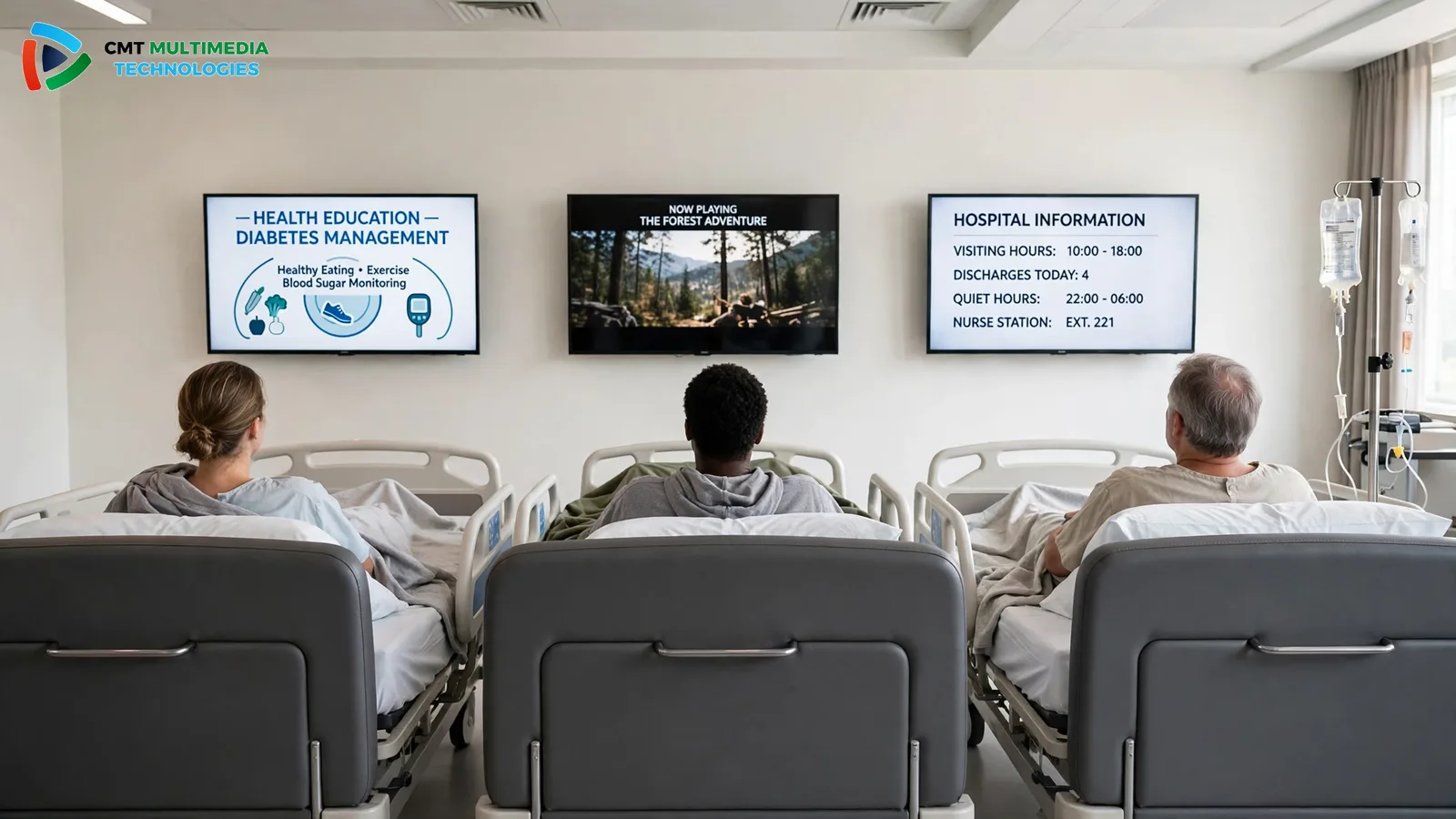
- Screen type. Private rooms take a wall TV each, and multi bed wards take one wall screen per bed, and the survey confirms the mix.
- Network condition. Hospital networks carry medical systems first, and IPTV traffic must stay separate and planned. The survey lists weak points before installation, not during it.
- Education content and languages. Each hospital gets its own education library and language set, matched to its specialties and patients.
- Buildings and towers. Similarly, separate clinic buildings and annexes each need their distribution planned in.
- Support level. Around the clock monitoring is also part of the service price, agreed before work starts.
Survey first, then a proposal with the per bed figure and everything it includes: that is the order that lets a hospital compare providers fairly.
Why Jeddah Hospitals Choose CMT Technologies
CMT Technologies is one team for the whole system: headend, middleware, patient screens, installation and support. In other words, a hospital deals with a single accountable supplier, not a chain of subcontractors. Our engineers have delivered healthcare and hospitality systems across the Gulf, and the team monitors every installation around the clock, fixing most faults before the ward hears about them.
Moreover, the platform runs on the screens the hospital already owns or plans to buy, grows ward by ward and tower by tower, and carries new services on the same system as care standards change, without another rebuild.
Frequently Asked Questions
Can doctors assign education videos to a specific patient?
Yes. The care team assigns education content to a bed from the dashboard, matched to the patient treatment, such as diabetes care or recovery after surgery. The patient then watches it on the bedside screen in Arabic or English.
How do meal orders respect patient diets?
The kitchen sets the approved diet menu for each patient, and the screen shows only those choices. The order then reaches the kitchen with the bed number attached, so the right meal goes to the right bed.
Which languages does the interface support?
Arabic and English come as standard in Jeddah hospitals. Moreover, the platform carries more languages for international patients and pilgrims. The welcome screen opens in the language set for the patient at admission.
Does the system work in multi bed wards?
Yes. In a multi bed ward each bed faces its own wall mounted screen, and patients listen with headphones or bedside speakers, so every patient watches without disturbing the others.
How does installation work in a hospital that is full?
The team works ward by ward, in empty rooms and quiet windows, and follows the hospital infection control rules on every floor. Meanwhile, the survey produces a timetable that keeps patient care and installation running side by side.
What happens to patient content at discharge?
The screen clears itself at discharge: the system wipes education assignments, requests and personal settings, and the next patient starts with a clean welcome screen.
Start Your Healthcare IPTV Project in Jeddah
Tell us your bed count, your specialties and the screens you run today. Then we will survey the hospital and prepare a clear proposal with a personalised demo of the CMT platform.