

IPTV Healthcare in Makkah | CMT Technologies
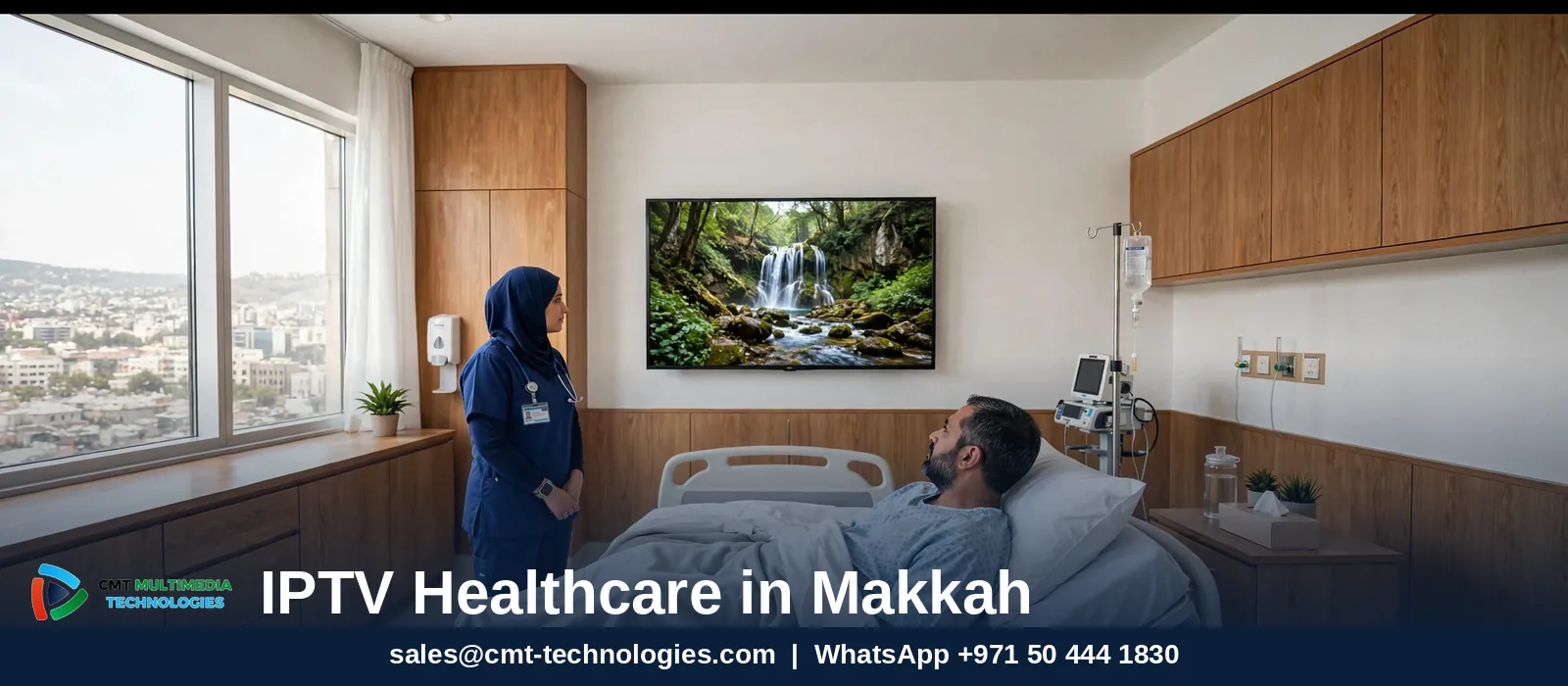
IPTV healthcare in Makkah gives hospital patients a bedside TV that carries live channels, health education, prayer times and hospital information in their own language. CMT Technologies supplies and supports these hospital IPTV systems for Makkah hospitals, including the Hajj and Umrah seasons when patient numbers rise sharply. Request a demo or a site survey to start.
This guide covers Makkah. For the Kingdom-wide picture, read our IPTV healthcare in Saudi Arabia guide and our healthcare IPTV in Saudi Arabia page, and for the capital see hospital IPTV in Abu Dhabi.
What does bedside TV do for a patient in Makkah?
Bedside TV does far more than pass the time. A patient in Makkah is often far from home, sometimes in a country whose language they do not speak, and a long stay in a ward can feel lonely. The bedside screen becomes their window to the hospital and to home: live channels in their language, health education about their own care, meal choices, prayer times, and a simple way to ask for help.
In our experience, the patients who use the screen most are the ones staying longest. A patient recovering over several days checks the same screen for their meal, their medication time, and what happens next in their care. When that information is on the patient TV in front of them, they ask the nurse fewer repeated questions, and the nurse has more time for care.
A hospital IPTV system in Makkah is therefore not a hotel extra placed in a hospital. It is part of the care itself: the screen carries what the patient needs to know, in a language they understand, at the bedside where they can actually see it.
How do Makkah hospitals cope during Hajj and Umrah?
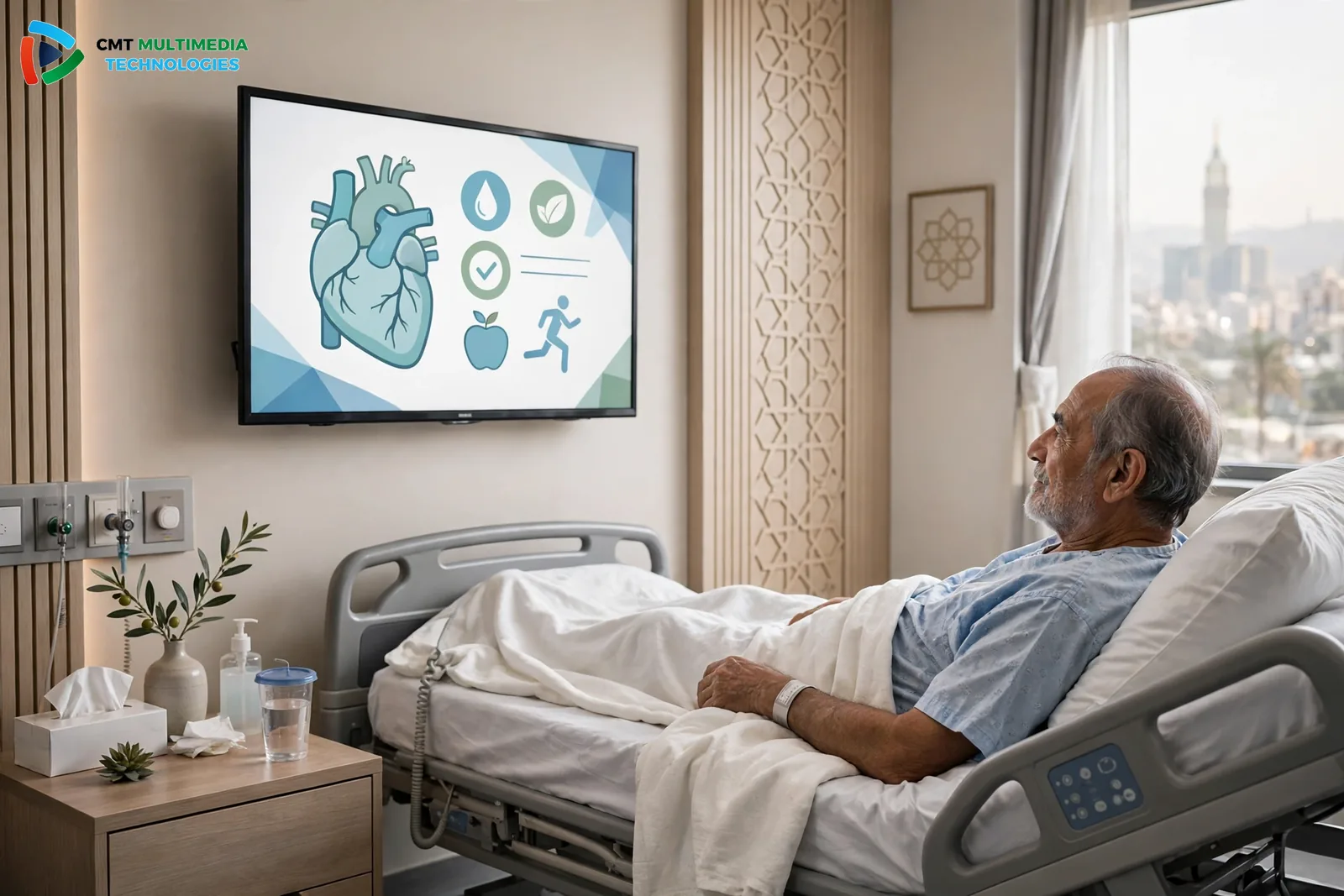
Makkah hospitals cope during Hajj and Umrah by planning for surge capacity before the season starts. Patient numbers rise sharply as pilgrims arrive from every country, and wards that run quietly for most of the year fill up, with temporary beds and extra staff brought in. A hospital IPTV system built for Makkah must scale the same way: new beds join the system without a fresh installation, and the same channel list, menus and announcements reach every ward from one place.
The busiest wards during the season are the ones treating pilgrims, and those patients bring two extra needs. First, language: a pilgrim patient may speak Urdu, Turkish, Indonesian, French or one of many other languages, and the bedside screen must speak to them in theirs. Second, family: a pilgrim in hospital is often thousands of kilometres from home, and the screen is one way the hospital keeps them connected and informed.
Planning matters more than equipment here. A system installed in a quiet month and never tested under load will fail in the season that matters most. CMT surveys the hospital, agrees the channel list and languages with the team, and tests the system bed by bed before handover, so the season starts with a system that already works at full capacity.
Can patients choose their own language?
Yes. Patients choose their own language on the bedside TV, and the menus, health education and hospital information follow that choice. Arabic comes first, with English and the main pilgrim languages alongside it, so a patient reads their meal, their medication guidance and their discharge information in the language they understand best.
This matters most for health education. A short video about recovery, medication or wound care only helps if the patient understands it. In our experience, multilingual patient guides are the single most used part of a hospital IPTV system in Makkah, because they answer the questions patients actually have, in words they recognise.
Language selection sits at the bedside, not at a central desk. The patient or a family member changes it from the bed, and the nurse does not need to be called to translate a menu. Wayfinding information for visitors follows the same languages, so families find the right ward without asking at every desk.
What control do nurses have over the ward screens?
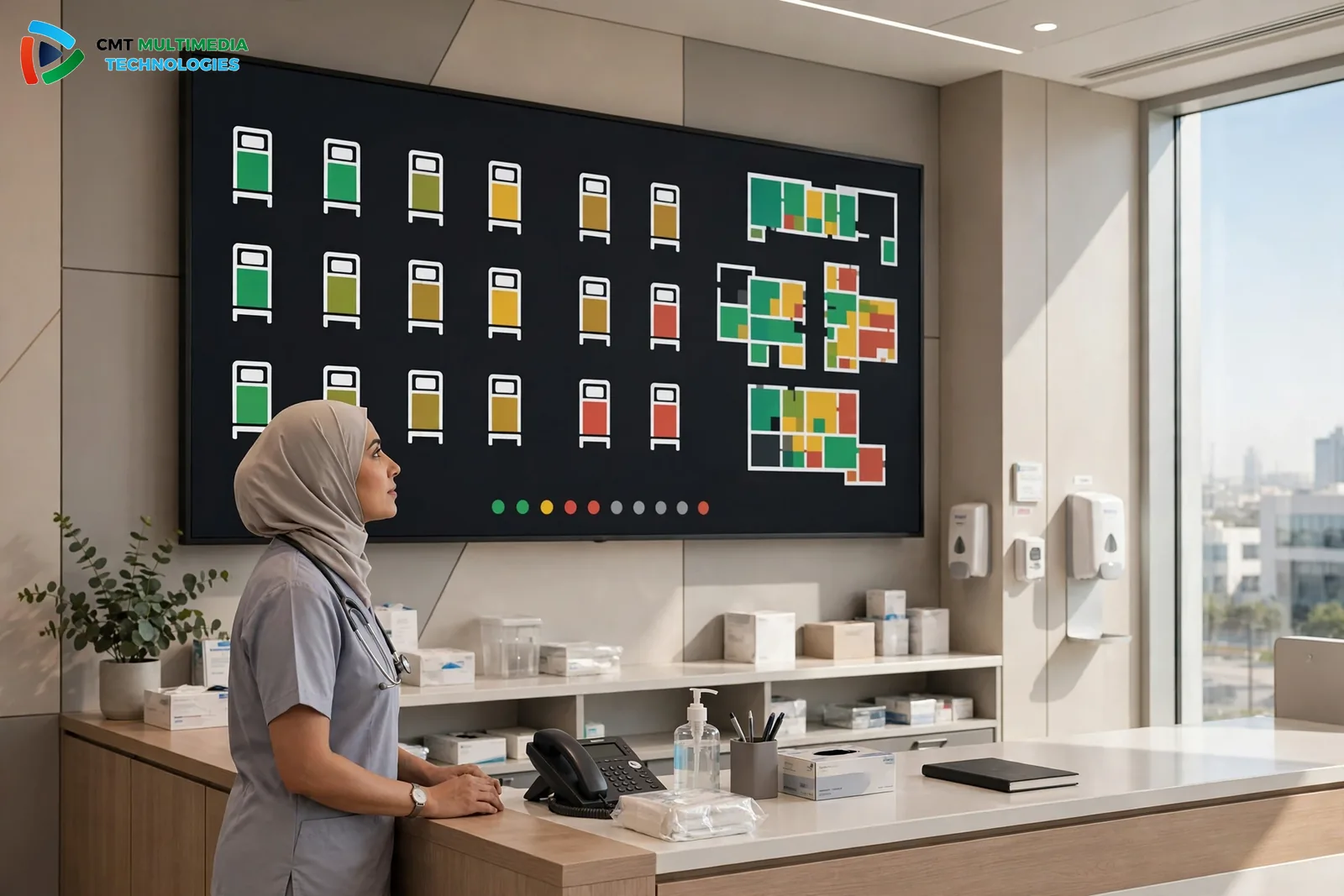
Nurses control the ward screens from one place: they set quiet hours, send a ward-wide announcement, change the channel list for a ward, and mute or pause screens around prayers and rest times. Control is per bed and per ward, so one restless patient does not decide the volume for the whole ward, and one ward does not decide it for the whole hospital.
Cleaning and infection control shape the design too. Bedside screens and controls are chosen so ward staff can clean them quickly between patients, with no loose parts that trap dust. The system itself runs over the hospital network, so there is no extra box at every bed to clean around or to go missing.
Announcements are the quiet workhorse of ward control. A prayer-time reminder, a visiting-hours notice or a safety message reaches every screen in the ward at once, in the languages those patients use. The nurse sends it once, and the whole ward sees it.
How are prayer times shown on the hospital TV?
Prayer times are shown on the hospital TV as a daily display with the Qibla direction, and content pauses or mutes respectfully around prayers. The schedule updates automatically, so no member of staff has to retype times every day, and the display is the same on every screen in the hospital.
For many patients in Makkah, prayer is part of the day, not an interruption to it. The TV respects that: programmes pause, the prayer-time display takes the screen, and the programme returns afterwards. Visitors see the same display in waiting areas, so the whole hospital keeps one rhythm.
Qibla direction is shown on the bedside screen and on ward screens, so a patient who can pray in bed knows the direction without asking. It is a small feature, but in Makkah it is the feature patients notice first.
How do families stay in touch with a patient?
Families stay in touch through the bedside screen and through the information it carries. A pilgrim patient far from home worries about two things: their own care, and their family worrying about them. The screen helps both, by showing the patient what is happening in their care and by carrying visitor information, visiting hours and contact details where the family can see them.
Video contact with family depends on the hospital's own policy and network, and CMT sets the system up to match it. What the screen always does is keep the patient informed, so the family hears a calmer, clearer story when they call.
In our experience, a patient who understands their care worries less, and a family that can see the hospital is organised worries less too. The bedside TV is a small part of that, but it is the part the patient sees all day.
How does IPTV work in a Makkah hospital?
Every project follows the same clear steps, so the hospital team knows what happens next at each stage.
- Survey. Bed count, TV models, network and ward layout checked, so the quote and the timeline are based on your hospital, not a guess.
- Design. Channel list, languages, menus, prayer-time display and ward controls agreed, with a sample room signed off before full rollout.
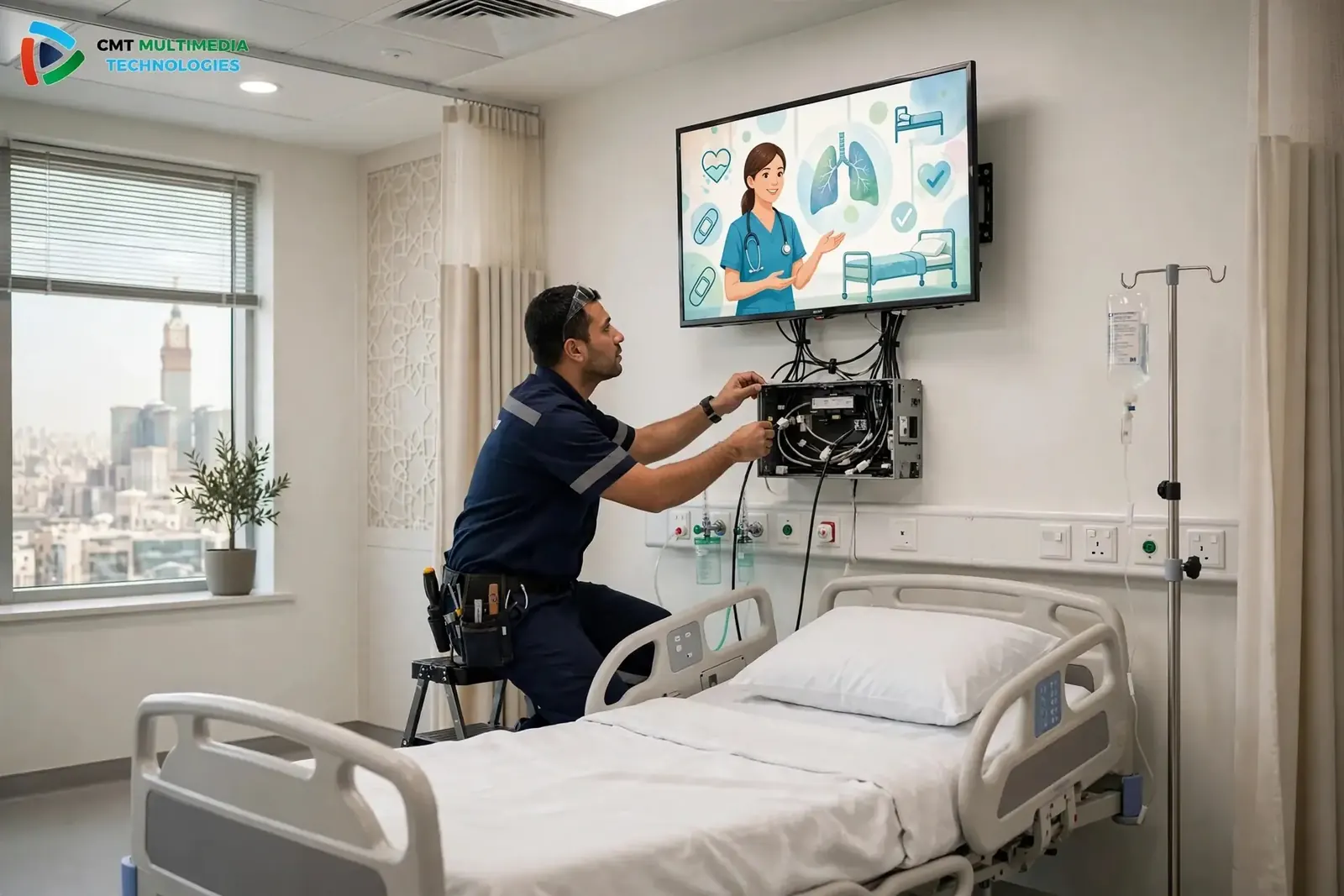
- Installation. Screens and platform installed and tested bed by bed, with staff training before handover. Wards stay open while the work happens.
- Handover and support. Monitoring after handover and support from the team that installed the system, with local support in Saudi Arabia.
Bedside TV or printed leaflets?
The honest comparison is not TV against nothing. It is TV against the printed leaflet, which is what most hospitals still rely on.
Printed leaflets
One language, or two at most. Out of date the moment a menu or a time changes. Lost, torn or taken home. The patient reads it once, if they read it at all.
Bedside TV
Every patient language, updated from one place. Health education as video, not small print. Prayer times and announcements that change themselves. Always at the bedside, always current.
Leaflets still have a place, for the patient who prefers paper. But for the information that changes daily, the screen has already replaced them in the hospitals we work with.
What shapes the price for a hospital in Makkah?
An honest provider quotes after a survey, not before. Four things shape the final price for a Makkah hospital: bed and screen count, which sets the scale of the platform; channel package and languages, including health education content; network work, since a modern network keeps installation simple while an older one may need upgrades; and support cover, including monitoring after handover.
IPTV for hospitals in Makkah is quoted as one clear price for the full project after the survey, with no hidden items added later. A phased rollout is possible, so the busiest wards go live first and the rest follow without closing beds.
Why hospitals in Makkah choose CMT
CMT Technologies brings 18+ years of experience in hospitality and healthcare television, with systems designed and deployed for hospitals across Saudi Arabia. For hospital IPTV in Makkah, CMT stays responsible from survey to support, so the hospital deals with one supplier for the platform, the screens and the service after handover.
- 18+ years of experience in hospitality and healthcare television.
- Multilingual bedside TV, built for Hajj and Umrah patient numbers.
- Ward control, prayer-time display and Qibla direction as standard.
- Local support in Saudi Arabia after handover.
- Demo and site survey before any commitment.
Frequently asked questions
For patients and families
What is IPTV healthcare in Makkah?
IPTV healthcare in Makkah is the bedside TV system for hospitals serving Hajj and Umrah pilgrims: live channels, health education, prayer times, meal choices and hospital information, in the patient's own language, controlled from the bed.
Can I watch TV in my own language?
Yes. You choose your language on the bedside TV, and the menus, health education and hospital information follow that choice, with Arabic first and English and the main pilgrim languages alongside it.
Does the TV show prayer times?
Yes. Prayer times are shown daily with the Qibla direction, and programmes pause or mute respectfully around prayers, on every screen in the hospital.
Can my family contact me through the TV?
Video contact depends on the hospital's own policy and network. The screen always carries visiting hours, ward information and contact details, so your family knows when and how to reach you.
For hospitals
Can one system cover the Hajj season surge?
Yes. New beds join the system without a fresh installation, and the same channel list, menus and announcements reach every ward from one place, so the system scales as patient numbers rise.
How long does installation take?
It depends on bed count, the existing network and whether TVs are reused. A site survey gives the exact timeline, and wards stay open while the work happens, with the busiest wards going live first.
Can our existing TVs be reused?
Yes, in many cases. CMT supports set-top-box-free Smart TVs from LG, Samsung, Philips, Sony and Panasonic, and a survey confirms compatibility for your current screens.
What support do we get after handover?
Monitoring after handover and support from the team that installed the system, with local support in Saudi Arabia. Faults are flagged early, often before patients notice, and your team gets help whenever they need it.
Talk to CMT about IPTV for your hospital in Makkah. Request a demo.
Request a demo