

OTT in Saudi Arabia
OTT in Saudi Arabia means television and film delivered over the internet to apps on smart TVs, phones, tablets and the web, instead of through a dish or a cable line. CMT Technologies builds and runs these streaming platforms for operators, broadcasters and brands across the Kingdom, alongside our IPTV in Saudi Arabia work.
Saudi viewing has already moved to apps. The Kingdom’s audience is young, connected and mobile first, and local and international services have proved how strong the demand for Arabic streaming is. Live sport, Ramadan series and film nights now gather around applications and smart TVs, and every year the share of viewing on traditional channels shrinks further.
However, global apps cannot carry a Saudi business on their own. An operator wants its customers inside its own service, a broadcaster wants its channels and archive under its own name, and a hotel wants guests reaching their accounts on a smart hotel TV without fighting a foreign menu. Owning the platform is how a business owns that audience.
This guide explains what an OTT platform in Saudi Arabia includes, why the Kingdom is ready for it, how a launch runs, and what shapes the cost. If the term itself is new to you, our beginner guide explains how OTT works in plain words first.
Table of Contents
What an OTT Platform in Saudi Arabia Includes
Six parts make up a complete service, working together from the content library to the viewer’s screen:
- Branded apps on every screen. Your own application on Samsung, LG and Android smart TVs, phones, tablets, the web and set-top boxes, carrying your name and your design.
- Arabic and English interfaces. A proper right to left Arabic interface beside the English one, so the service feels local instead of translated as an afterthought.
- Library and live channels together. Films, series and on demand programmes sit beside live channels and catch up viewing in one guide.
- Ways to earn from viewing. In addition, the platform supports pay-per-view for major events, paid packages for premium libraries, and advertising funded free viewing, mixed the way your market needs.
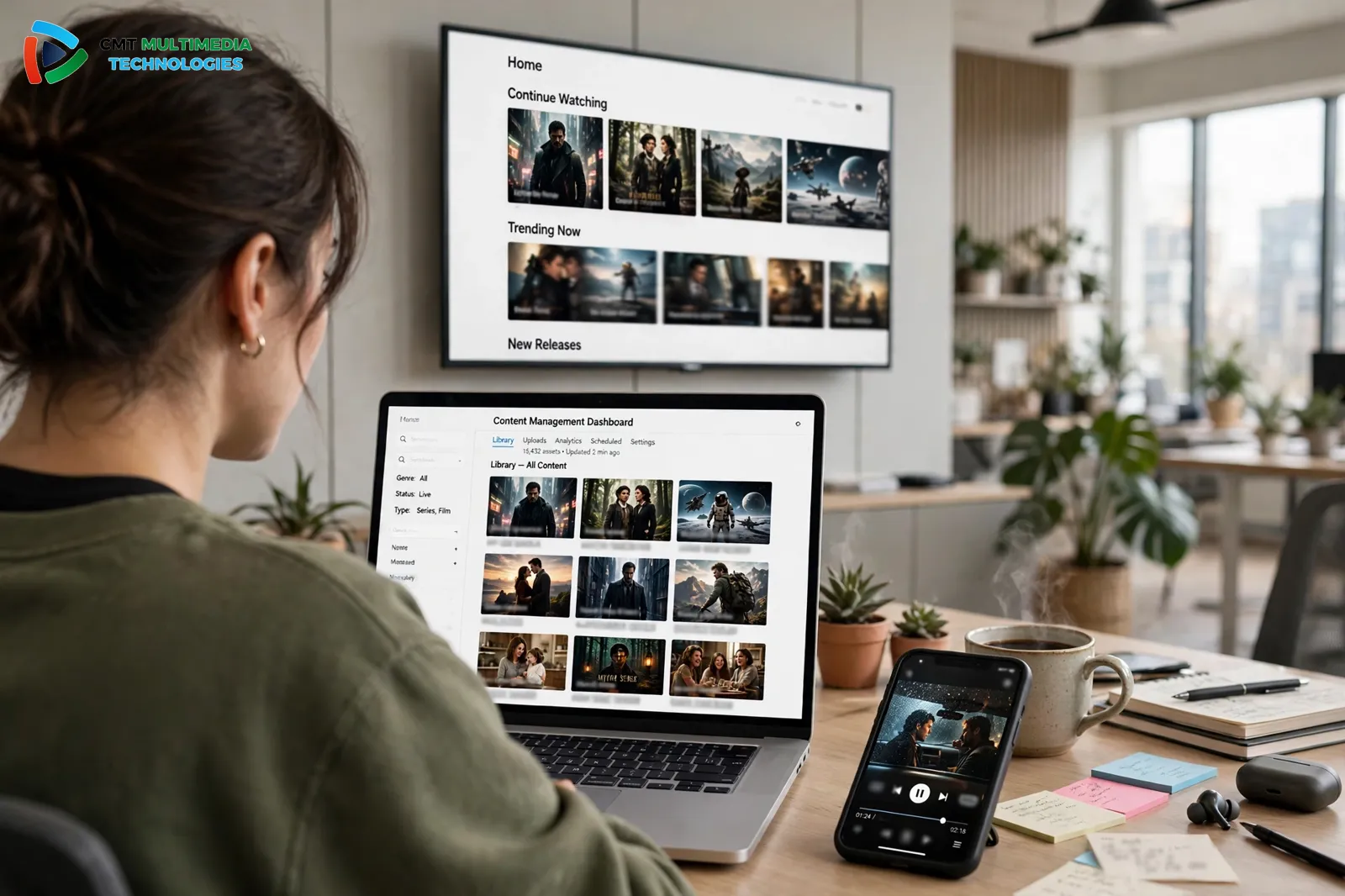
- An operator dashboard. Your team manages content, prices, offers and reports from one panel, and sees what viewers actually watch.
- Protection for your content. Licences, login control and regional rules keep films and sport inside the rights you have bought.
Together, those parts turn a pile of video files into a service a business can sell, support and grow.
Above all, the parts share one library and one set of rules. A film added once appears on every app at the same moment, a price changed in the dashboard reaches every screen together, and a live channel joins the same guide as the films. Because nothing is copied between separate systems, your team runs one service instead of five, and viewers meet the same rows everywhere.
Why Saudi Arabia Is Built for OTT
First of all, the audience is already equipped. Fast home internet and 5G cover the main cities, smart TVs hang in most new homes, and phones carry much of the daytime viewing. A service launched today lands on screens the audience already owns, which is why IPTV and OTT solutions for telecom operators in the Kingdom now treat streaming as the main product, not an extra.
Meanwhile, entertainment itself keeps expanding under Vision 2030. Cinemas, concerts and a fast growing sports calendar, from the Pro League to international boxing and racing weekends, keep creating live moments that audiences refuse to miss. As a result, each of those moments is a streaming moment first, because fans follow on whatever screen is nearest.
Indeed, Ramadan proves the pattern every year. Families gather around series after iftar, viewing peaks hard for a month, and platforms that cannot scale lose the audience they won. A Saudi platform is therefore designed for those peaks from the first day, not patched when they arrive.
Moreover, the audience is young enough to expect this as normal. Most Saudi viewers grew up with a phone in hand, and many households treat the television as one screen among several in the same room. A service that opens quickly, remembers every profile and speaks Arabic naturally therefore feels like the standard, not a luxury. Providers who arrive late must win viewers away from habits that are already years old.

The Viewing Experience Saudi Audiences Expect
In fact, viewers compare every new service against the best app they already use, and four things decide whether they stay:
- Start anywhere, continue anywhere. A series begun on the phone in a taxi continues on the TV at home from the same second, under one account.
- Arabic done properly. Menus, search and programme rows in natural Arabic, with Saudi and regional content easy to find, not buried behind imported rows.
- Live sport without the panic. In particular, big matches must start on time and hold their quality when the whole country presses play at once.
- Family controls and downloads. Children get their own profiles and a PIN protects adult content, while downloads carry viewing onto flights and long drives.
Above all, the service must feel effortless: open the app, find something in seconds, and watch without thinking about the technology at all.
A personal touch also keeps viewers returning. The home screen learns from each profile, so a football fan sees the weekend matches first while a drama fan meets the new Ramadan series at the top. Search understands titles typed in Arabic or English, and recommendations stay inside the viewer’s own taste instead of pushing the same rows to everyone. As a result, the service feels made for the household, not rented from a catalogue abroad.
How an OTT Launch in Saudi Arabia Runs
A launch follows a clear sequence, so the service opens as a finished product instead of an experiment:
- Content and audience plan. The team first agrees what the library holds, which languages lead, and which viewers the service must win.
- Apps and design. CMT then builds the branded apps and interfaces in Arabic and English, shaped around your content and your audience’s habits.
- Platform and payments. The library, live channels and protection are connected, with payment routes Saudi viewers actually use, such as mada and mobile wallets.
- Testing on real devices. Next, every app is tested across the televisions, phones and boxes your audience owns, including older models still in Saudi homes.
- Launch and peak readiness. Finally, the service opens with capacity planned for Ramadan evenings and match nights, monitored by our team around the clock.
It is the same disciplined sequence behind our IPTV hospitality solutions, applied to a public audience instead of guest rooms.
The work does not stop at launch, either. New televisions and phone models arrive every year, and each one joins the testing list before viewers buy it. Seasonal rows for Ramadan, national celebrations and school holidays are prepared in the dashboard ahead of time, so the home screen changes with the calendar without a rebuild. In this way, the service your audience opens in its second year feels newer than the one they joined.
What Shapes the Cost of an OTT Platform in Saudi Arabia?
The cost depends on the service you plan to run. Therefore, any figure quoted before that plan exists is a guess. The factors that move it most:
- Number of apps. Each screen family, from smart TVs to phones and the web, adds design and testing work, so the device list is agreed first.
- Live streaming. Similarly, live channels and events need more capacity and monitoring than an on demand library alone.
- Content and rights. Likewise, your library, its licences and the countries it may play in are priced into the plan openly.
- Languages and versions. Arabic and English interfaces, subtitles and dubbed versions each add a share, and the plan shows it line by line.
- Expected audience peaks. A service built for a finals night costs more to run than one built for steady evening viewing, because delivery capacity follows the peak.
- Support and updates. Around the clock monitoring, app updates and new device releases are also part of the running cost, agreed before launch.
A plan first, then one clear proposal covering build and running costs together: that is the order that lets an operator compare providers fairly.
A phased launch also keeps the first step smaller. Many operators open with the core apps and an on demand library, then add live channels and extra devices once the audience grows. Because the platform was designed for those additions, the second phase builds on the first instead of replacing it, and the early spending keeps working.
Why Saudi Operators and Brands Choose CMT Technologies
CMT Technologies is one team for the whole service: platform, apps, content tools and support, delivered from the Gulf for Gulf audiences. In other words, you sign one contract and call one team when a match night or a Ramadan premiere is coming, instead of chasing an app developer, a hosting company and a support desk in three countries.
The proof is already live in the Kingdom. Our team built the SBC OTT solution in Saudi Arabia and the Mobily MView OTT platform, so the lessons of real Saudi audiences, real peaks and real Arabic interfaces are built into every new launch. Moreover, the platform grows with you: more titles, more devices and more viewers join the same service, without a rebuild each time the audience doubles.
Support also speaks your audience’s language. The team works in the Gulf time zone, answers in Arabic and English, and knows the local calendar, from Ramadan viewing peaks to national day celebrations. When a premiere or a final is hours away, you reach people who understand exactly what that evening means for your numbers.

Frequently Asked Questions
What does OTT mean, in simple words?
OTT means television delivered over the top of the internet, straight to apps on the viewer’s own screens. There is no dish and no cable line involved. Instead, the viewer opens your app on a TV, phone or tablet and watches films, series or live channels.
Which devices can our streaming service run on?
The service runs on Samsung, LG and Android smart TVs, iPhone and Android phones and tablets, web browsers and set-top boxes. The device list is agreed in the plan, and every app is tested on real devices before launch.
Can the apps be fully Arabic?
Yes. The interface is designed in Arabic from the start, with a proper right to left layout beside the English version. Content rows, search and descriptions work in both languages, so Arabic viewers never feel like guests in their own service.
How do we earn money from the platform?
Most Saudi services therefore mix three routes: pay-per-view for major live events, paid packages for premium libraries, and advertising on free viewing. The mix is set in your dashboard, and it can change per title, per season or per audience.
Can we stream live sport and events?
Yes. Live streaming is part of the platform, with capacity planned for the peaks that Saudi sport creates. The operations team monitors the stream during events, so problems are handled while the audience is watching, not after.
How long does an OTT launch take?
It depends on the scope. A focused on demand service launches faster than a full platform with live channels and many apps. The plan sets the launch date before building starts, and the date already includes testing and peak readiness.
Can we bring our existing content library with us?
Yes. Your films, series and recordings move into the new platform during the build, with their artwork, descriptions and categories organised in the dashboard. Live channels you already carry are connected as well, so viewers find everything in one guide from the first day.
Start Your OTT Service in Saudi Arabia
Tell us what you want to stream, who it is for, and which screens matter most. Then we will prepare one clear plan and proposal, with a personalised demo of the CMT platform running your kind of content.