

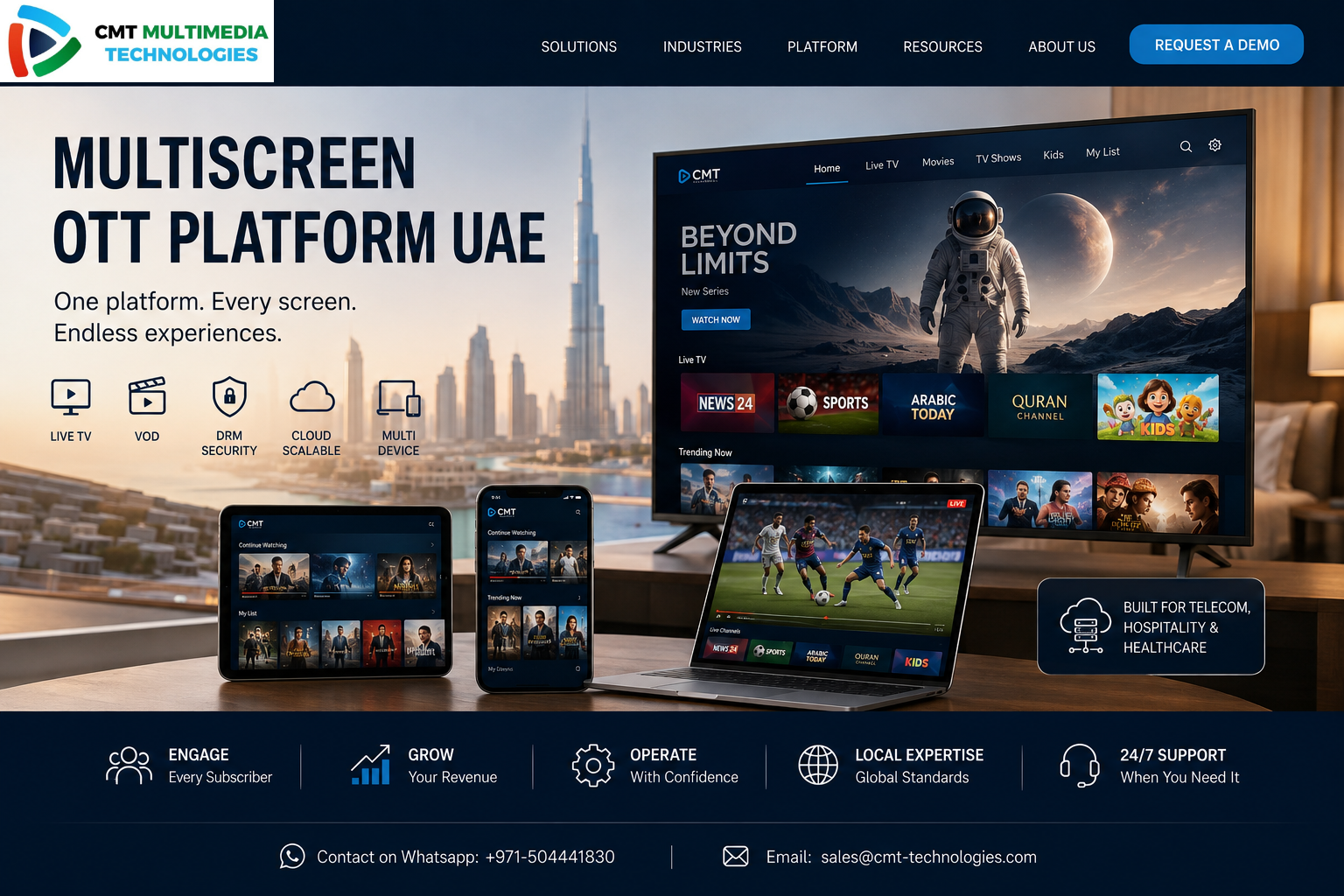
Multiscreen OTT Platform UAE: What CMT Built
A multiscreen OTT platform UAE operators can actually launch on schedule needs more than a video player and a subscription button. It needs middleware that talks to billing, DRM that satisfies content owners, and an app layer that works the same way on a smart TV, a phone, and a hotel room screen without three separate development teams. CMT Technologies has built this stack for telecom operators and hospitality groups across the GCC, and the gap between a working platform and a demo that looks good in a pitch meeting shows up fast once real subscribers start streaming.
This guide covers what a multiscreen OTT platform actually includes, how it differs from IPTV, and where CMT’s over-the-top streaming platform fits for UAE telecom operators, hotels, and hospitals. For the regulatory side of any UAE streaming deployment, the TDRA sets the licensing and content framework every OTT launch has to work within.
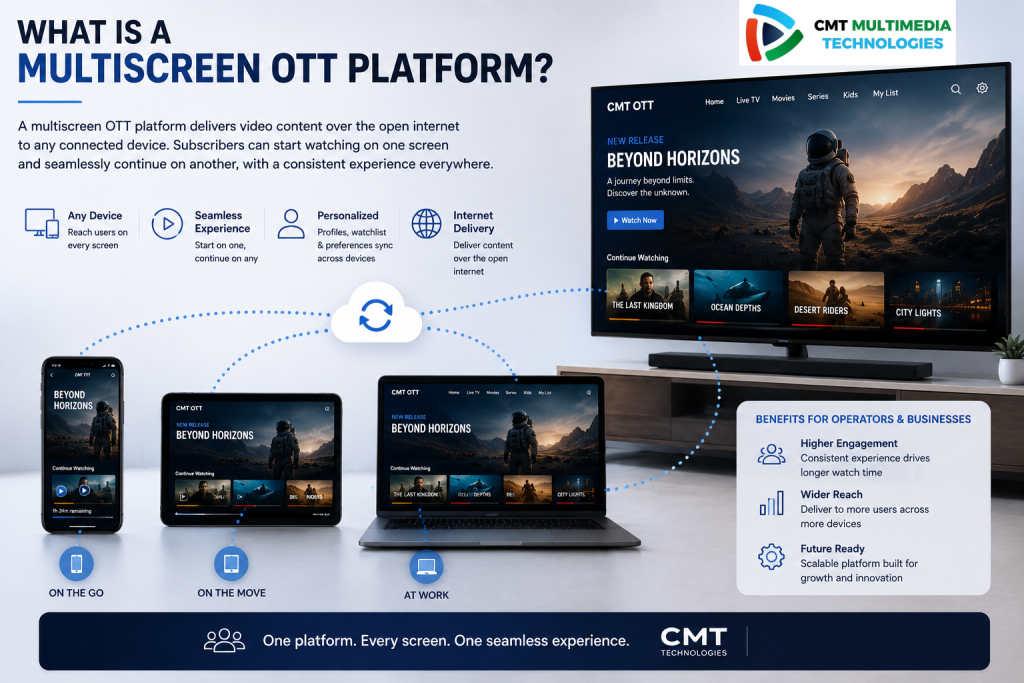
What Is a Multiscreen OTT Platform?
A multiscreen OTT platform delivers video content over the open internet to any connected device, phone, tablet, smart TV, or set-top box, rather than through a dedicated, closed network. The “multiscreen” part means a subscriber starts a show on their phone during a commute and picks it up on the living room TV that evening, with playback position, subtitles, and preferences carried across every screen automatically.
For a telecom operator or hospitality group in the UAE, this isn’t a nice-to-have anymore. Subscribers expect the same experience they get from global streaming services, and a platform that only works well on one device type loses adoption fast, regardless of how good the content library is.
What Is the Difference Between IPTV and OTT?
IPTV runs over a managed, private IP network, usually the operator’s own infrastructure, which gives more control over quality but limits delivery to devices on that specific network. OTT runs over the public internet, reaching any device with a connection, which is why hotels increasingly pair the two: IPTV for guaranteed in-room quality, OTT for guests who want to keep watching on their phone after checkout.
A video on demand platform in the UAE built the right way can actually serve both use cases from one backend, which is where a lot of vendors selling separate IPTV and OTT products start to look expensive and redundant.
Core Components of CMT’s OTT Middleware Solution
CMT’s OTT middleware solution handles the parts that don’t show up in a demo but decide whether the platform survives contact with real subscribers:
- Content management system (OTT) for organizing, scheduling, and publishing video libraries across live channels and VOD
- DRM protection for streaming in the UAE, meeting the content licensing requirements studios and broadcasters expect before granting rights
- OTT billing engine that handles subscriptions, pay-per-view, and bundled packages without a separate finance system bolted on
- Cloud-based OTT infrastructure that scales up during peak viewing hours, like a major sports fixture, without the platform buckling
- OTT content delivery network tuned for the region, so buffering during a live event doesn’t become the story of the launch
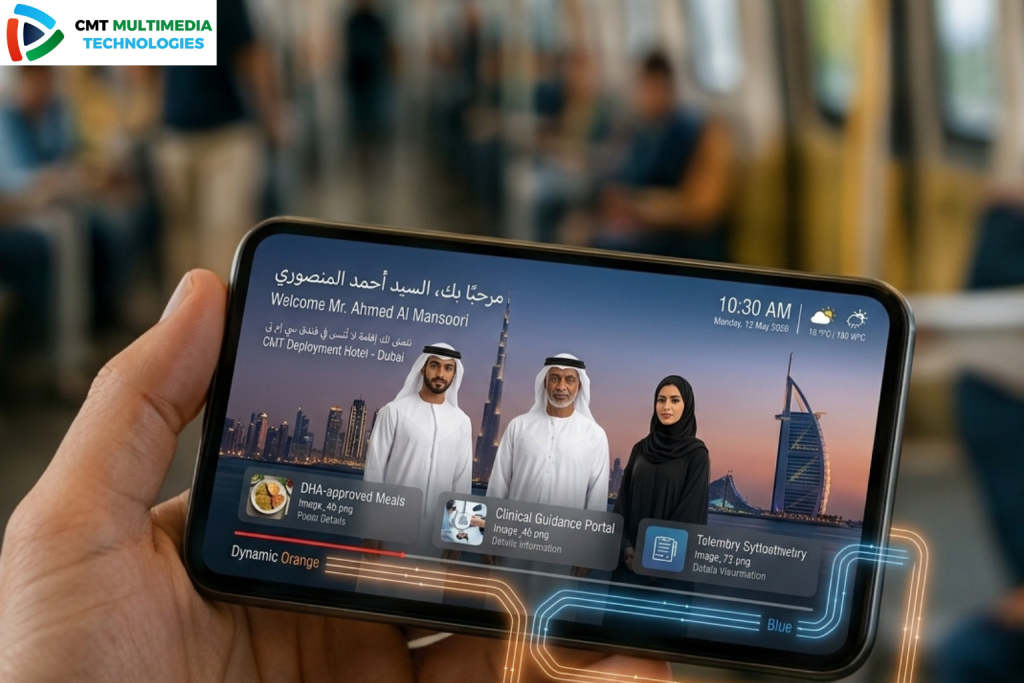
Which OTT Platform Is Best for Hotels in the UAE?
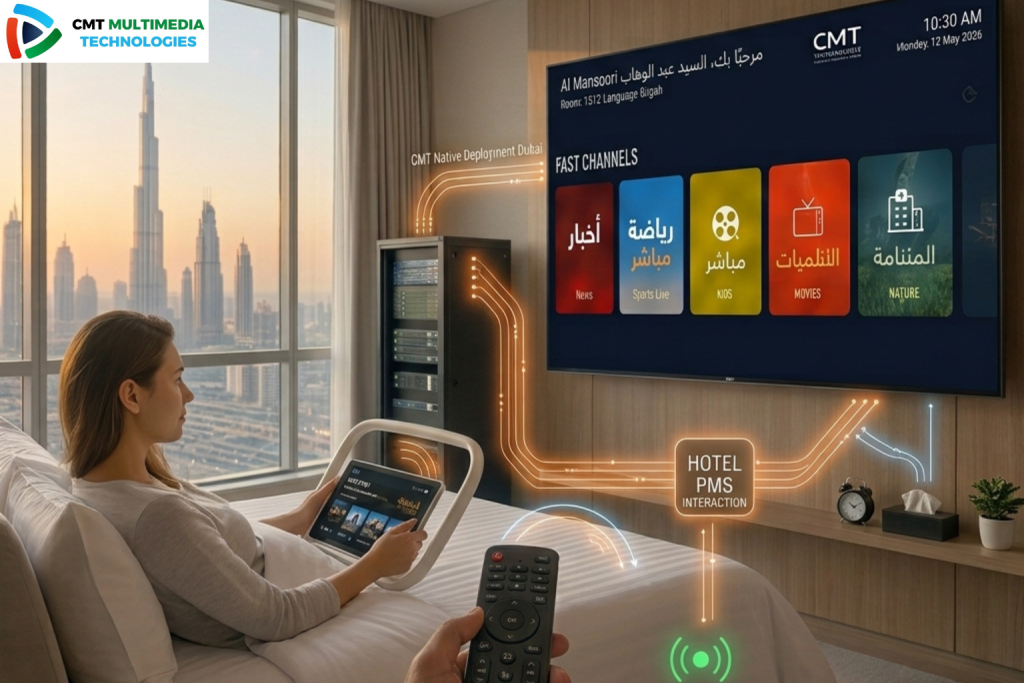
The right choice for a hotel depends on whether guests need in-room casting, VOD libraries, or both, alongside how tightly the platform needs to sync with the property’s PMS. A hotel VOD system in the UAE built on a multiscreen foundation lets guests browse and resume content on their own device before switching to the room TV, which matters most for longer-stay guests who want continuity across a multi-night visit. CMT’s hospitality IPTV solutions for UAE hotels run on the same underlying middleware as the telecom-facing OTT platform, so a hotel group isn’t paying for two unrelated systems that happen to share a logo.
Smart TV and Android TV App Deployment
A platform is only as good as the app running on the device a subscriber actually owns. Smart TV apps in the UAE need to run cleanly across Samsung Tizen, LG webOS, and Android TV, since assuming one dominant platform is a fast way to alienate a chunk of the subscriber base. Android TV app deployment specifically matters for operators targeting set-top box replacements, since a growing share of UAE households are moving away from dedicated boxes toward smart TVs and streaming sticks running Android TV natively.
CMT builds and maintains these apps as part of the platform rather than treating them as a one-time deliverable handed off after launch. Firmware updates on Samsung and LG hardware happen regularly, and an app that isn’t actively maintained tends to break quietly, usually right when subscriber complaints start piling up.
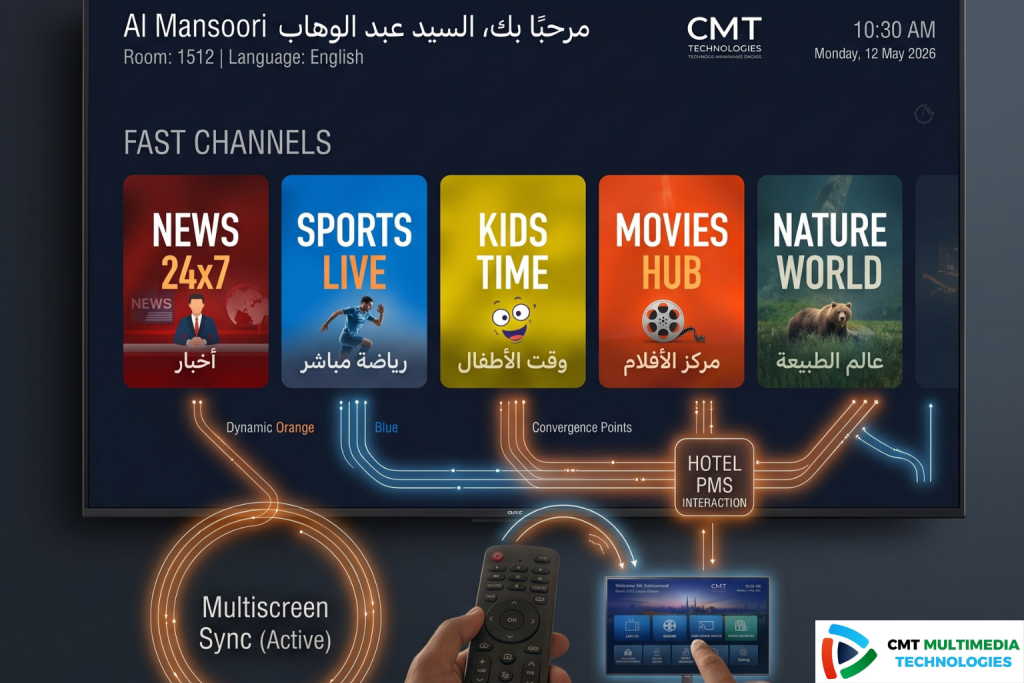
FAST Channels and What They Add to an OTT Platform
FAST channel platforms in the UAE, free ad-supported streaming television, are becoming a real part of how OTT operators fill out their content offering without licensing every title as premium VOD. For a telecom operator building an enterprise OTT solution, adding FAST channels gives free-tier subscribers something to watch immediately, which helps conversion later when they’re offered a paid upgrade.
How Do Telecom Operators in the UAE Launch OTT Services?
An OTT platform launch in the UAE 2026 timeline typically runs through content licensing negotiations, middleware and billing integration, DRM certification, app store approval for smart TV and mobile apps, and a soft launch period before full marketing. The licensing and DRM certification steps are usually where timelines slip, since they depend on third parties outside the operator’s direct control. Working with a middleware provider that already has DRM relationships in place, rather than starting those negotiations from scratch, can shave weeks off the schedule.
Can Hospitals Use OTT Platforms for Patient Entertainment?
Yes, and this is one of the more underused applications of multiscreen OTT technology in the region. A patient entertainment system built on an OTT-capable platform lets patients access content on a bedside terminal or their own device, with the same middleware handling content licensing and delivery that a telecom operator would use. For hospitals specifically, this pairs well with multilingual content libraries and Quran channel access, similar to what CMT builds into its hospitality deployments.
Getting an OTT Platform Right the First Time
The operators and hotel groups that get the most out of an OTT streaming solution treat it as infrastructure, not a single project with a launch date and an end date. Content libraries need ongoing management. Apps need updates when device manufacturers push firmware changes. Billing needs to handle new package types as the business evolves. A multiscreen video streaming platform built for the Middle East, with regional DRM relationships and local support already in place, tends to hold up better over years than a platform assembled from disconnected vendors chasing the lowest quote on each individual piece.
Connect with CMT Technologies
Contact us via our website to schedule your personalized demonstration.
Demo
FAQs
What is a multiscreen OTT platform?
A multiscreen OTT platform delivers video content over the internet to multiple device types, phones, tablets, smart TVs, and set-top boxes, with playback state and preferences synced across every screen a subscriber uses.
What is the difference between IPTV and OTT?
IPTV delivers content over a managed private network, typically the operator’s own infrastructure. OTT delivers over the open internet, reaching any connected device without requiring access to that private network.
Which OTT platform is best for hotels in the UAE?
The best option depends on whether the property needs in-room casting, VOD libraries, or a combined system that syncs with the hotel’s PMS. A platform built on shared middleware avoids running separate, disconnected systems for IPTV and OTT.
How do telecom operators in the UAE launch OTT services?
Launch typically involves content licensing, middleware and billing integration, DRM certification, app store approval, and a soft launch phase. Licensing and DRM steps usually take the longest, since they involve third-party content owners.
Can hospitals use OTT platforms for patient entertainment?
Yes. A patient entertainment system built on OTT-capable middleware can deliver content to bedside terminals or personal devices, using the same content licensing and delivery infrastructure built for telecom-facing platforms.