

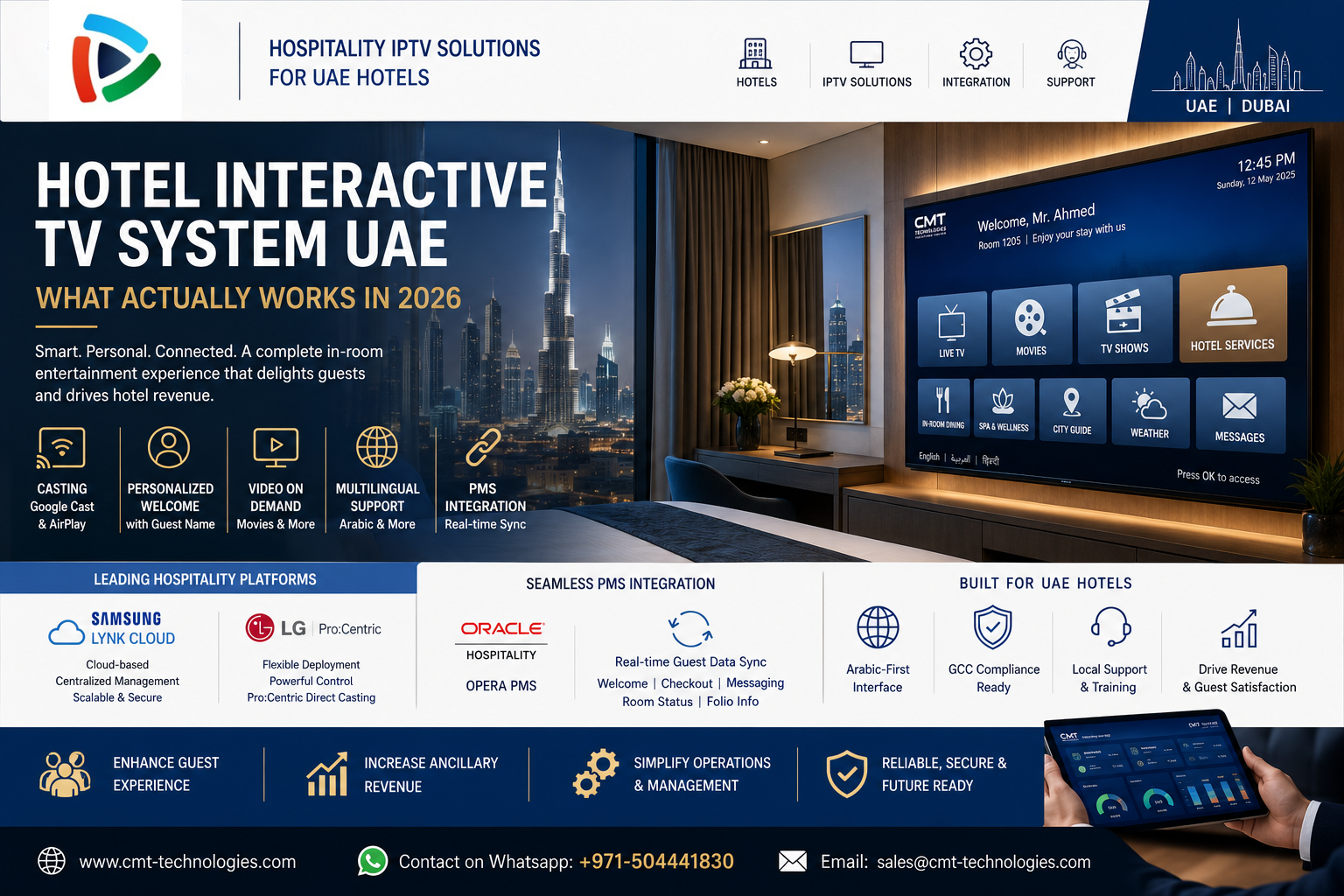
Hotel Interactive TV System UAE: What Actually Works
A hotel interactive TV system UAE properties choose today looks nothing like the cable box guests remember from a decade ago. It’s a platform that syncs with the front desk, lets guests cast their own Netflix account, and doubles as a way to sell spa bookings without a phone call. Most hotel groups evaluating this technology get stuck comparing channel counts, when the real differences show up in PMS integration, casting support, and how the system handles a fully Arabic-speaking guest list.
This guide breaks down what a hotel interactive television system in Dubai and across the wider UAE should actually include, how Samsung’s and LG’s hospitality platforms compare, and where CMT Technologies’ hospitality IPTV solutions for UAE hotels fit into that picture. Most procurement teams start this process comparing channel counts, then realize halfway through that the harder questions are about PMS sync, casting reliability, and who actually owns the middleware once the contract is signed. For background on the regulatory side of any UAE telecom deployment, the TDRA sets the framework every hospitality IPTV rollout has to work within.
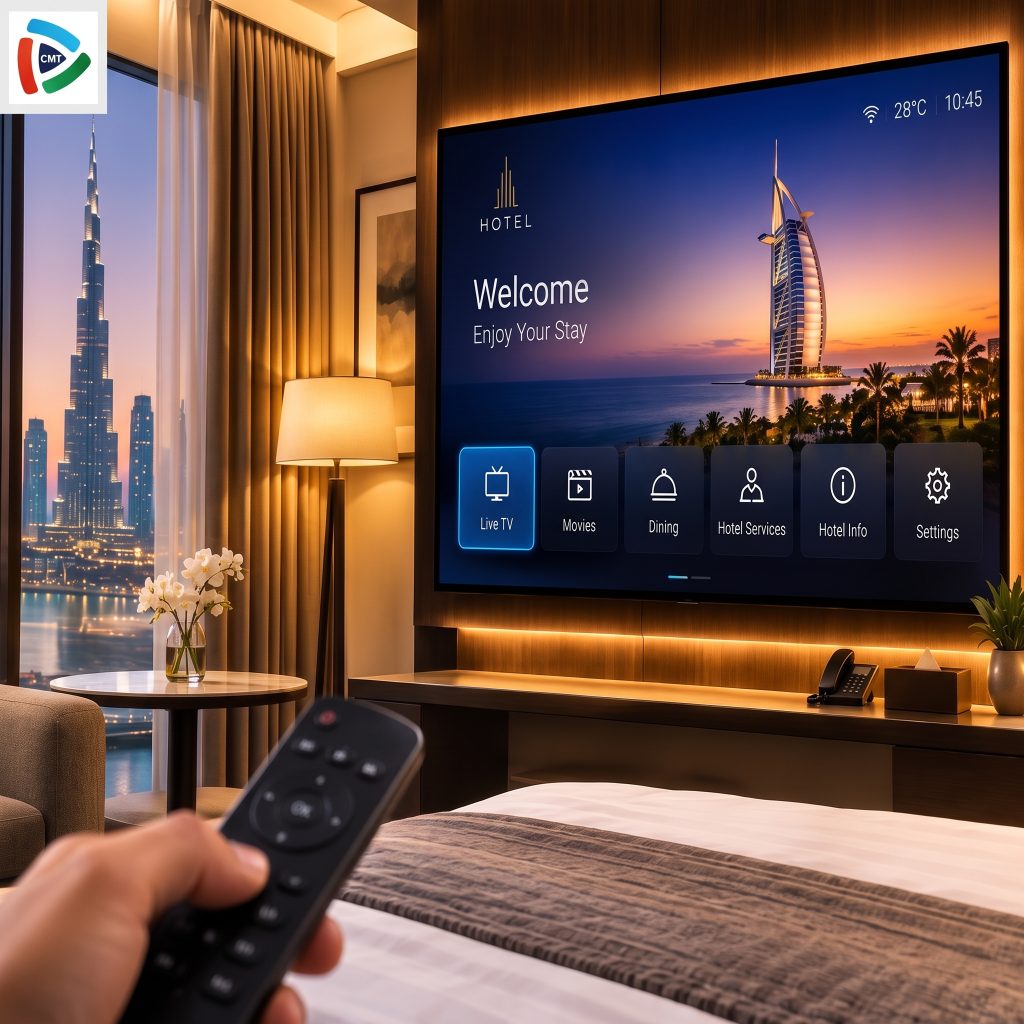
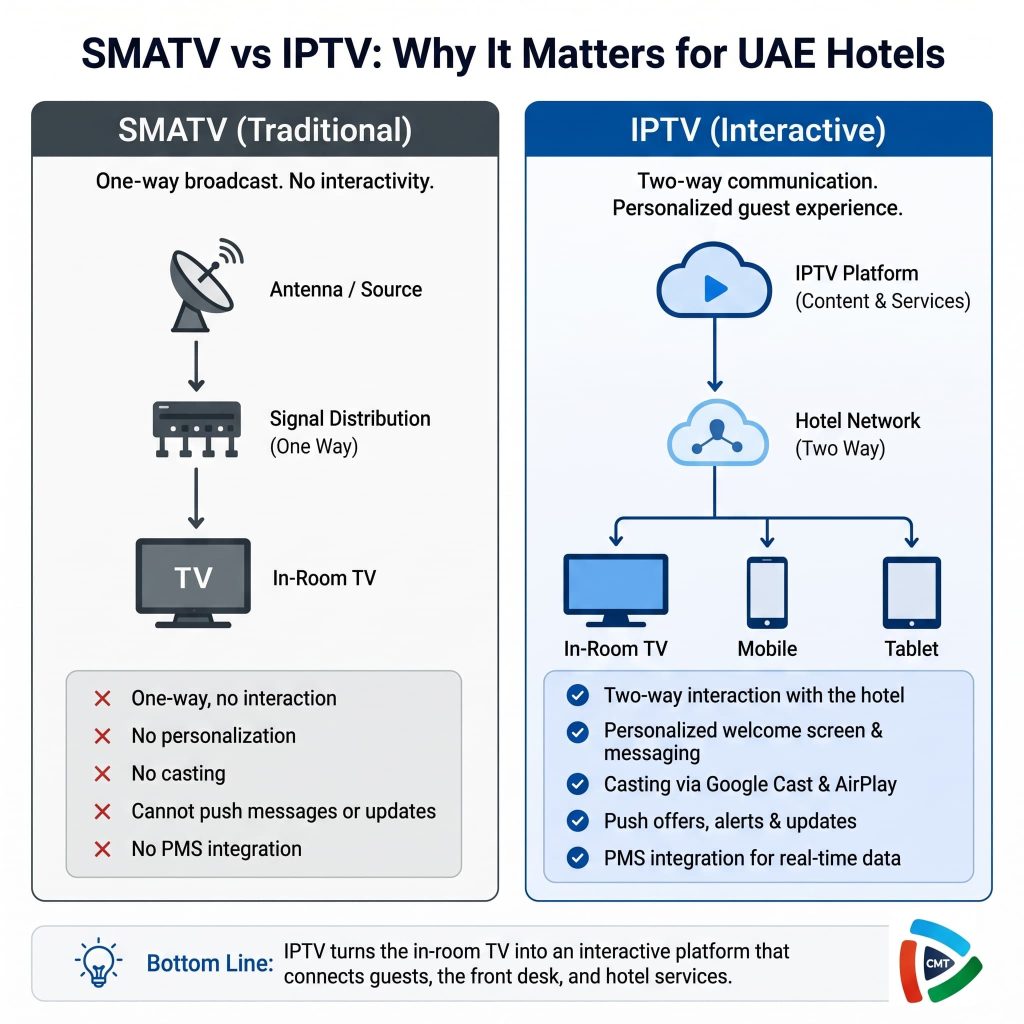
SMATV and IPTV solve completely different problems, and the SMATV vs IPTV comparison makes that clear. A traditional SMATV setup sends one signal from an antenna through a distribution box to the room TV, with nothing coming back the other way. There’s no way to greet a guest by name, push a Wi-Fi code, or let someone cast their own Netflix account. CMT Technologies’ IPTV platform replaces that one-way pipe with a real hotel network: the in-room TV, mobile, and tablet all connect back to the same system, pulling live PMS data so the welcome screen, messaging, and casting options update automatically the moment a guest checks in. That two-way connection is what turns a hotel TV from a fixture into part of the guest experience.
- PMS integration is the foundation — real-time sync with OPERA PMS drives the personalized welcome screen, guest data, and in-room messaging; without it, the rest is just a nicer remote
- Casting (Google Cast + Apple AirPlay) is the most-requested guest feature — it’s what actually gets used every stay, more than channel count ever will
- Arabic-first UI with full RTL support — not a translated overlay, since this is what UAE guests notice first and complain about when it’s missing
- In-room messaging turns the TV into a revenue tool — spa offers, late checkout, happy hour promotions pushed directly to the screen, not just passive content
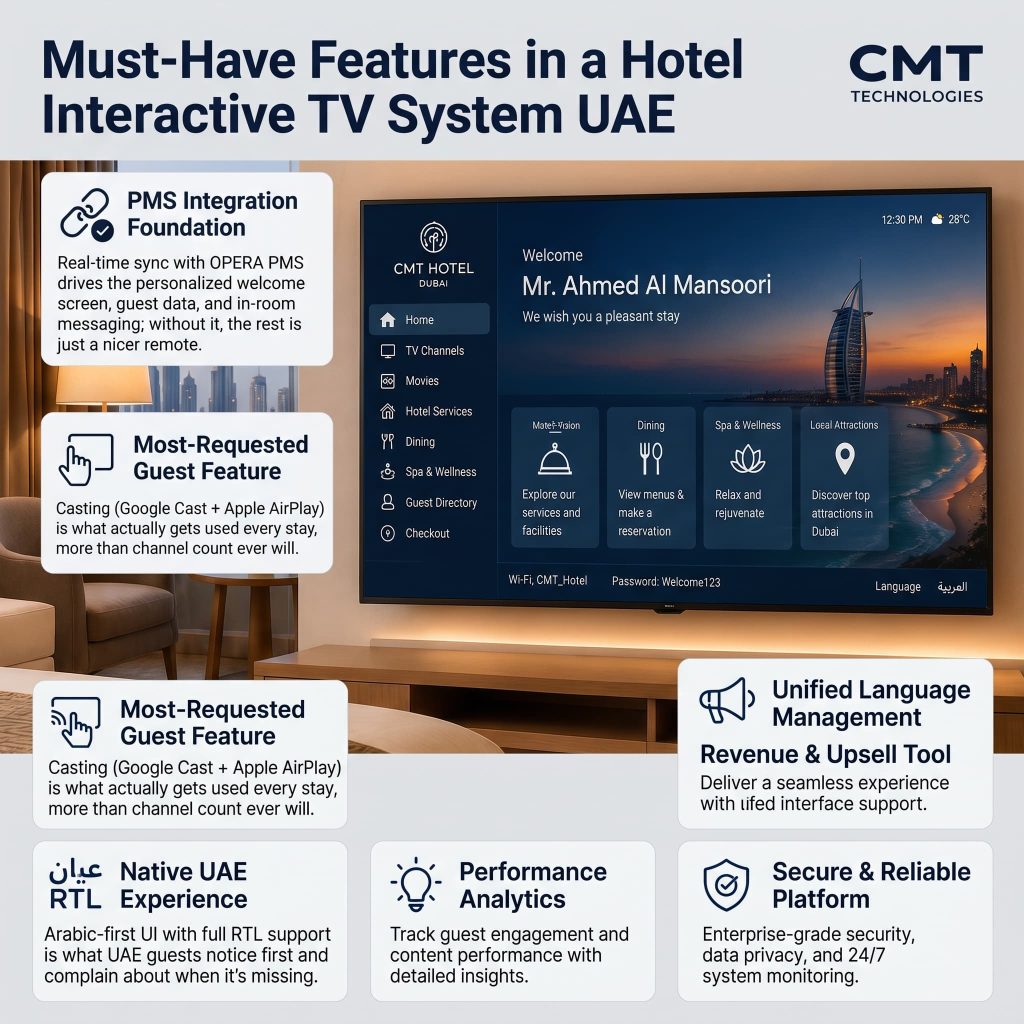
- Security and uptime guarantee (99.9%) — enterprise-grade reliability matters more here than in most hospitality tech, since a guest-facing outage becomes a checkout complaint within minutes
Samsung LYNK Cloud for Hotels in the UAE
Samsung’s LYNK Cloud platform runs hospitality TVs, including models like the HU8000F, through a centralized cloud dashboard. Properties can push content, manage channel lineups, and update welcome screens across every room without visiting each floor individually. For a hotel with 200+ rooms, that centralized control is the difference between an afternoon’s work and a week of manual updates.
LG Pro:Centric vs Samsung LYNK Cloud for UAE Hotels
LG’s Pro:Centric platform competes directly with Samsung’s LYNK Cloud, and the two get compared constantly during procurement. Here’s how they typically stack up for a UAE deployment:
| Factor | Samsung LYNK Cloud | LG Pro:Centric |
|---|---|---|
| Management | Cloud-based, centralized | On-premise server or cloud, depending on tier |
| Casting support | Google Cast, AirPlay | Google Cast, AirPlay (Pro:Centric Direct) |
| PMS integration | Via middleware partners | Via middleware partners |
| Arabic UI support | Depends on middleware layer | Depends on middleware layer |
| Typical hardware | Samsung Hospitality TVs (HU8000F and similar) | LG UHD Hospitality TVs |
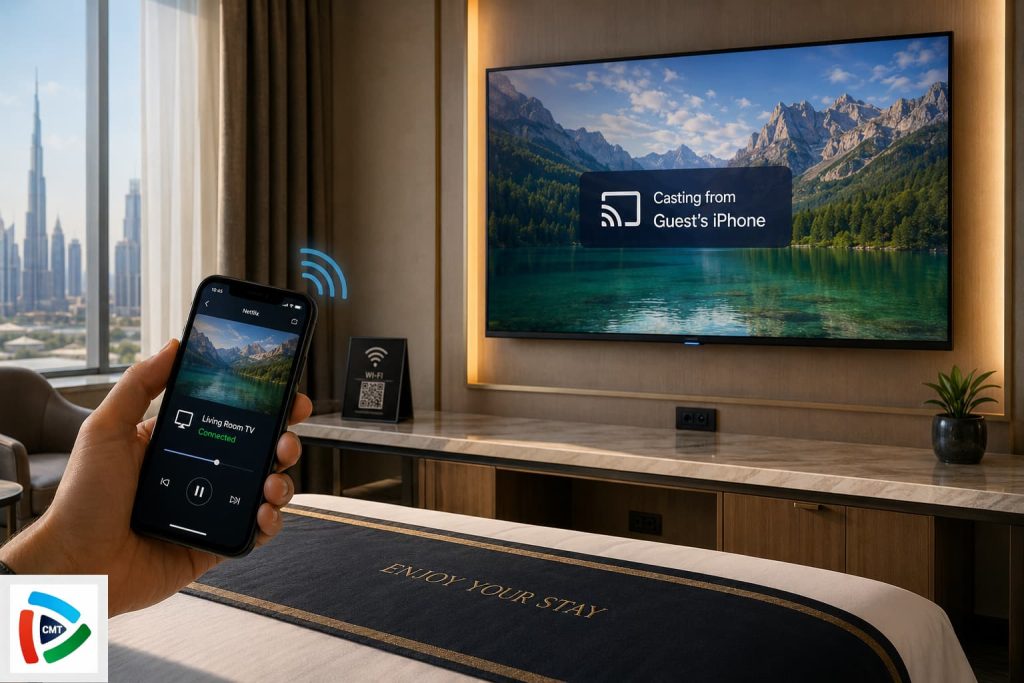
Hotel TV Casting System UAE
Casting is one of the most requested features from hotel guests, and one of the most inconsistently delivered. A proper casting setup lets a guest open Netflix, YouTube, or a personal photo library on their own device and send it to the room TV without pairing headaches. Systems that require guests to download an app first see far lower adoption than ones supporting native Google Cast and AirPlay.
IPTV Welcome Screens: Why First Impressions Matter
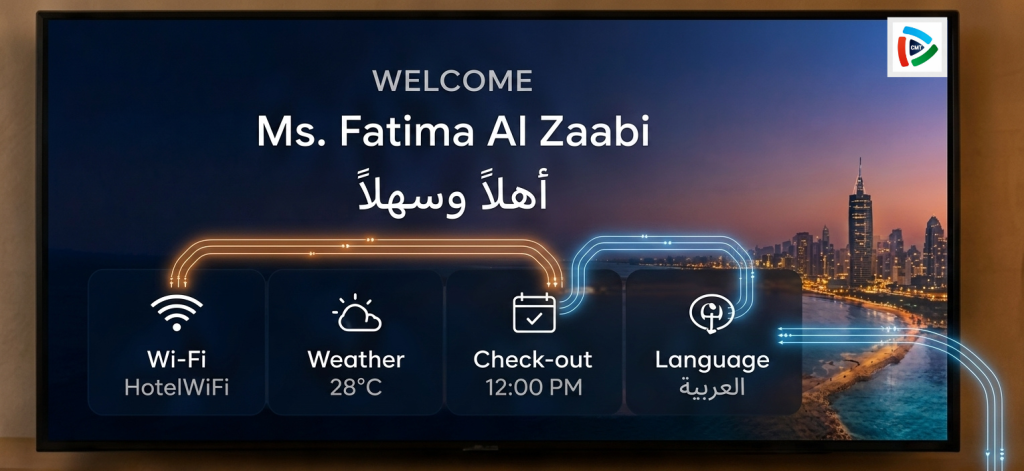
The welcome screen is the first thing a guest sees when they turn on the TV, and it’s an underused piece of hotel technology. Beyond a greeting, it can show Wi-Fi credentials, restaurant hours, and local weather, no remote needed. Multilingual Dubai properties should default this screen to the guest’s registered language automatically. Pulling that straight from PMS data beats requiring a manual language selection every stay.
Hotel VOD System UAE: Beyond Live Channels
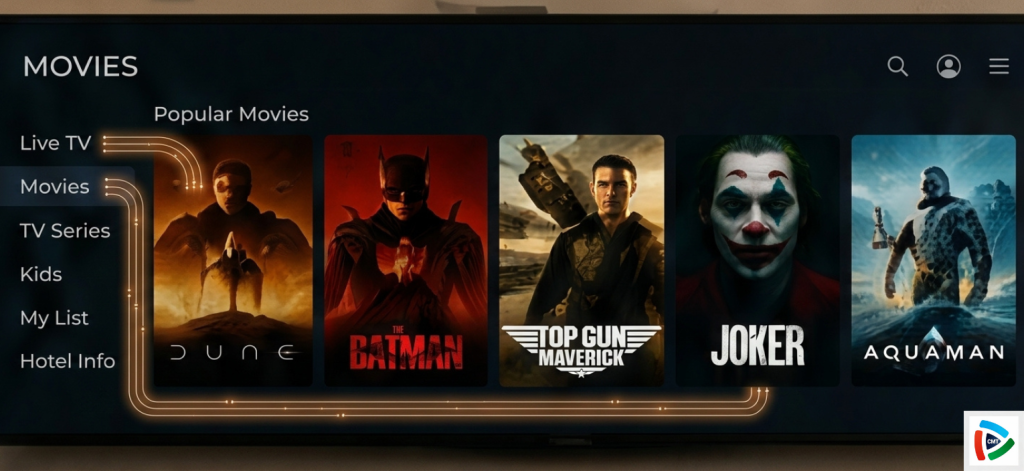
A video-on-demand library matters more for extended-stay and business travelers than leisure guests, since it fills the gap for anyone who’s already watched what’s live that night. A well-built hotel VOD system in the UAE should let properties add their own promotional content, including hotel amenity videos and local attraction guides, alongside licensed movie content.
Opera PMS IPTV Integration for Hotels in the UAE
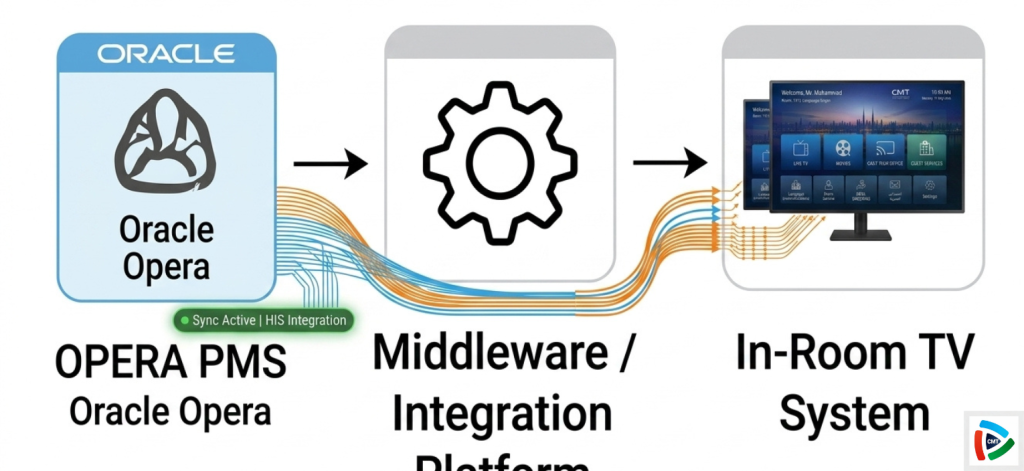
Oracle Hospitality’s OPERA PMS is the system most UAE hotel groups already run, and IPTV integration with it should be close to plug-and-play by now. In practice, it often isn’t. A proper integration syncs guest names, room status, checkout times, and folio data automatically, so the in-room screen updates the moment a guest checks in or out. Ask any potential supplier for a live demo of this integration.
Connect with CMT Technologies
Contact us via our website to schedule your personalized demonstration.
Demo
FAQ Section
What is the best hotel interactive TV system in Dubai?
The best system depends on property size and existing infrastructure, but the strongest options combine Samsung LYNK Cloud or LG Pro:Centric hardware with middleware built specifically for GCC hotels, covering Arabic UI, PMS integration, and local compliance.
How does hotel TV PMS integration work?
The IPTV middleware connects to the hotel’s PMS (commonly Oracle Hospitality OPERA) through an API, syncing guest names, room status, and checkout data so the in-room screen updates automatically without staff intervention.
Samsung LYNK vs LG Pro:Centric for hotels in the UAE: which is better?
Both are capable hospitality TV platforms with similar core features. The real difference shows up in the middleware layered on top, which handles Arabic UI, regional compliance, and PMS integration that neither platform includes natively.
Can hotel guests use Netflix on in-room TVs in the UAE?
Yes, through casting support (Google Cast or AirPlay) or, on some systems, a native app integration, guests can stream their own Netflix account directly to the room TV.
How much does a hotel interactive TV system cost in the UAE?
Costs vary by room count, hardware tier, and feature set, typically priced per room with a separate middleware licensing fee. Get a full breakdown, including PMS integration costs, before comparing vendor quotes.
What is the difference between IPTV and hotel casting?
IPTV delivers live and on-demand channels over the hotel’s IP network. Casting is a separate feature that lets guests stream content from their own personal devices to the room TV, and a modern system typically includes both.