

Smart Hotel TV in Riyadh
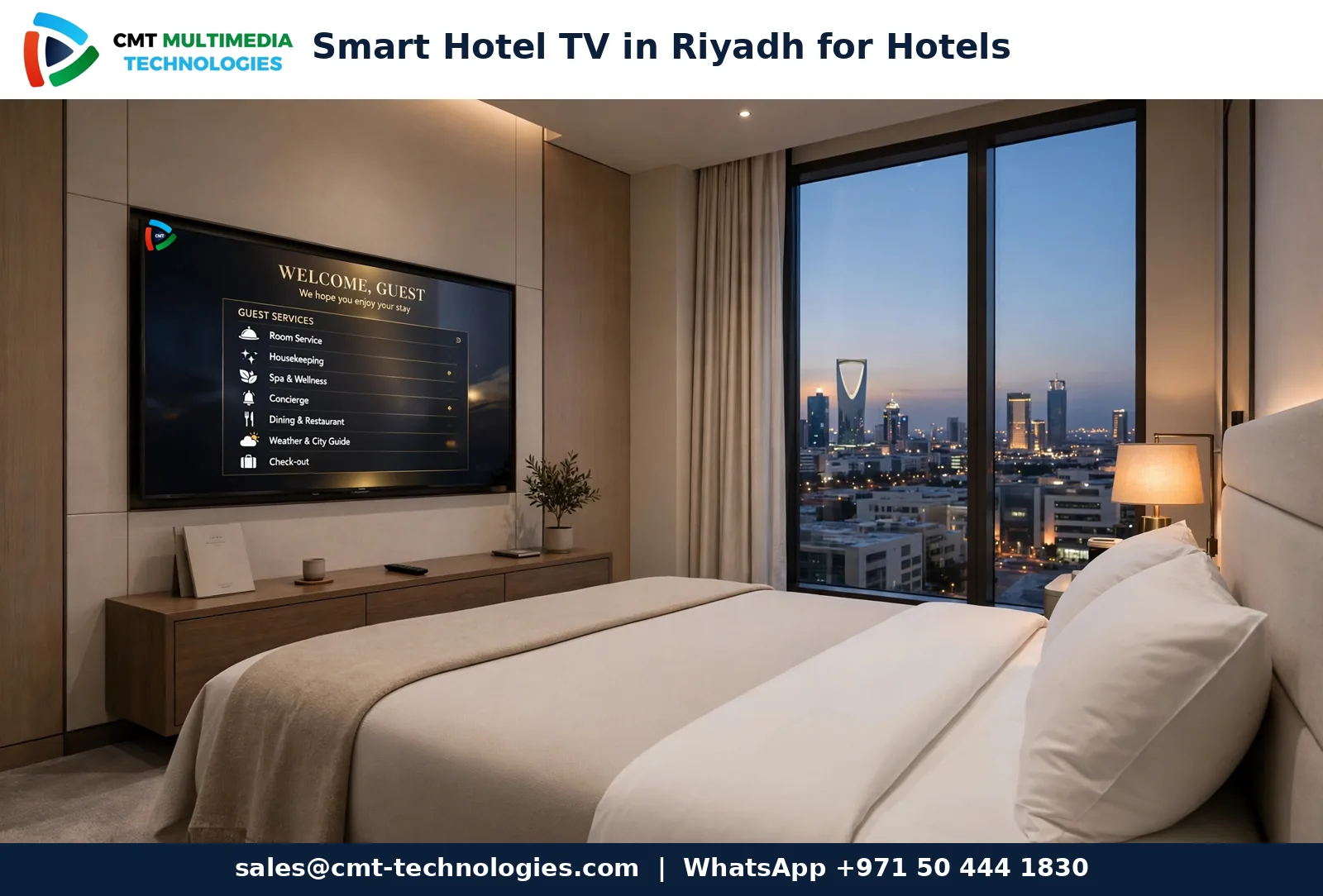
Smart hotel TV in Riyadh gives every room a modern television that opens on the hotel’s own welcome screen, with live channels, hotel services and guest casting in one place. CMT Technologies supplies and installs these systems for business hotels across the capital, alongside our hotel IPTV in Riyadh work.
Riyadh’s business hotels compete on minutes. A guest who lands from Dammam or London, for example, wants to check in, find the Wi-Fi details and relax in front of the television without reading a manual. An old channel list with no guide and no hotel information fails that test in the first evening.
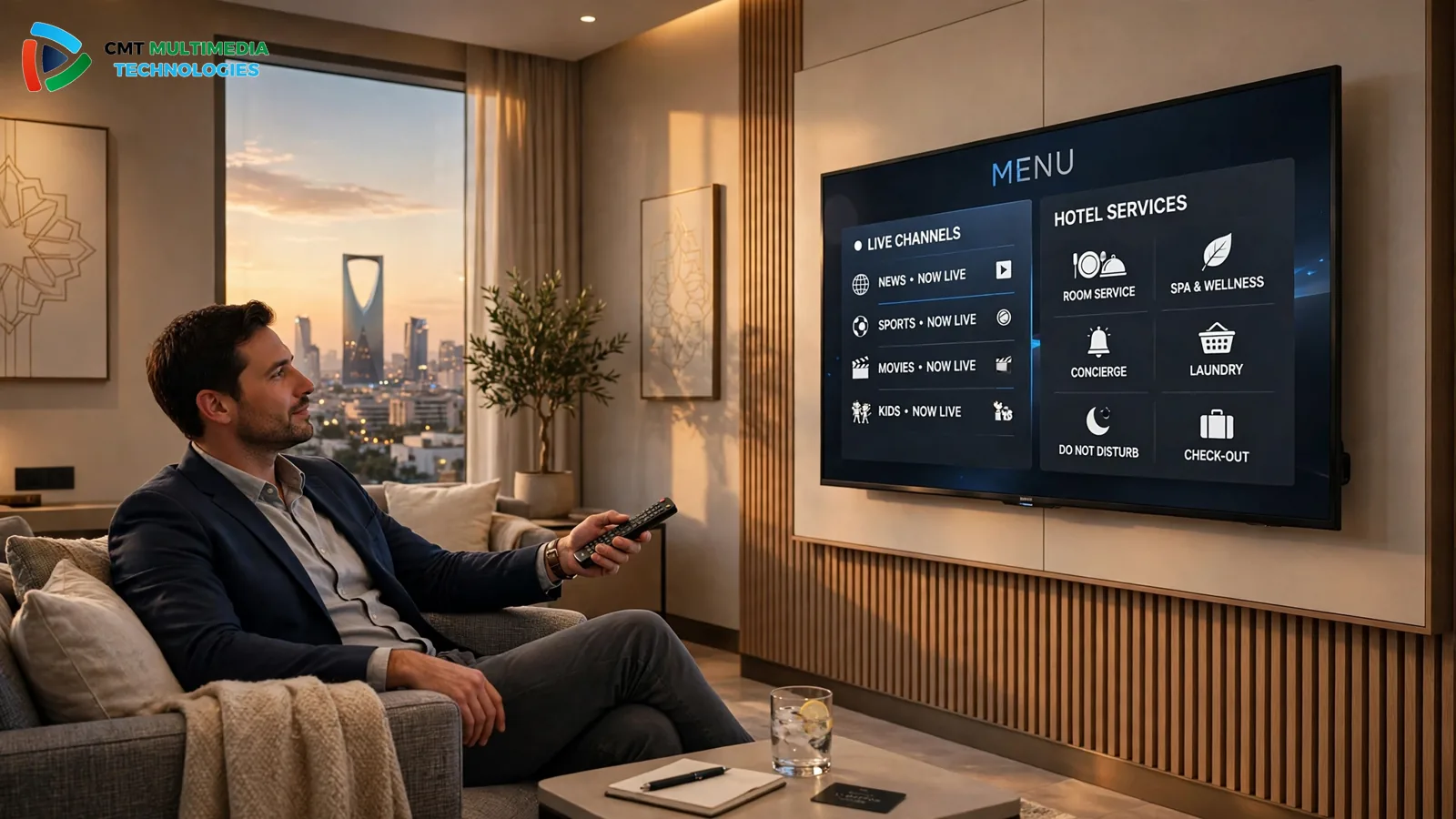
A smart hotel TV changes the first hour of the stay. The screen opens on the hotel’s welcome menu, with the guest’s name, prayer times and the day’s meeting information. Live Saudi and international channels sit beside hotel services, so room service, spa booking and checkout requests all happen from the same remote.
This guide explains what a smart hotel TV system includes, how it serves Riyadh’s business guests, and how a hotel rolls it out floor by floor. For hotel groups running properties in several cities, the country level picture is in our guide to hospitality IPTV in Saudi Arabia, and the service behind it is IPTV in Saudi Arabia.
Table of Contents
What a Smart Hotel TV System Includes
- A smart TV or set top box in every room, running the hotel’s own welcome screen and apps
- Live Saudi, Gulf and international channels with an Arabic first programme guide
- Hotel services on screen: room service ordering, spa booking, wake up calls and express checkout
- Guest casting, so visitors play their own phone or laptop content on the room TV safely
- Central control of channels, welcome screens and messages from one dashboard
- Integration with the property’s systems where available, such as check-in data for personalised welcomes
- Installation, staff training and ongoing support from a team based in the Kingdom
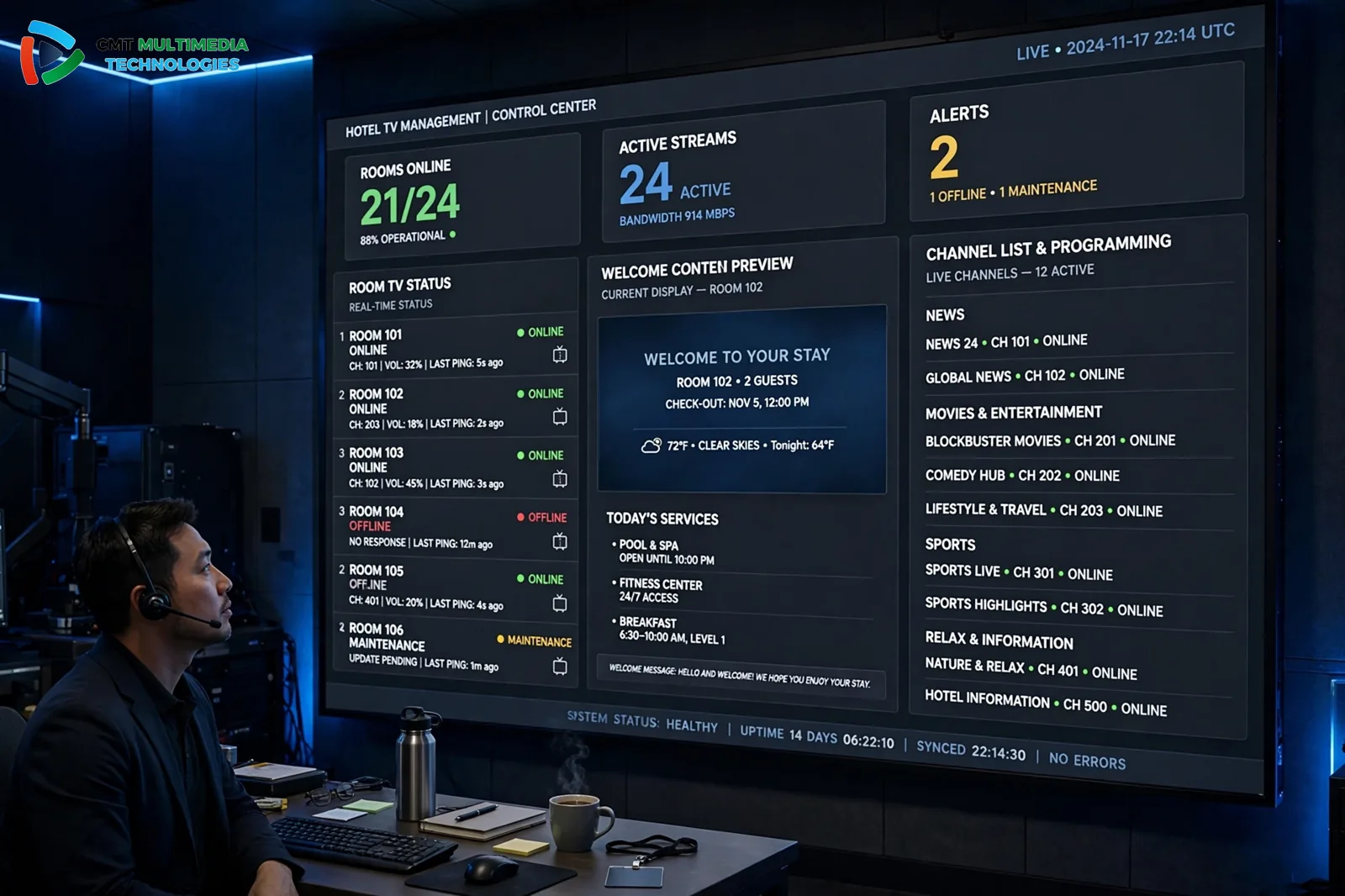
How It Serves Riyadh’s Business Guests
Riyadh runs on business travel. Conference delegates, government visitors and company teams fill the capital’s hotels through the week, and they judge a room by how quickly everything works. A smart TV meets that test because the guest finds channels, meeting times and hotel information without asking reception for help.
Evenings matter just as much. After a day of meetings, guests want live sport, business news and films from home, in Arabic or English. A clear guide that reads from the bed, for example, makes the difference between a relaxing evening and a call to reception.
Groups and events add a third pattern. When a conference books fifty rooms, the hotel can push the event agenda, shuttle times and restaurant hours to every screen at once. As a result, the front desk answers fewer repeated questions, and delegates find their own information.
The Guest Experience
For the guest, the service stays simple on purpose. The television opens on a welcome screen with the hotel’s name and useful information. Channels open quickly, the guide reads clearly from the bed, and volume starts at a sensible level.
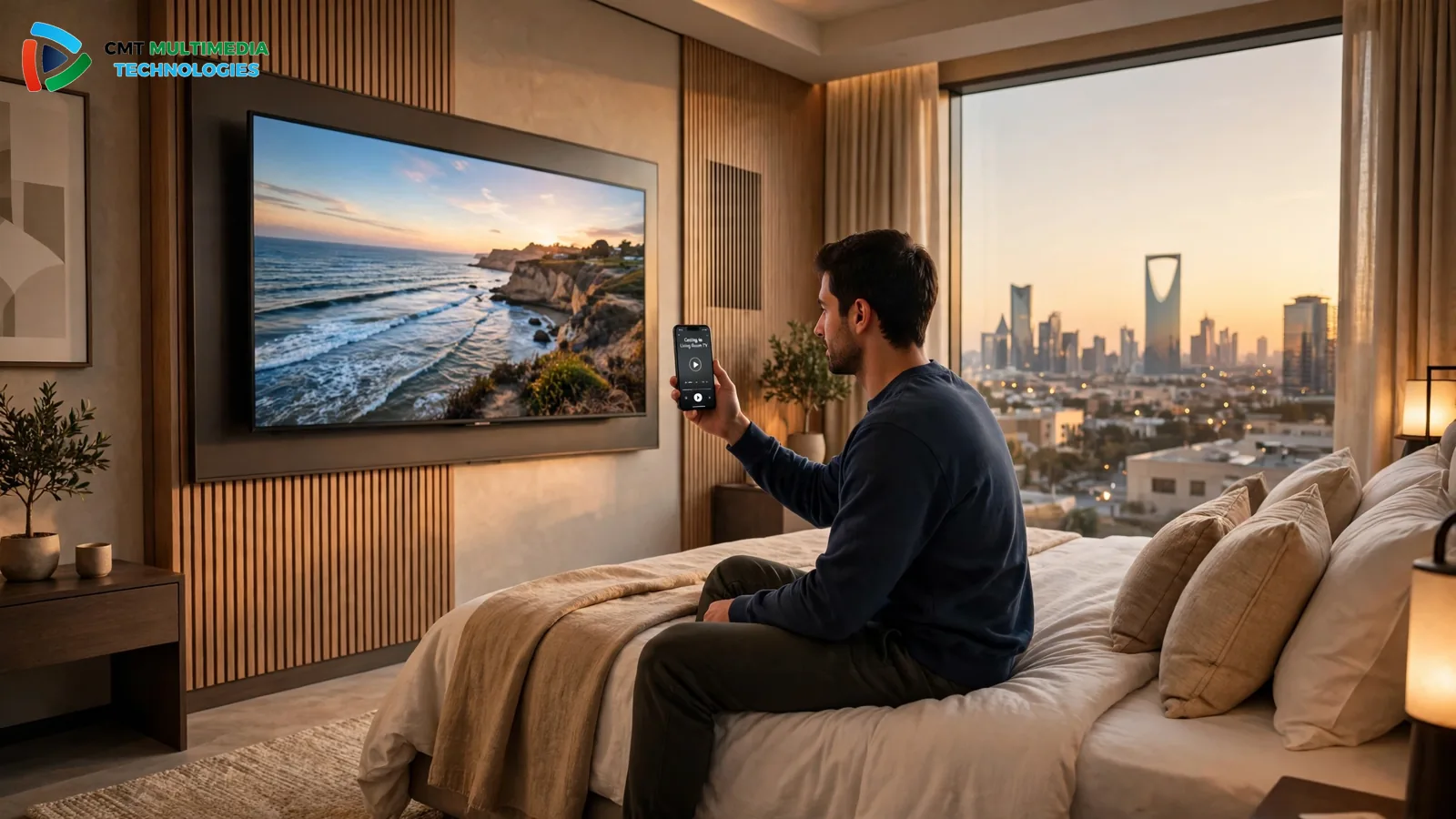
Casting is the feature guests now ask for by name. In a well run hotel IPTV system, a guest connects a phone to the room TV in seconds, watches personal content, and disconnects at checkout with nothing left behind. Families use the same screen for kids channels in the daytime and films in the evening, without touching the hotel’s settings.
How a Riyadh Rollout Runs
- Survey. We visit the property, review the network and count every screen position, including suites and meeting rooms.
- Design. You approve the screen plan, the welcome design and the price before any work begins.
- Pilot floor. One floor goes live first, so the hotel sees the real guest experience before committing the rest.
- Rollout. Floors join in phases, usually in order of occupancy, with each floor live within days of its own installation.
- Training and support. Staff learn the dashboard in one short session, and monitoring stays on after handover.
Phased rollout keeps revenue safe, because no floor closes for the work. The pilot floor also becomes the training ground for the hotel’s own team, which shortens every later phase. The same platform also connects with the wider IPTV solutions for hotels CMT runs across the region, and it matches the smart TV system already live in Dammam, described in our smart hotel TV in Dammam guide.
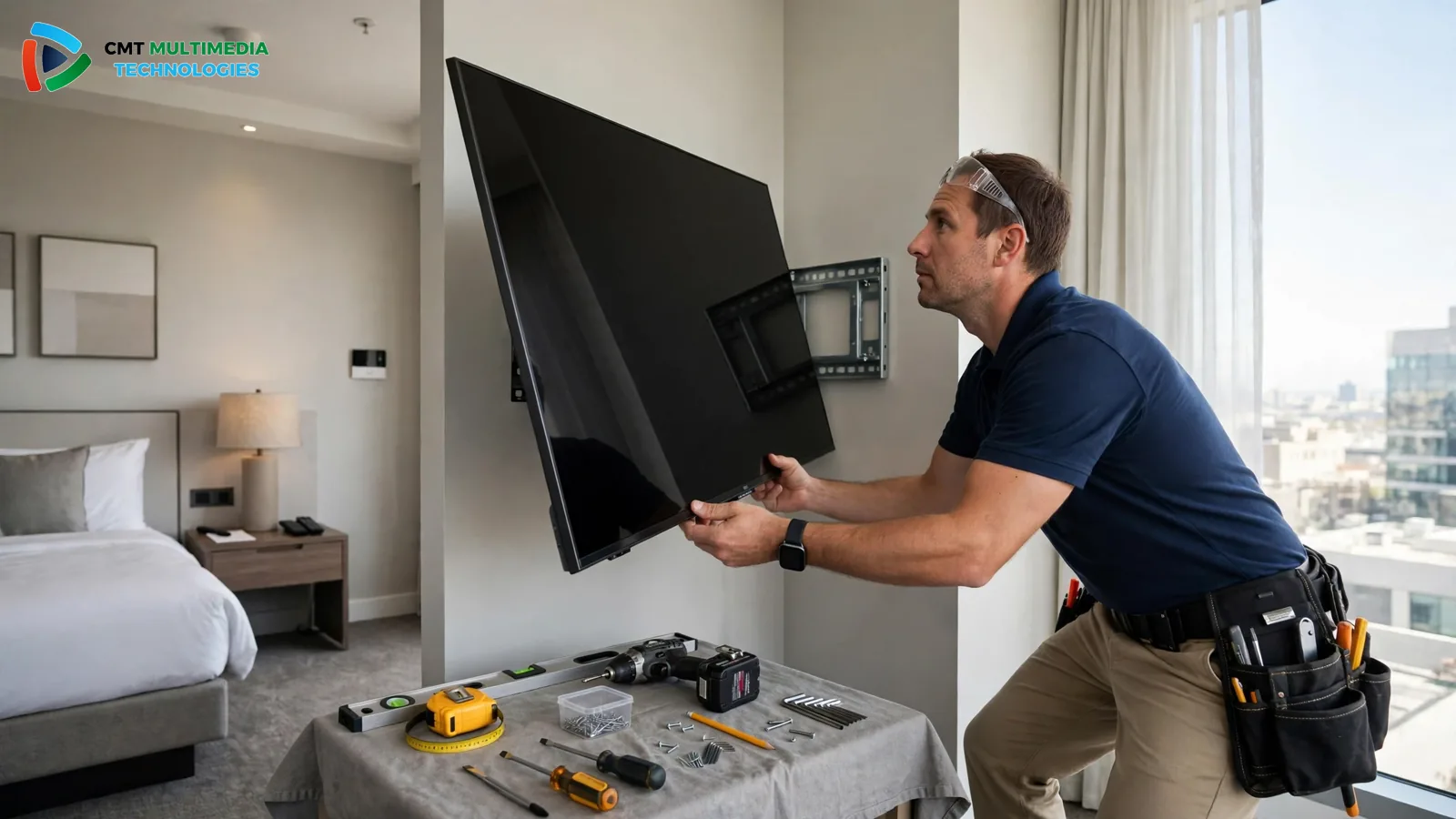
What Smart Hotel TV in Riyadh Costs
The price depends mainly on how many rooms the hotel runs and how much of the network already exists. A new build with smart TVs and modern cabling, for example, needs far less equipment than an older property starting from coax wiring. The same pattern applies to hospitality IPTV projects: the room count and the existing network set the price, and channel packages and casting licences then shape the running cost.
Most hotels phase the spending floor by floor. The pilot floor goes live first, then the busiest floors follow, and the remaining floors join as budgets allow. CMT quotes one clear figure per phase, so there are no surprises halfway through the work.
Why Riyadh Hotels Choose CMT
CMT Technologies has delivered IPTV and streaming projects across Saudi Arabia and the Gulf for more than eighteen years. That record includes hotel systems in every major Saudi city, alongside national platforms such as the SBC OTT solution built by CMT in KSA and Mobily’s mView service.
For hotels comparing IPTV providers in Saudi Arabia, the practical difference is simpler. You deal with one team for the survey, the installation and the support afterwards, and the person who answers knows your property. As a result, problems get solved in hours rather than passing between suppliers.
FAQs
Do we need to replace all our televisions?
Not always. Newer smart TVs run the service through an app, while older screens connect through a compact set top box. The survey tests your existing screens and confirms what each room needs.
Can guests cast from their own phones?
Yes. Guest casting lets visitors play their own content on the room TV safely, and everything disconnects automatically at checkout, so nothing personal stays behind.
Will the system show our hotel’s own brand?
Yes. The welcome screen carries your property’s name, colours and information, even though the platform underneath is shared with other hotels.
How long does a rollout take?
The pilot floor is usually live within a few weeks of design approval. Later floors join in phases, each within days of its own installation, so the whole hotel can be live within a few months.
What happens if a screen stops working?
Monitoring watches the system around the clock, and most faults are fixed remotely before your team notices them. Support is available in Gulf working hours, every day.
Can the system carry meeting and event information?
Yes. Event agendas, shuttle times and restaurant hours can be pushed to every screen at once, which suits conference groups and business events in Riyadh.