

Digital Signage Retail Food Courts in Bahrain | CMT Technologies
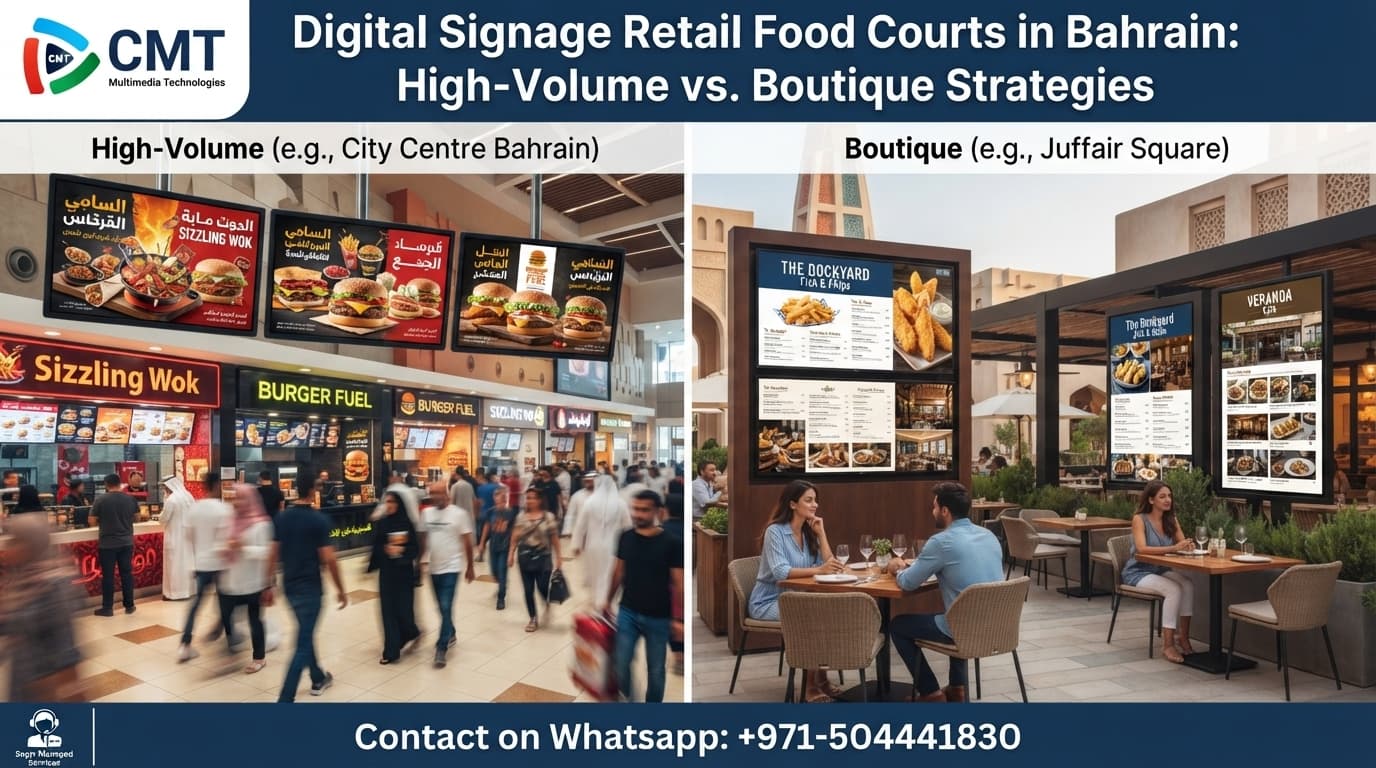
Bahrain’s food and beverage retail scene covers real extremes. City Centre Bahrain in Seef pulls in more than 13.5 million visitors a year. It anchors one of the busiest retail environments in the Gulf. Compare that to Juffair Square. It runs as an open-air lifestyle development with a smaller, more curated set of dine-in venues.
That gap in scale is exactly why digital signage retail food courts in Bahrain require different plans depending on the venue. A one-size-fits-all screen strategy wastes budget in a boutique setting and underperforms in a high-traffic one.
How Visitor Volume Shapes Digital Signage for Retail Food Courts in Bahrain
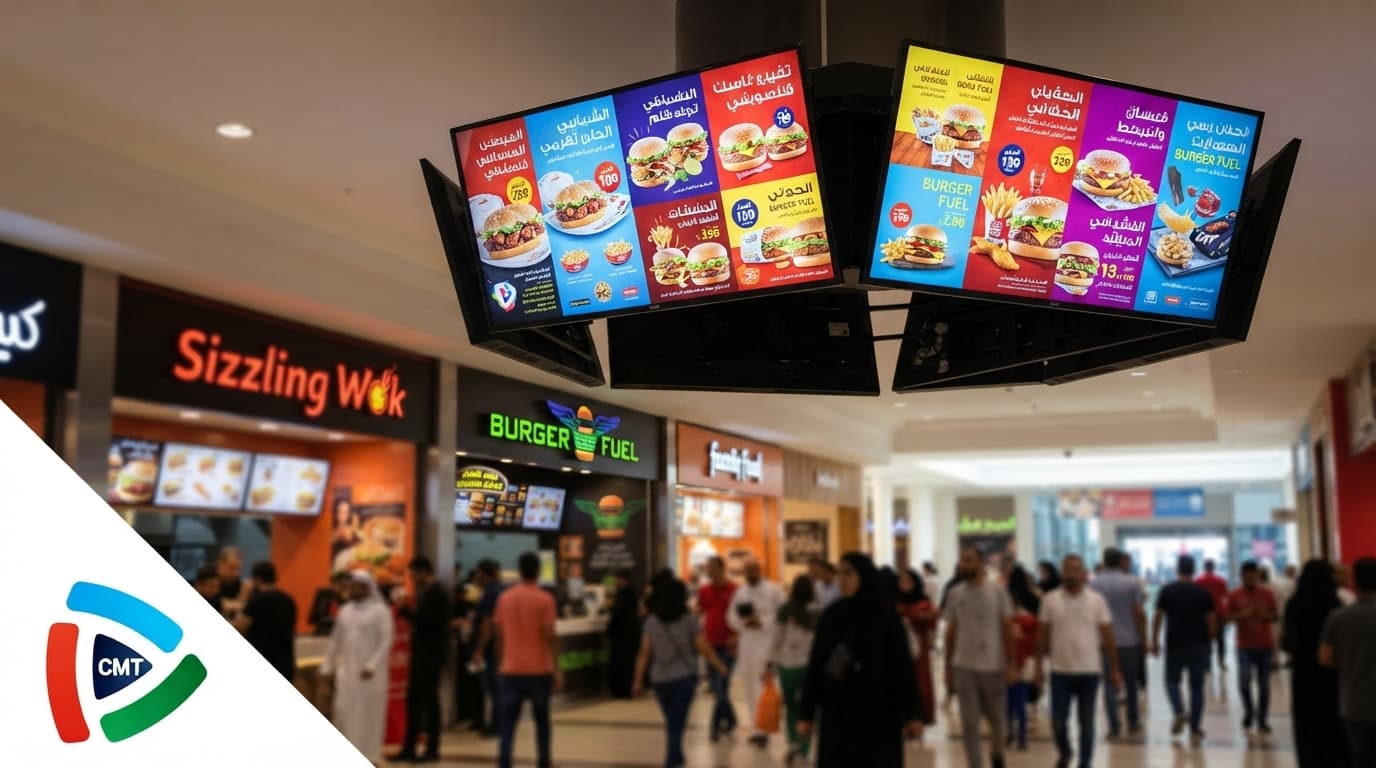
At a high-volume destination like City Centre Bahrain, signage has to cut through noise and crowd density. Screens need to be bright. They need distance visibility, often from an elevated mount. Content also has to cycle fast enough to stay relevant to a constant stream of new faces. The Bahrain Mall in Isa Town sits in this same high-throughput category, with significant monthly footfall demanding immediate message delivery.
Juffair Square is a different case. With dine-in brands like Katana Torii and The Dockyard Fish & Chips, the audience is smaller. Visitors here browse more deliberately instead of grabbing food on the move. Signage can carry more detail — full menu previews, ambiance shots, a slower promotional rotation — without losing attention the way a fast-moving mall concourse would.
What This Means Practically for Venue Operators
High-volume food courts should prioritize:
- Larger, brighter displays built for distance viewing.
- Fast-cycling promotions in short loops, not long slideshows.
- Simple, scannable menu boards visitors can read while walking.
Boutique or lifestyle food courts should prioritize:
- Richer content per screen, since visitors linger longer.
- Ambiance-driven visuals paired with menu information.
- A slower rotation that matches a relaxed browsing pace.
Not sure which category your venue falls into? A quick site assessment settles it in one visit.
📋 Request a Free Site AssessmentSeef Mall and Moda Mall: Two More Data Points
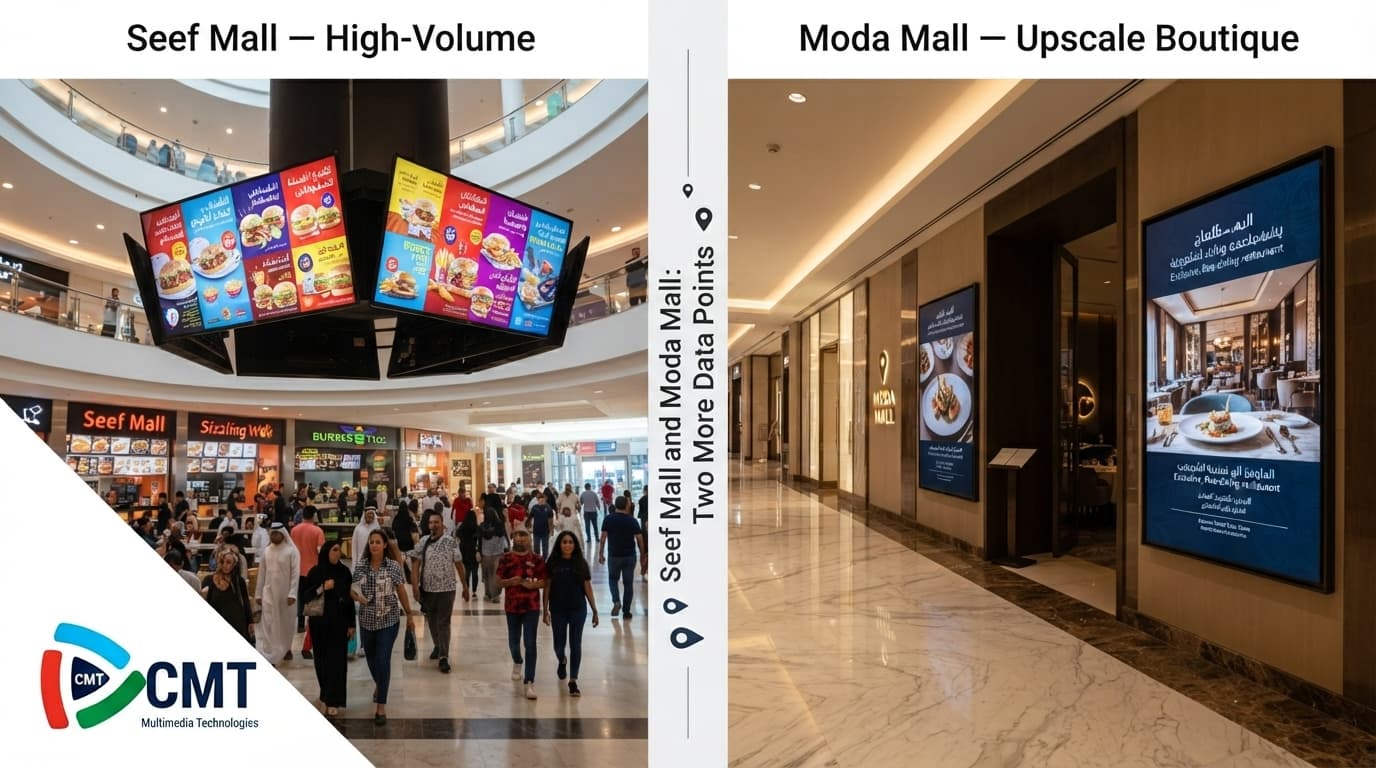
Location context within Bahrain matters too. Seef Mall’s food and beverage offering spans more than 55 restaurants, stalls, and cafés. That scale puts it closer to the high-volume category, even though it’s a distinct property from City Centre Bahrain. Moda Mall, at the Bahrain World Trade Center, leans upscale and boutique instead — closer in character to Juffair Square than to a mass-market food court.
The takeaway is simple. Don’t assume every food court in Bahrain needs the same signage setup just because they share a category label. Visitor profile matters more than square footage or tenant count.
Real Digital Signage Deployments Across Bahrain
Bahrain’s appetite for ambitious digital signage isn’t theoretical. Retail venues in the region have already deployed large-scale immersive displays — including an 8K LED ceiling installation at a Bahrain mall, used for panoramic visual presentations across entrances, elevators, and entertainment zones. That project shows what’s technically possible in this market when a venue commits to a flagship-level rollout.
Most food court projects won’t need that scale. But it signals something important: Bahrain’s retail sector is investing seriously in digital signage as a customer-experience tool, not just a cost-saving replacement for static menu boards. Demand is rising fastest in retail and hospitality specifically — the two sectors that overlap directly with food court environments.
Where CMT Technologies Fits Your Deployment
Tailored Food Court Deployments
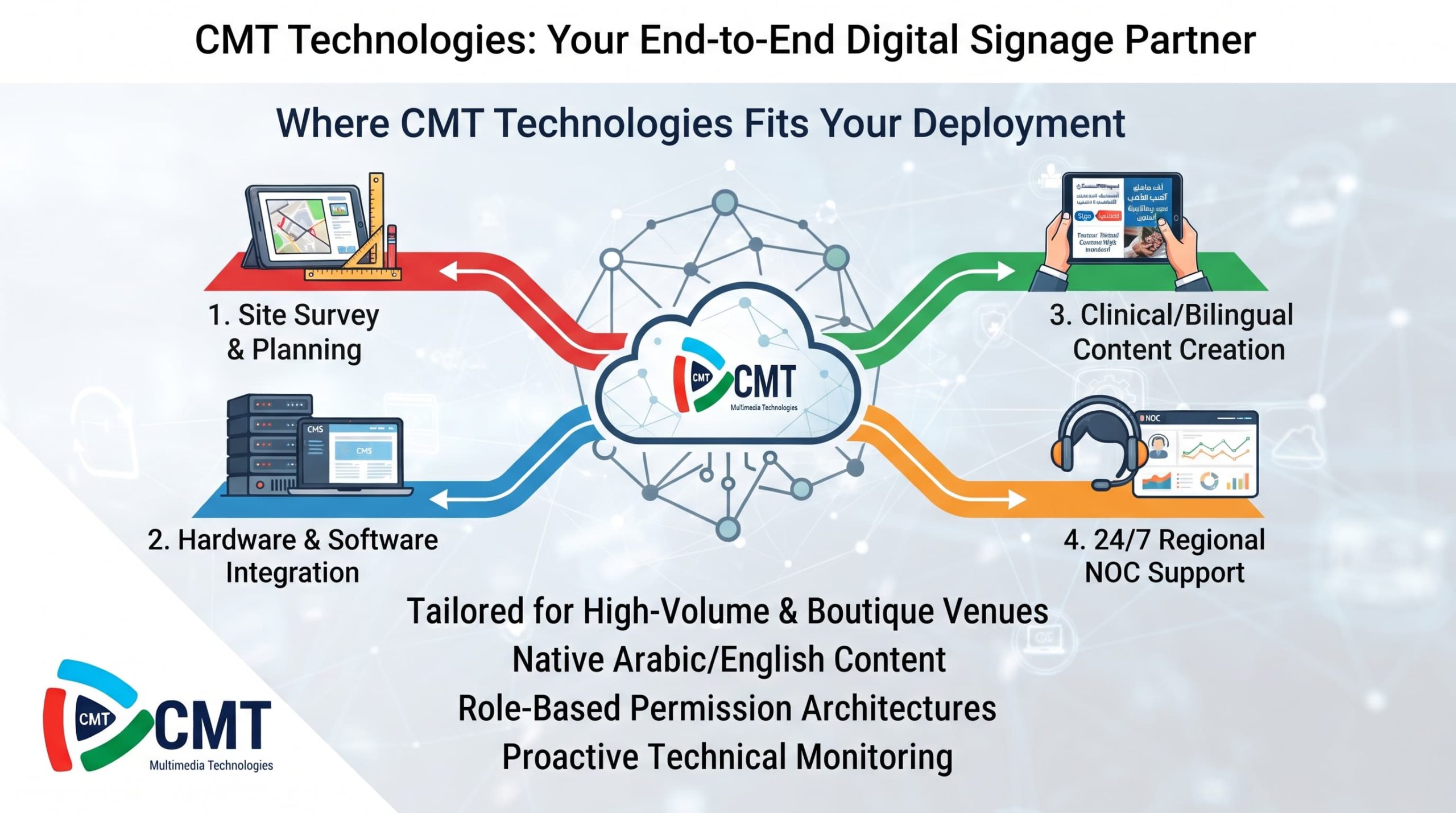
CMT Technologies plans digital signage retail food courts in Bahrain and across the wider GCC — from high-volume retail destinations to smaller, boutique dining developments.
This work sits alongside our broader hospitality technology portfolio, including hotel interactive TV systems in the UAE and in-room entertainment architectures. Many of the same content-management principles carry across both settings. For more on how we structure ongoing content updates, see our digital signage content management guide.
The right starting point for any Bahrain food court project is visitor volume and browsing behavior — not just square footage or tenant count.
Frequently Asked Questions
-
Does a high-volume food court need different hardware than a smaller one?
Usually yes. High-volume locations benefit from brighter, larger displays built for distance visibility. Smaller boutique food courts often work better with modestly sized screens placed closer to seating or storefronts.
-
How fast should promotional content rotate in a busy food court?
Faster cycling works best in high-throughput environments, since each visitor only glances at the screen briefly. Slower rotations suit venues where people linger over a meal or coffee.
-
Can one content management system handle both high-volume and boutique locations?
Yes. A single CMS can manage varied display types and content pacing across venues, as long as each location is configured on its own terms rather than forced into one universal template.
-
Is bilingual Arabic-English content necessary for food courts in Bahrain?
Yes. Bilingual content scheduling is standard practice across food court deployments in Bahrain and the wider GCC, given the diverse mix of residents and tourists.
-
How do we know which category our food court falls into?
A short site visit — checking visitor volume, average dwell time, and tenant mix — is the most reliable way to decide between a high-throughput or boutique signage approach. Reach out via our contact page or request a live demonstration.